Get Full Government Meeting Transcripts, Videos, & Alerts Forever!
Get email alerts on the Bridge Repairs topic
No spam. Unsubscribe anytime.
Washington governor, WSDOT announce emergency repairs after bridge strike; target reopening Oct. 31–Nov. 14
Summary
Governor Bob Ferguson and WSDOT Secretary Julie Meredith announced an emergency contract and a repair plan after an Aug. 18 over‑height strike damaged a truss bridge linking Buckley and Enumclaw. Officials estimate $5–6 million in repairs, expect crews to work seven days a week and aim to reopen two‑way traffic between Oct. 31 and Nov. 14.
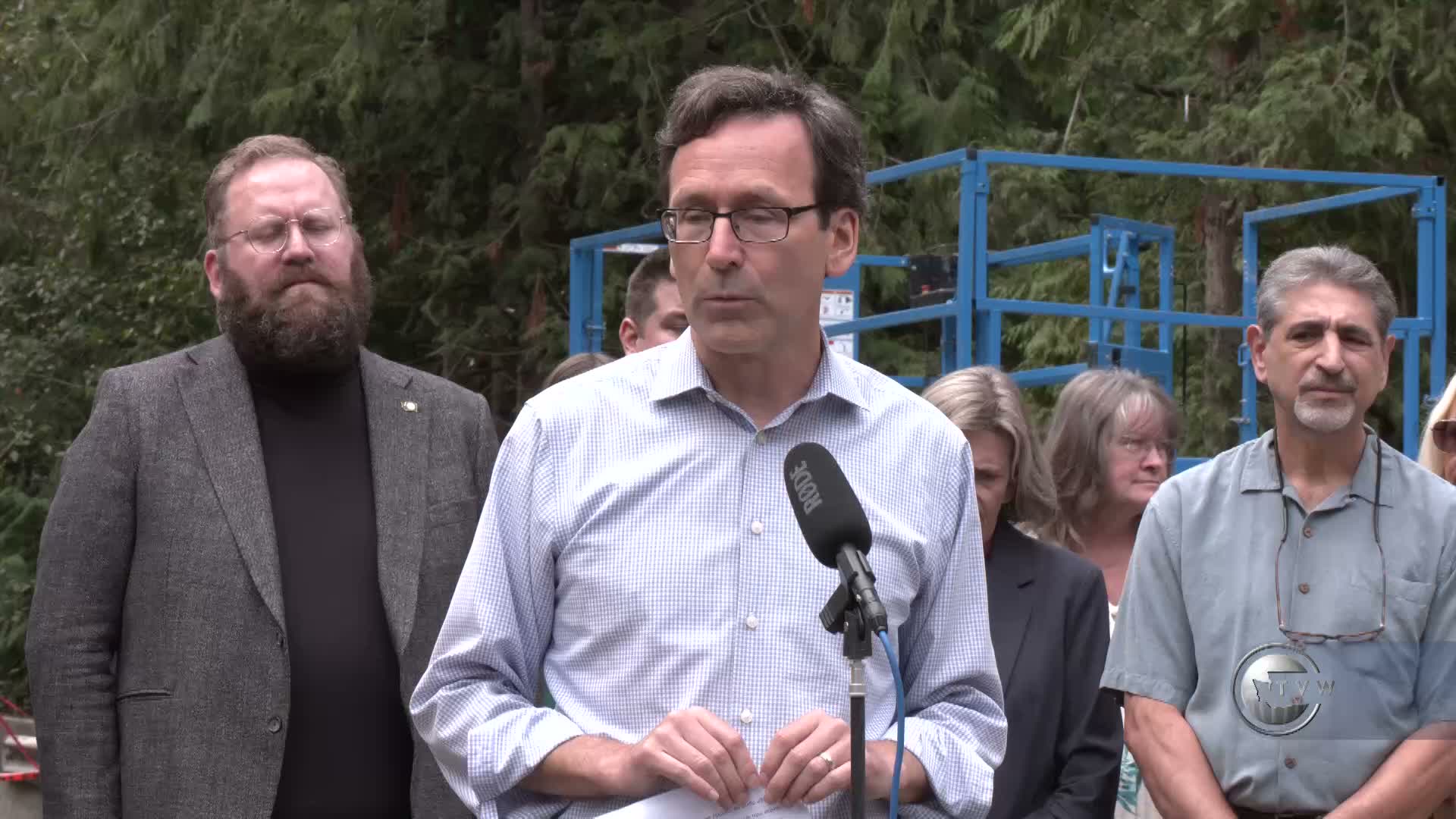
Governor Bob Ferguson and Washington State Department of Transportation officials onstage at a roadside briefing described an accelerated emergency repair plan after an Aug. 18 over‑height vehicle struck and damaged a truss bridge that connects Buckley and Enumclaw.
Ferguson said the state is “moving forward on a contract to get this work done” and that crews will work seven days a week to speed repairs. Julie Meredith, WSDOT secretary of transportation, told reporters crews will begin the emergency contract the week of Sept. 15 and that permanent repairs — a mix of heat‑straightening and replacing badly damaged members — are expected to take six to eight weeks. “Our goal is to reopen the bridge between October 31 and November 14 to two‑way traffic,” Meredith said.
WSDOT and bridge engineer Jeff Sweatt described the damage and repair sequence. Sweatt said an over‑height vehicle hit the bridge’s portal and damaged five sway braces and several vertical truss members, pulling down the top chord and fracturing some elements. As an interim step, crews installed temporary support rods to stabilize fractured verticals; Sweatt said the rods are “about 5 times stronger than the steel that was used back in 1949” and will allow contractors to remove and replace damaged members safely.
Meredith estimated the repair cost at between $5 million and $6 million and said those funds will come from WSDOT’s preservation program while the agency seeks reimbursement from the Federal Highway Administration and from the at‑fault party’s insurance through the standard third‑party damage process. Ferguson said declaring the emergency permits the state to pursue federal assistance but cautioned that federal aid is not guaranteed.
Officials also explained why they opted against a temporary single‑lane opening: WSDOT said a one‑lane configuration would still impose long queues and, crucially, would require reclosure to finish final repairs, potentially extending disruption. “If we do that, in order to finish the repairs, you’d have to close the bridge again,” Ferguson said, arguing it was better to complete permanent repairs in one continuous sequence.
The state said the damaged span carries about 22,000 vehicles a day. Meredith and Sweatt emphasized repair safety and preservation: heat‑straightening will be used to return some members close to their original position, but pieces showing signs of cracking or severe damage will be replaced rather than reused.
Officials said they are coordinating with local leaders, emergency responders, schools and transit agencies on traffic and detour planning while repairs proceed. The briefing closed with Ferguson thanking the on‑site crews and local officials for their cooperation as work moves forward.
The administration said the emergency contracting and federal‑reimbursement steps are already underway; WSDOT expects crews to continue site updates in coordination with local leaders as work progresses.