Get Full Government Meeting Transcripts, Videos, & Alerts Forever!
Get email alerts on the Health Care Subsidies topic
No spam. Unsubscribe anytime.
Officials Warn Expiration of Enhanced ACA Tax Credits, Approve 21% Average Rate Hike for 2026
Summary
At a Bellevue press event, Democratic leaders, the state insurance commissioner and hospital executives warned that the potential expiration of enhanced Affordable Care Act premium tax credits and recent federal legislation could sharply raise premiums, force some to drop coverage and strain hospitals unless Congress acts.
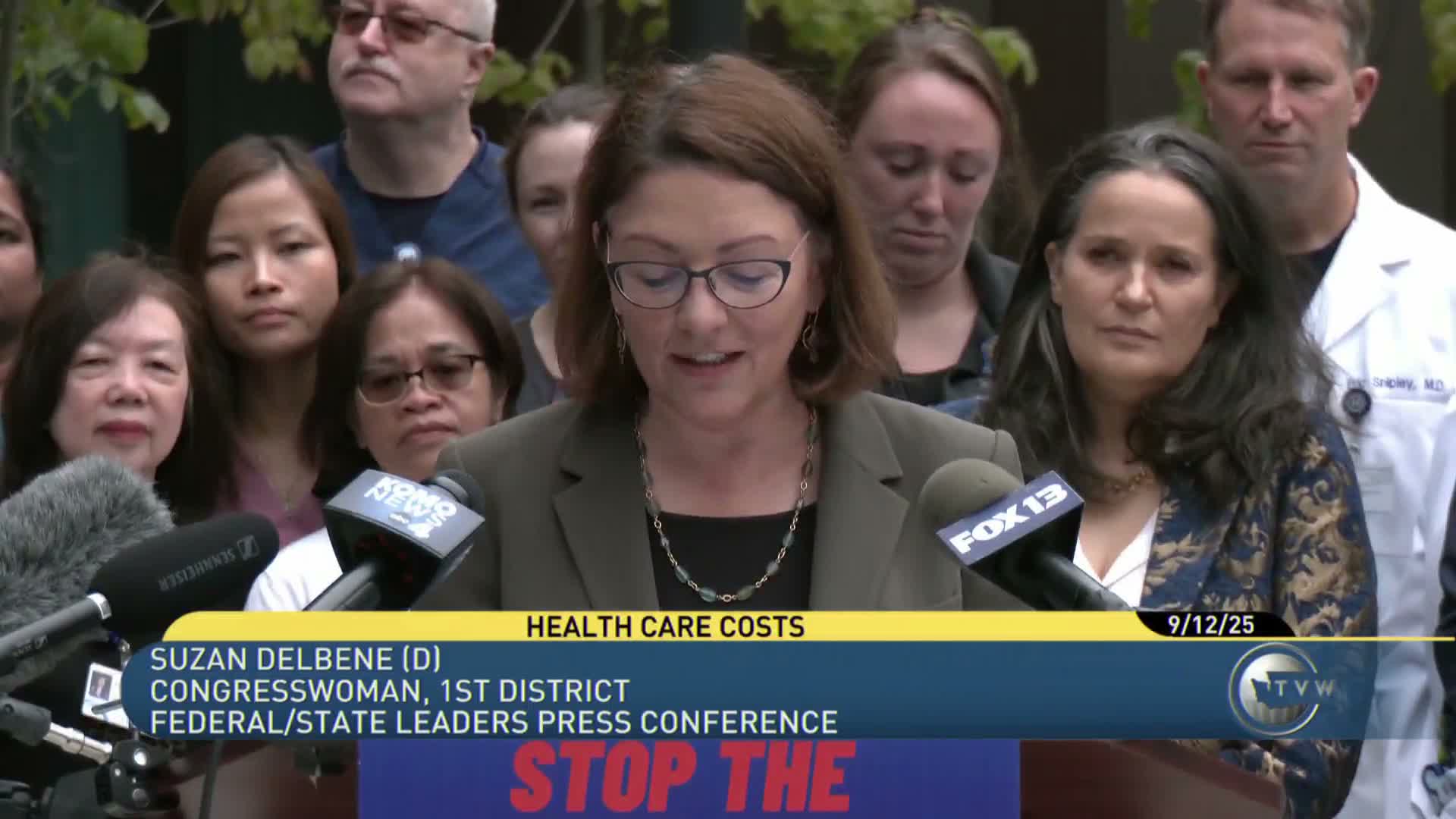
Congresswoman Susan Del Bene convened federal and state officials at Overlake Medical Center in Bellevue to warn that upcoming federal changes and the possible expiration of enhanced Affordable Care Act (ACA) premium tax credits could sharply increase premiums and reduce coverage in Washington state.
"They passed the largest cut to health care in American history," Del Bene said, blaming recent Republican legislation and the Trump administration for policies she said are driving higher costs and narrower access. She cited a state release showing a 21% average increase in 2026 individual market rates and said about 216,000 Washingtonians used enhanced premium tax credits this year.
House Democratic Leader Hakeem Jeffries framed the issue nationally, calling the measures an "unprecedented assault" on health care and urging a bipartisan spending agreement that preserves health and economic well-being. "House Democrats are prepared to find a bipartisan path forward," Jeffries said, but he added, "We will not support a partisan Republican spending bill that continues to gut the health care of the American people."
Dr. Kim Schreyer, who practiced as a pediatrician before serving in Congress, described patients who delayed care because of lack of insurance and warned of clinical consequences if coverage falls. "We're about to see 16,000,000 people in our country lose their health insurance," she said, adding that the most vulnerable services, such as labor and delivery in rural areas, are among those at risk.
At the state level, Governor Ferguson emphasized the immediacy of the risk ahead of the Jan. 1 effective date cited by speakers and noted exchange enrollment figures. "286,000 Washingtonians are enrolled in private health care plans through the health benefit exchange," he said, and "about 80,000 Washingtonians can only afford their private health care plans through the exchange because of these tax credits."
Insurance Commissioner Patty Kuder said her office approved the 2026 individual market rates this week with an average increase of 21% and explained the limits of her authority under state law: if insurers properly justify their rate filings, the office must approve them. Kuder added that insurers cited greater utilization, hospital consolidation and federal uncertainty about expiring premium tax credits as drivers of the increases. She also described an emergency premium-alignment rule enacted in March intended to soften the impact.
John Duarte, president and CEO of Overlake Medical Center and Clinics, described the provider perspective and the systemwide financial strains. "Enrollment in the plans has grown to over 300,000 people in 2025," Duarte said, and he warned that rising uncompensated care and Medicaid shortfalls threaten services. He estimated that MultiCare as a system "stands to lose an additional $1,500,000,000 in funding over the next 10 years," as stated at the event.
Small-business owner Maya Tussing described her family's experience with premiums that she said rose sharply last year and said projected changes could double her premiums in 2026. "For me, no coverage is not an option," Tussing said, relating why the subsidies matter to entrepreneurs who cannot offer employer-sponsored insurance.
In a question-and-answer session, reporters asked how Democratic leaders communicate the stakes to constituents in Republican districts. Del Bene and Jeffries said they emphasize affordability and seek bipartisan solutions, noting some Republicans have introduced legislation to extend subsidies. Jeffries urged rapid action before open enrollment and warned that premium notices arriving in the coming weeks could alarm consumers.
No formal vote or legislative action was taken at the event. Speakers closed by urging Congress to extend or make permanent the enhanced premium tax credits and by thanking Overlake Medical Center for hosting.