Get Full Government Meeting Transcripts, Videos, & Alerts Forever!
Get email alerts on the Early Learning topic
No spam. Unsubscribe anytime.
Ballmer Group pledges up to 10,000 ECAP seats a year; state must pass legislation to receive funds
Summary
Ballmer Group announced a pledge to fund up to 10,000 new school-day ECAP seats annually for 10 years (about $170 million a year), a gift Governor Bob Ferguson said will require legislation and a phased ramp-up overseen by DCYF.
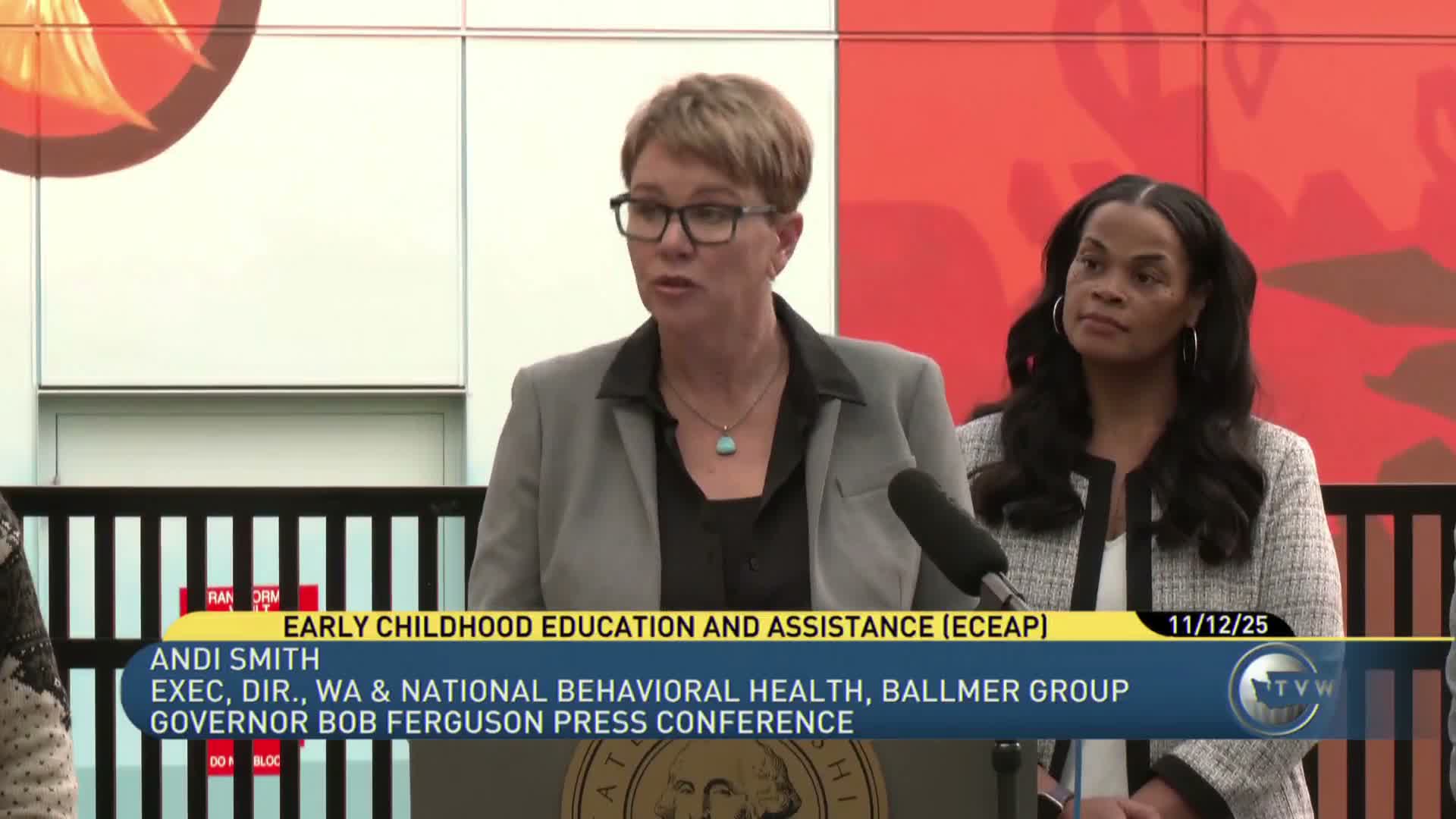
SEATTLE — The Ballmer Group pledged onstage at the Denise Louie Education Center to fund up to 10,000 new school-day seats in Washington’s Early Childhood Education and Assistance Program each year for the next decade, a philanthropic commitment officials said could amount to "about a $170,000,000 a year in new ECAP funding for the next decade." "We are committing to fund up to 10,000 new school day ECAP seats per year for the next 10 years," Andy Smith, Ballmer Group's Washington executive director, said at the Feb. 20 press event.
The gift is structured as a resource to the state, Ballmer Group officials said, and state leaders must still take formal steps before the money can be accepted and distributed. "We do need to go to the state legislature to get a piece of legislation adopted so we can receive these funds and move forward," Governor Bob Ferguson said, calling a governor-request bill a top priority and expressing confidence the administration could get legislation to his desk before the end of the session.
State officials and advocates said the funding could substantially expand access to free prekindergarten for eligible 3- and 4-year-olds at a moment when some programs face federal and state funding pressures. "ECAP connects with families who would be unlikely to access early learning if it weren't for ECAP," Tana Senn, secretary of the Department of Children, Youth, and Families, said. DCYF currently serves over 14,000 children in more than 460 locations statewide and will manage the phased expansion, Senn said.
Officials cautioned the expansion will take time. "It's not like we can just snap our fingers and turn on every single slot," Ferguson said, noting the state will need to hire staff, recruit providers and secure facilities to meet an ambitious rollout. Andy Smith said the Ballmer Group designed the grant to provide predictable revenue so providers "who might be out there wanting a little predictability" would have a stable funding source if they chose to expand.
Reporters asked whether current state payment rates per ECAP slot are sufficient. Ballmer Group officials said the grant was built on the rate structure passed in the most recent legislative session, including base rates plus add-ons, and pledged that if the state raises the rate, "Ballmer Group will match that," Andy Smith said. Secretary Senn highlighted that the commitment also includes funds targeted for children with "complex needs," a key component for many providers.
On the gift’s duration, Ballmer Group representatives said the group expects to review progress after several years. "We need to get in for 5 years and say, how is this going? How is expansion going?" Andy Smith said. He left open whether the arrangement would be renewed beyond the 10-year commitment.
Community leaders and a parent who uses ECAP spoke at the event about the program’s impact. "ECAP has given me so much support, not just for my child, but for me as a parent too," said Butet Dashtembril, an ECAP parent, describing language services, family supports and developmental gains for her son.
Next steps: Governor Ferguson said his office will work with DCYF and legislative sponsors — Senator Claire Wilson in the Senate and Representative Steve Bergquist on the House side, whom officials named at the event — to draft and advance the legislation needed to receive and implement the funds. Officials said they aim to begin phased expansion this fall but emphasized the timeline depends on staffing, provider capacity and legislative approvals.