
Superintendent: federal K‑12 funds held steady; state faces cuts to non‑basic programs
Get AI-powered insights, summaries, and transcripts
Subscribe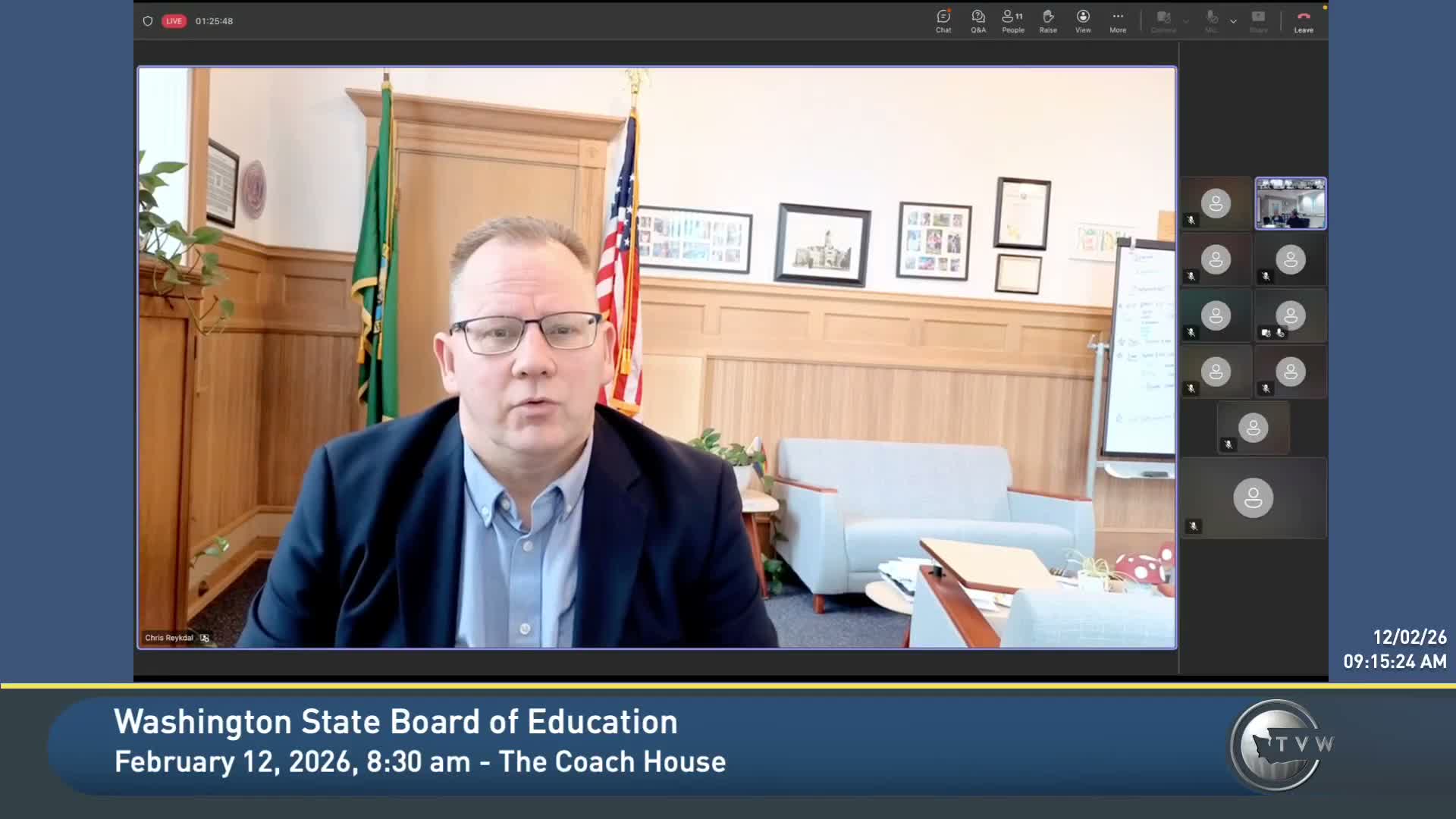
Summary
Superintendent Chris Reykdal told the State Board the federal budget preserved Title I–III funding and the U.S. Department of Education has stepped back from broad withholding tied to diversity work, but he warned the governor's proposed state cuts could reduce funding for early learning, dual‑credit and other programs.
Superintendent Chris Reykdal updated the Washington State Board of Education on federal and state developments affecting K‑12 schools, saying new federal appropriations maintain major education programs and a prior threat to withhold funds tied to diversity, equity and inclusion work has receded.
"There were no major cuts to any of our federal title programs," Reykdal said, noting that Title I, II and III remained intact after the federal budget actions. He added, "We were one of many states that litigated" executive‑branch attempts to restrict diversity work; the U.S. Department of Education has "backed away" from blanket withholding and federal dollars should continue to flow to states.
Why it matters: The stability of federal funds reduces immediate funding uncertainty for districts, particularly for programs that serve high‑poverty schools. Reykdal cautioned, however, that state budget proposals will likely tighten resources for items outside the statutory "basic education" guarantee.
What Reykdal told the board: He said the governor's proposed reductions will likely affect early learning, levy equalization assistance and some dual‑credit and summer programs. "We're expecting more cuts, and those will hurt kids and hurt our school districts," he told members, urging them to be ready when the governor's budget details are released.
Reykdal also described federal activity on civil‑rights enforcement, saying the Department of Justice and U.S. Department of Education have opened investigations into four Washington school districts, mostly centering on Title IX and athletic participation policies for transgender students. He urged districts to comply with records requests and stressed that following state law is the appropriate course.
Board reaction and follow‑up: Members asked about the federal reorganization of USED functions and about timelines for learning‑standards releases. Reykdal said most administrative functions have been parceled to other agencies, with special education and the Office for Civil Rights still housed at USED, and that new math and English‑language arts standards will be rolled out for district review in the coming months.
Next steps: Staff committed to circulate a high‑level summary of budget impacts to board members once the governor and legislative bodies release their proposals and to provide data support for districts preparing for potential reductions.