
State regulators briefed on prediction markets, court fights over whether CFTC or states control them
Get AI-powered insights, summaries, and transcripts
Subscribe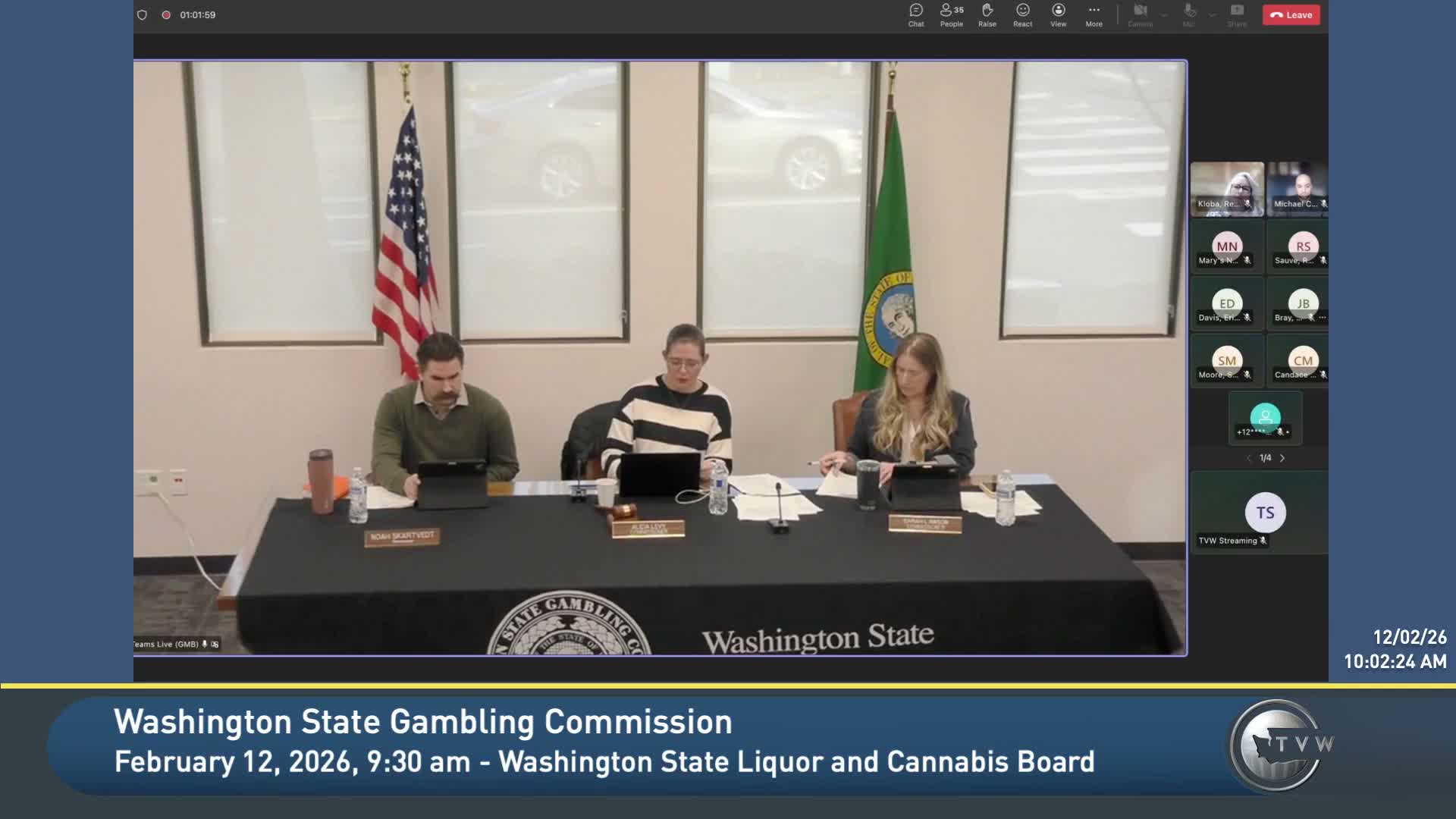
Summary
Commissioners heard a briefing that prediction-market platforms (e.g., Kalshi, Polymarket) are at the center of litigation over whether the Commodity Futures Trading Commission or state gambling authorities have regulatory authority; presenters warned of risks to state and tribal revenue if preemption is found.
At the Washington State Gambling Commission meeting Feb. 12, staff briefed commissioners on prediction markets and the unsettled legal question whether those platforms are federally regulated event contracts or state‑regulated gambling products.
Bryce Mack, a special agent supervisor in the commission’s intelligence unit, outlined the industry’s argument that some operators treat prediction markets as commodity contracts subject to Commodity Futures Trading Commission oversight. "Their fundamental argument is they're no different than trading, you know, gold or soybeans," Mack said, summarizing operators' positions that contracts are CFTC‑regulated designated contract markets.
Scott (identified in the meeting materials as Scott Crowell), an attorney with long experience in Indian country who represents tribal clients in Washington, told commissioners that litigation across Nevada, New Jersey, Maryland and Massachusetts has produced mixed outcomes. He described a patchwork of rulings, including preliminary injunctions and later reversals, and warned of broader consequences if federal preemption is accepted. "I don't think I'm overstating it when I say this is an existential threat, not just to tribal sovereignty... but even more so to state sovereignty," Scott said, arguing that federal preemption could remove licensing, consumer protections and tribal revenue streams.
Mack and Scott reviewed recent case developments: a Nevada federal judge initially sided with Kalshi but that injunction was later vacated; New Jersey issued a preliminary injunction for Kalshi; Maryland denied a request for a preliminary injunction; and Massachusetts’s attorney general sued to halt operations in state court. Presenters also noted that the CFTC's recent public comments directing staff to consider rulemaking and the agency’s potential role in litigation have introduced new uncertainty into cases now on appeal.
A legislator on the call asked whether gains and losses on prediction markets are taxed as capital gains or treated differently for federal tax purposes; presenters said tax treatment appears unsettled and recommended follow‑up. Commissioners did not take regulatory action at the meeting but were briefed on enforcement tools used by some states, including cease‑and‑desist letters and license suitability reviews for businesses associated with prediction‑market operators.
The presenters urged continued coordination among states and tribes as litigation develops.