WDFW committee reviews rule changes to tighten motorized recreation on department-managed lands
Loading...
Summary
WDFW staff outlined director-led rule amendments that would make routes closed to motorized use unless specifically designated and posted open, add definitions for e-bikes and other motor-assisted devices, and expand information posting; staff plan town halls in March and a director's hearing in April.
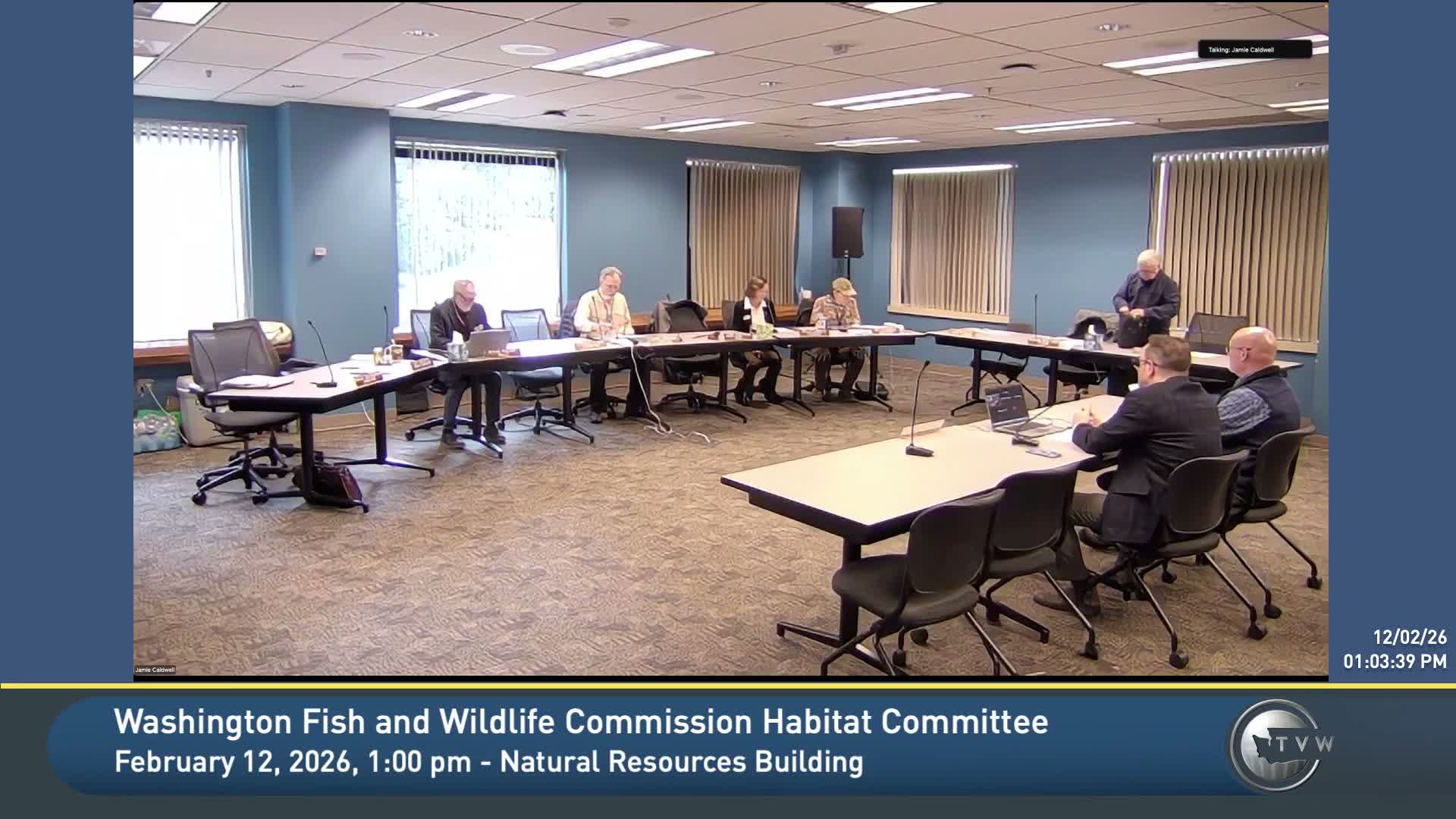
OLYMPIA — The Habitat Committee of the Fish and Wildlife Commission heard a staff presentation Feb. 12 on proposed changes to Washington Department of Fish and Wildlife rules that would clarify where motorized recreation is allowed on lands the agency manages.
Agency staff said the amendments would update two Washington Administrative Code sections to define “department-managed lands,” clarify what it means for a route or area to be “designated” and “posted,” and explicitly cover motor-driven and motor-assisted vehicles and devices, including electric-assisted bicycles and newer devices such as scooters. "We have an obligation to preserve cultural and historical sites on lands that we manage and to protect and restore species and the habitats that they rely on," Kevin Connolly, Wildlife Lands Division manager, said as he framed the rulemaking and noted the agency oversees roughly 1,000,000 acres and an estimated 2,000 miles of roads and routes.
The proposed framework shifts the default approach so that routes would be closed to motorized use unless the department has gone through a travel-management process to designate and post them as open, restricted or prohibited. Heidi Anderson, a WDFW planner, said the change is intended to make land-use status clearer to the public and to managers. "Designated means anything — mainly a road or trail, but it can be other things like an area or facility — specified by the department for permitted, restricted, or prohibited use," she said.
The proposal would broaden the means by which the public is notified: posted information could include signs, kiosks, websites, published maps and other media "reasonably ascertainable to the public," Anderson said. Some exceptions would remain in the rule, she added, including written permission by the director, administrative uses by staff, and authorized agency or law-enforcement uses.
The discussion also addressed electric-assist bicycles (e-bikes). Staff stressed the travel-management planning process will evaluate each route’s compatibility with e-bikes, rather than applying a blanket approach statewide. Anderson said the Methow pilot recommends allowing class 1 e-bikes on routes where mountain bikes are already permitted, while other areas may limit e-bike use to motorized roads. Joel Sisolak, Planning and Recreation Section manager, described a department report that urged case-by-case analysis of e-bike compatibility across public lands.
Captain Mike Jewell of WDFW law enforcement said enforceability drove several drafting choices. "Any law and regulation without enforcement is just merely a suggestion," he told commissioners, arguing the posted-open framework will be a clearer tool for officers in the field. Jewell and others said WDFW expects to rely first on education and outreach when rolling out the changes, moving gradually to enforcement as awareness grows.
Commissioners raised several concerns during the meeting. Commissioner Lemkeill, who described long experience with the Green Dot system, said closed roads are frequently used where enforcement is absent and that compliance tends to be seasonal. He also described personal reliance on a class 1 e-mountain bike and cautioned that tight restrictions could reduce access for older or less-mobile users. Commissioner Garcia said the agency’s reconstituted ADA committee will submit a position letter and flagged accessibility and sensory concerns, noting that some high-speed e-bikes can be effectively silent and create hazards for people with hearing disabilities.
Staff discussed logistics and costs linked to managing routes. Connolly said road maintenance is expensive and that WDFW estimates a land-maintenance backlog "somewhere north of $100,000,000," with road and basic infrastructure repairs forming a significant portion of that figure. Staff also said they are coordinating with other land managers — including DNR and the U.S. Forest Service — to make language and practices more consistent where jurisdictions abut.
Next procedural steps include a virtual town hall planned for March and a CR-102 notice expected to be published in mid-March, with staff aiming to take a final rule and a director’s public hearing to the director in April, according to Heidi Anderson and Kevin Connolly. Chair Molly Linville reminded the committee that the rulemaking is director-led and said staff should notify committee members about town-hall dates so commissioners can attend if they wish; she then adjourned the meeting.
The rulemaking is currently in an information-gathering stage; staff said they will seek public comment and hold targeted outreach, particularly on the east side of the state where staff expect elevated interest.