Get Full Government Meeting Transcripts, Videos, & Alerts Forever!
Get email alerts on the Budget topic
No spam. Unsubscribe anytime.
Budget chairs call governor's plan a start; caucuses split on millionaires' tax and rainy-day use
Summary
Budget chairs called Gov. Bob Ferguson's supplemental budget a reasonable starting point but caucuses split on tapping the rainy-day fund and a proposed millionaire's income tax, with Democrats viewing it as a fairness measure and Republicans warning of capital flight and immediate fiscal risk.
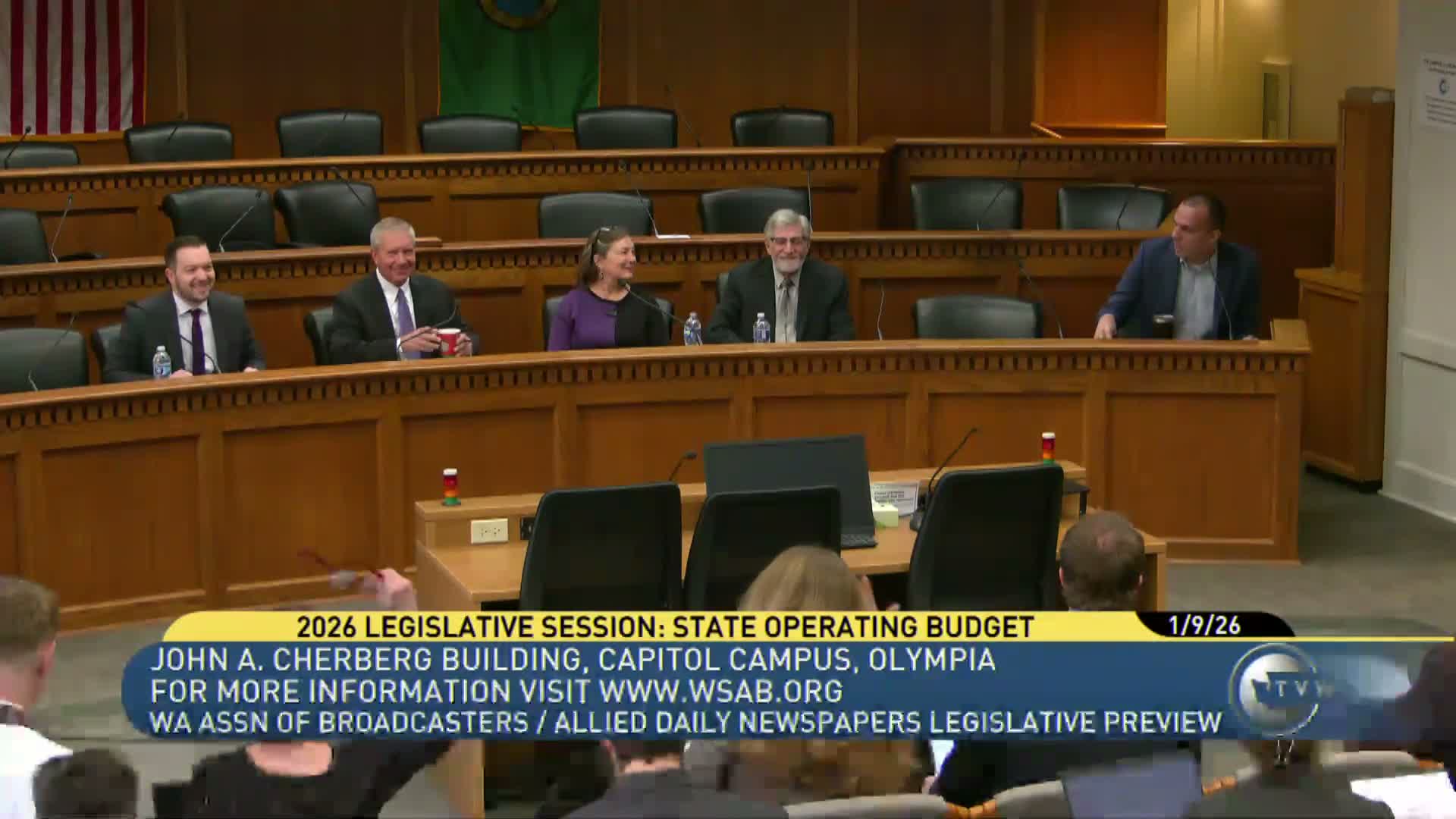
The House and Senate budget chairs opened the 9:30 budget panel by describing Gov. Bob Ferguson's supplemental proposal as a responsible starting point for negotiations that address a roughly $2.3 billion shortfall.
Representative Tim Ormsby said the proposal "gives us a road map to resolving the shortfall," while Senator Drew Robinson said he views it as "a good starting place." The budget plan includes about $800 million in cuts, tapping about $1 billion from the budget-stabilization (rainy-day) fund and unspecified changes to tax preferences.
A major policy flashpoint was the governor's proposal for a high-earner income tax. Senator Robinson said a millionaire's tax could address regressivity and, if designed with credits, might be acceptable to voters; he and others argued proceeds could be dedicated to the Working Families Tax Credit and to targeted tax relief. Opponents called capital flight a real risk: Representative Couture and other Republicans said high earners and businesses could relocate and cited migration data and prior tax changes as reasons for caution.
Panelists also discussed federal uncertainties: multiple members noted that the governor flagged roughly $15 billion in federal funding at risk over the next decade and that HR 1 (federal rules affecting SNAP and Medicaid) could require state IT spending and program changes.
No formal policy decisions or votes were taken at the preview. Budget chairs said they will gather updated revenue forecasts and agency fiscal notes and negotiate across caucuses during the short session.