
Secretary of State backs tribal outreach in voting bill; cybersecurity experts and election officials clash on electronic ballot portal
Get AI-powered insights, summaries, and transcripts
Subscribe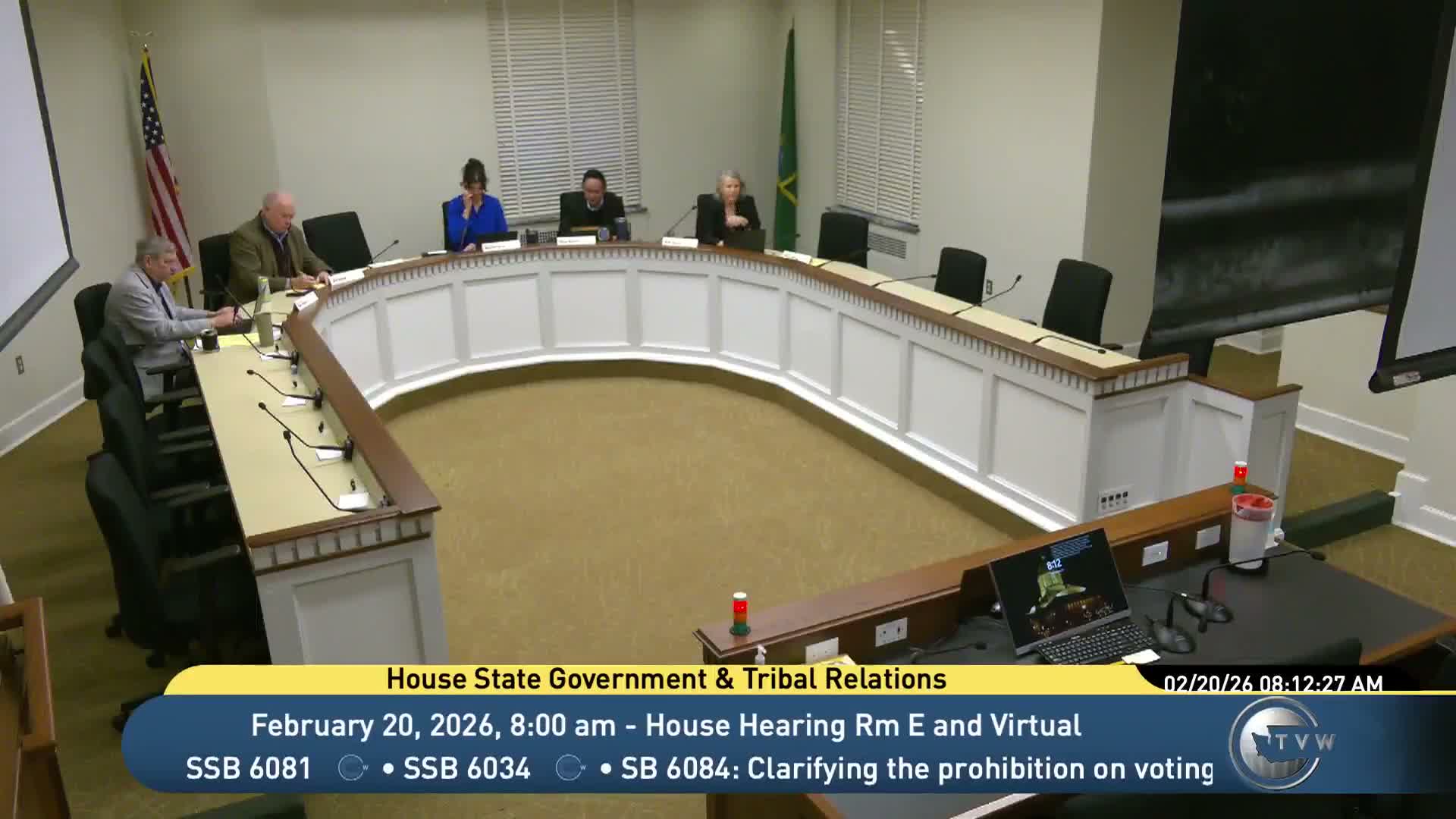
Summary
Committee debated second substitute SB 60 35, which authorizes a Secretary of State electronic ballot-return portal for military, tribal and disability voters. Security experts warned that Internet ballot return is high risk; Secretary's office and King County said the bill authorizes careful testing and reporting, with an estimated $214,000 to consult experts.
The House committee took testimony on second substitute Senate Bill 60 35, which combines requirements for tribal outreach with an authorization — not a mandate — for the Secretary of State to establish an electronic ballot‑return portal aimed at military overseas, Native American, and voters with disabilities.
Desiree Omley (committee staff) summarized the measure: it requires counties to meet regularly with federally recognized tribes and directs the Secretary of State to meet with tribes biennially; it authorizes the Secretary of State to create a portal, establish rules for security, privacy and auditability, and publish annual reports through 2034. The bill sets a target implementation date of Jan. 1, 2031, but does not compel the office to build the portal.
Sean Merchant, policy director for the Secretary of State, said the office had worked with the senate on language and highlighted the hiring of a tribal outreach specialist. Merchant described the portal process as a blueprint that would be tested to match the rigor applied to other election systems.
Security and election‑technology experts — including C.J. Coles (Verified Voting) and Josh Benalow (Microsoft Research) — testified that Internet ballot return presents intrinsic and unsolved security risks. Coles said federal agencies and subject‑matter experts (NIST, FBI, DHS/CISA, and EAC) have found such systems high risk, and Benalow warned that Internet return can permit undetectable large‑scale manipulation. Both urged striking the portal authorization (sections 3 and 4) until stronger standards exist.
Representative Dolan asked about fiscal implications; staff and the Secretary's office estimated about $214,000 to engage experts for accessibility, usability, technical, and security testing. King County Elections director Julie Wise supported the bill overall, stressing tribal outreach and saying a secure portal would be voluntary and aimed at voters who face the highest barriers; she described King County's pilot work and said encrypted PDFs and signature verification are part of the local approach.
Proponents and opponents reiterated their positions in remote testimony: proponents argued the portal improves access for voters with limited options; opponents cited international cases and technical reports that they said demonstrate the risk of internet ballot return. Committee members acknowledged the portal raises complex tradeoffs between access and security and pressed witnesses on testing, use limits, and reporting. The hearing closed and the bill was set for further consideration and reporting by staff.