
Committee hears bill to add state-level preclearance to Washington Voting Rights Act
Get AI-powered insights, summaries, and transcripts
Subscribe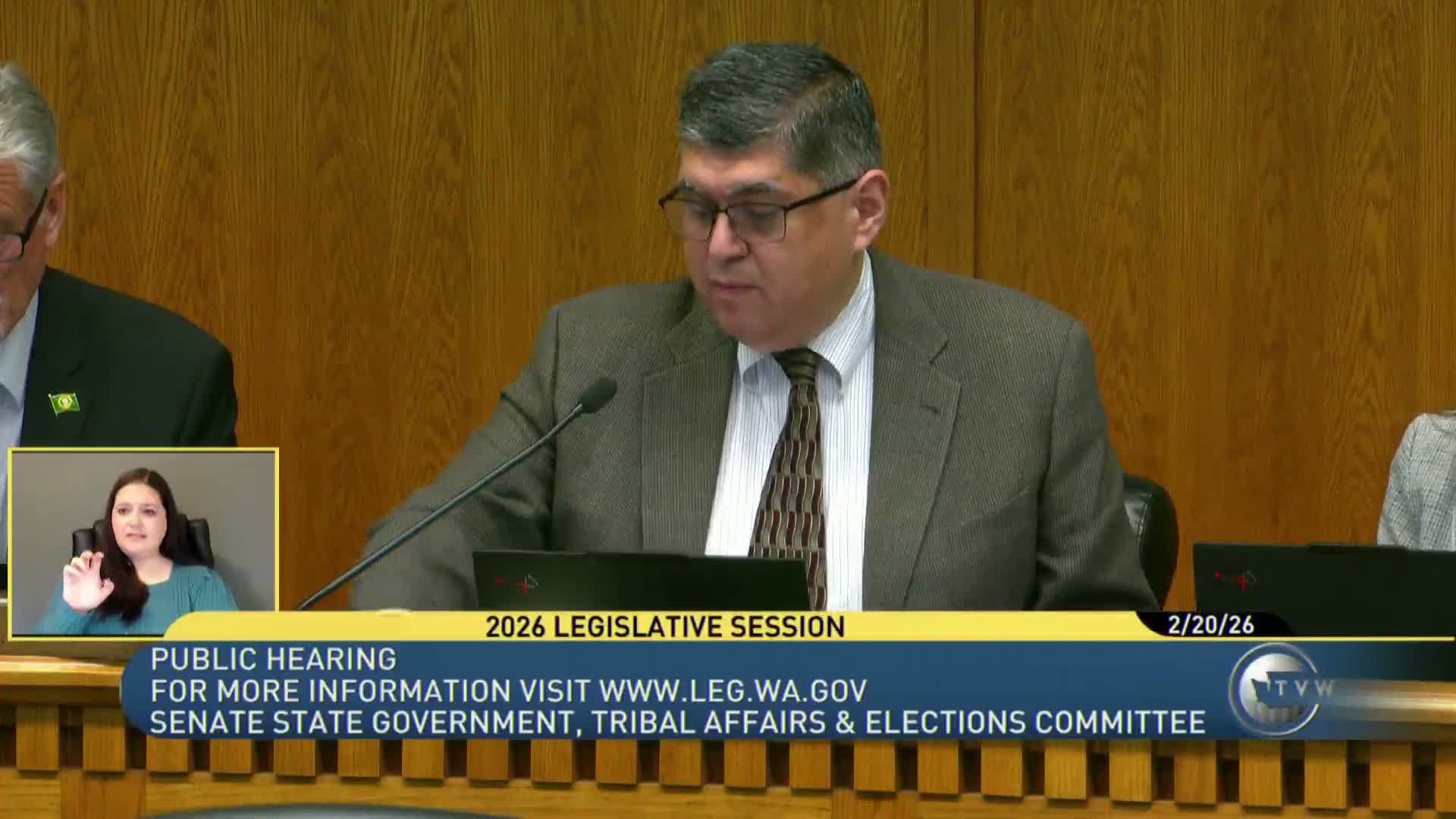
Summary
A proposal to require some local jurisdictions to seek attorney general preclearance before adopting covered voting-related policies drew both support from voting-rights advocates and concerns from city and county officials about scope, timelines and litigation risk.
The State Government, Tribal Affairs and Elections Committee on Feb. 20 heard testimony on House Bill 1710, which would add a state-level preclearance requirement to the Washington Voting Rights Act for jurisdictions with prior violations or specific findings within the last 25 years.
Danielle Creech, committee staff, described the amendment as requiring a covered jurisdiction to apply to the attorney general for approval before implementing a covered policy — an approach modeled on the federal-era Section 5 preclearance that the U.S. Supreme Court curtailed in Shelby County v. Holder (2013). The bill sets notice and determination rules, allows expedited judicial review for denials, and creates a four-year limit on bringing similar claims after approval, with limited exceptions.
City and county representatives raised objections. Derek Nunley of the Association of Washington Cities urged narrowing the 25‑year coverage period and requested rule-making to give jurisdictions clearer criteria for when preclearance applies. Paul Jewell of the Washington State Association of Counties warned that including denials as a triggering government enforcement action could reset the 25‑year clock and produce a perpetual cycle of oversight. Pierce County Auditor Linda Farmer said the bill's definitions are too broad and could conflict with required planning processes such as annexations under the Growth Management Act.
Voting-rights advocates pushed back. Alex Hurd of OneAmerica and Allison McCaffrey of the League of Women Voters argued the measure fills a gap left when federal preclearance became effectively unavailable, and that targeted preclearance could prevent long, costly litigation and protect voters in jurisdictions where discriminatory practices have been found.
Committee staff said the bill limits coverage to political subdivisions with prior enforcement actions or prior covered-policy findings; questions remain about specific covered policies and procedural details, which staff directed interested parties to in the bill report. No committee vote was taken at the hearing. The bill will be scheduled for further consideration under the committee’s process.