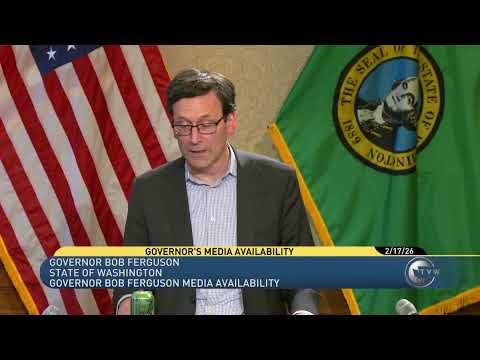
Governor details how proposed "millionaires tax" revenue would be returned to Washington families and small businesses
Loading...
Summary
At a Leadership Media Availability, Speaker 4 outlined a proposal to tax income above $1,000,000, said the threshold would be indexed for inflation, and proposed directing roughly $1.9 billion of revenue toward small-business B&O credits, an expanded Working Families Tax Credit, sales-tax holidays and exemptions.
Speaker 4 outlined a plan for using revenue from a proposed income tax on earnings above $1,000,000 and emphasized the priority is making life more affordable for Washington families and small businesses. "Any bill I sign must send a significant percentage of the revenue back to Washington families and small business owners," Speaker 4 said.
Under the governor's proposal, the tax would apply only to income above $1,000,000 (the first million would not be taxed) and the threshold would be indexed for inflation so it does not "trap" households over time. Speaker 4 said the measure should apply to "less than one half of one percent of Washingtonians," and urged clarity with the public about who would and would not pay.
The governor proposed dedicating roughly $1,000,000,000 of the new revenue to a dramatically expanded small-business tax credit that would effectively eliminate the B&O tax on the first $2,500,000 in a business's total revenue. "If adopted, that would result in 170,000 small businesses in Washington state no longer paying the B&O tax," Speaker 4 said, adding another roughly 30,000 businesses would see reduced B&O liability. The administration estimates the average savings would be about $5,000 per business annually.
Speaker 4 also proposed expanding the state's Working Families Tax Credit. Currently about 350,000 low-income families receive rebates ranging from $300 to $1,300; the governor's plan would raise eligibility to Washington's existing "needs standard," add roughly 460,000 households to the program, eliminate an age restriction included in the Senate proposal and increase rebate amounts by about 30 percent. Speaker 4 estimated expanding eligibility would cost about $180,000,000 and said the combined working-families changes would total roughly $380,000,000 annually.
To reduce regressive sales-tax burdens, the governor proposed two sales tax holidays (a three-day weekend and a two-day event) for purchases under $1,000 and broader, permanent exemptions for hygiene products; he said the holidays would return about $141,000,000 to consumers annually and that exempting diapers would cost about $200,000,000 a year.
Taken together, Speaker 4 said the administration's proposal would return about $1,900,000,000 of millionaire-tax revenue directly to Washingtonians — "over half of the total revenue generated," he said — while preserving funding for priorities such as K–12 education. Speaker 4 cautioned that any final bill must be ‘‘laser focused’’ on affordability and that negotiations with the Legislature are ongoing.
Reporters pressed Speaker 4 on several risks and implementation details. Asked whether the tax could "trickle down" to taxpayers with lower incomes, Speaker 4 replied, "I've been crystal clear that the millionaires tax should only apply to folks who make that million dollars," and reiterated support for indexing the threshold to inflation. On timing, he said collection and administrative systems would need to be developed and that a successful adoption could face court and ballot challenges that delay implementation.
Next steps: Speaker 4 said he and legislative leaders are in ongoing conversations and that he hopes to reach an agreement before the session ends; he did not set a firm date for final action.