
State budget leaves community colleges flat; board warns colleges will shoulder compensation costs
Get AI-powered insights, summaries, and transcripts
Subscribe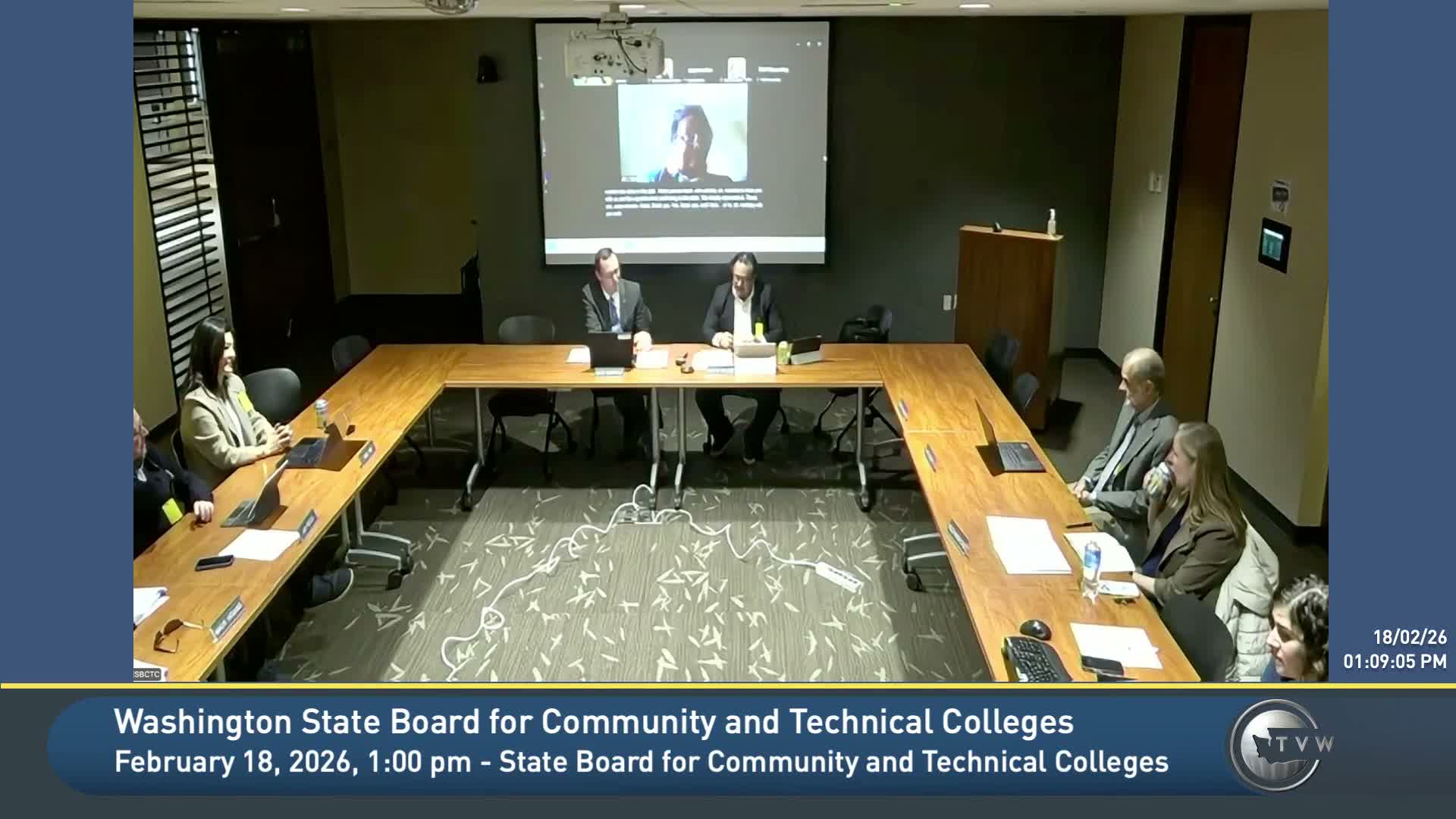
Summary
The governor's 2026 supplemental operating proposal includes no new investments for community and technical colleges, leaving colleges to cover portions of wage increases from tuition or local funds; capital bond capacity was routed largely to housing and human services, and Cascadia Community College did not receive full construction funding.
The Washington State Board for Community and Technical Colleges on Thursday reviewed Governor Jay Inslee's 2026 supplemental budget, which "includes no new investments for community and technical colleges," Stephanie Winter, director for operating budget, told the board.
Winter said the governor's proposal combines modest base reductions, including an across‑the‑board 1.5% cut and administrative services adjustments totaling $19,400,000, with maintenance‑level increases that together leave system funding largely flat. She added that projected compensation increases for fiscal year 2027 (about 2.7% for faculty and 2% for classified staff) are only partly funded by the legislature, meaning colleges will need to use tuition revenue or other local resources to cover the remainder.
"So they're going to require more money out of tuition or local dollars to fund those compensation increases in lieu of any state funding," Winter said during board discussion.
Board members pressed staff on how budget line items interact at the college level. A presenter flagged that some central services lines (for example, agency contributions to the state's self‑insurance pool) increase agency totals without delivering operational dollars to colleges. That item made the agency's bottom line look slightly higher on paper while not adding funds for campus operations, the presenter said.
On the capital side, Daryl Linning, director of capital budget, said the legislature reserved roughly $325 million of bond capacity for the supplemental session but the governor's proposal directed most of it toward housing and human‑services projects. Cascadia Community College's fully funded construction request was not included. Linning and board staff described a strategy of seeking partial construction funding in the supplemental budget so the college can pick up building permits (and avoid redesigns or delays) and request the remaining funds in the next biennial budget.
Board members said the net effect is a budgeting squeeze: costs such as wages and energy are rising while state support for college operations remains flat or slightly reduced. Board leadership asked staff to continue briefing legislators and to provide more detailed local analyses showing how district budgets will adapt if the governor's proposal holds.
The board did not take formal action on the supplemental budget at Thursday's meeting; members asked for follow‑up materials and for staff to continue engagement with budget writers in Olympia.