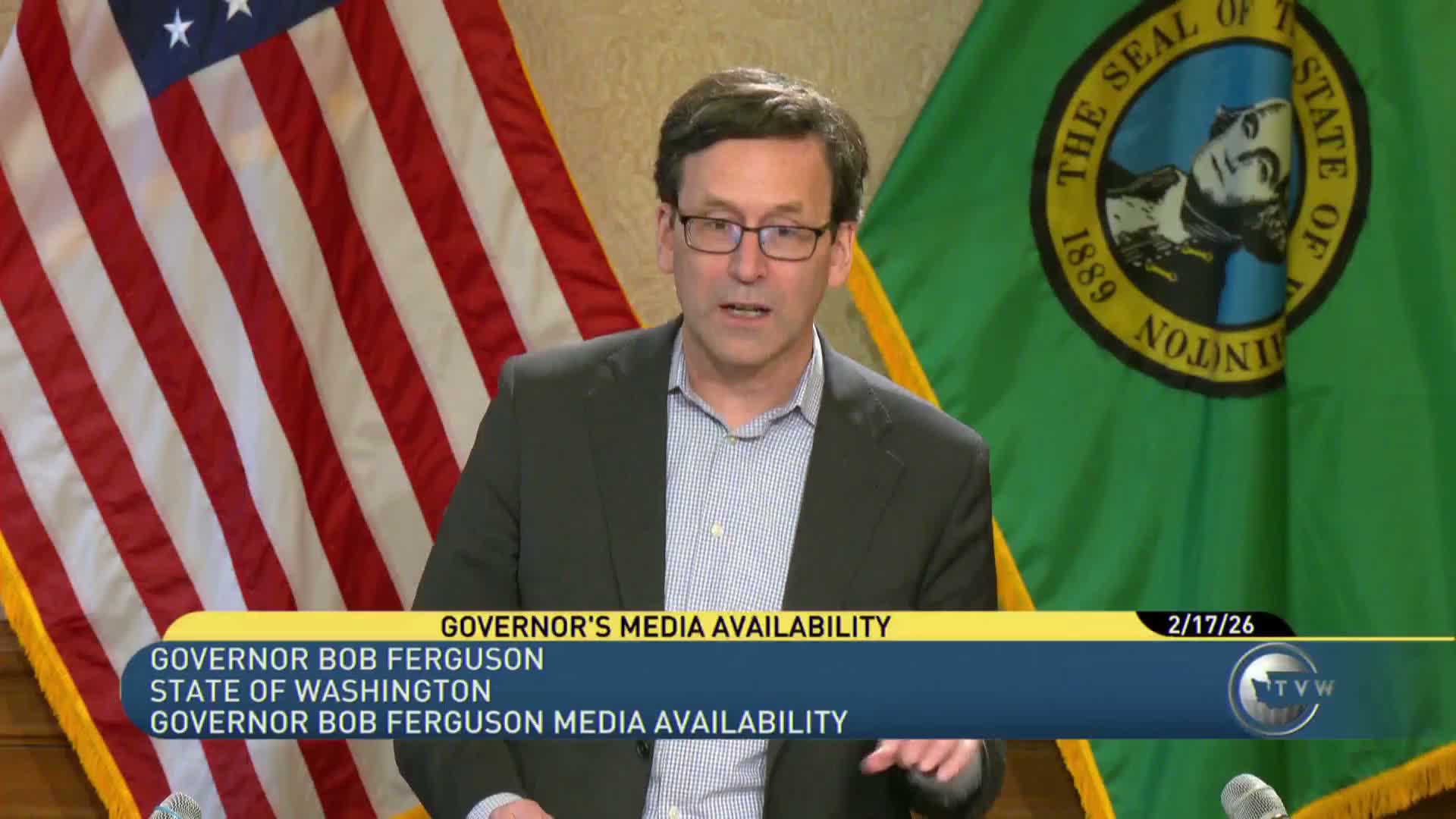
Speaker 1 outlines millionaire's tax plan to return roughly $1.9 billion to Washington households and small businesses
Loading...
Summary
Speaker 1 described a proposed income tax on earnings above $1,000,000 and detailed allocations to small-business tax credits, an expanded Working Families Tax Credit, sales-tax relief and product exemptions; he said proposals would direct about $1.9 billion of revenue back to Washingtonians.
Speaker 1 said the state should levy an income tax on earnings above $1,000,000 and use a large share of the revenue for direct relief to families and small businesses. "I'm gonna focus... the part of the revenue that would go directly back to Washingtonians," Speaker 1 said, outlining priorities he said a bill must meet before he would sign it.
The proposal Speaker 1 described would dedicate roughly $1 billion to expand a small-business tax credit, which he said would effectively eliminate the state business-and-occupation (B&O) tax on the first $2.5 million in revenue for qualifying firms. "That means dramatically increasing the small business tax credit," Speaker 1 said, adding that the change would lift about 170,000 small businesses out of B&O liability and reduce taxes for another 30,000, saving an average of about $5,000 per business annually under his estimate.
Speaker 1 also called for a major expansion of the Working Families Tax Credit (WFTC). He said the state should raise eligibility to the existing DSHS "needs standard," eliminate the Senate's age restriction, and increase rebate amounts by about 30 percent. "It will require an investment of $180,000,000," Speaker 1 said for a portion of the expansion; he later summarized the combined WFTC changes as totaling about $380,000,000 annually and said the expansion would extend eligibility to roughly 460,000 additional households.
To ease everyday costs, Speaker 1 proposed two sales-tax holidays (a three-day weekend and a two-day holiday for items under $1,000) and permanent exemptions for certain products. He estimated holidays would return about $141,000,000 annually to consumers and said exempting diapers and baby products would cost roughly $200,000,000 per year. Speaker 1 said the combined proposals would put about $1.9 billion of projected millionaire's tax revenue back into Washingtonians' pockets, "over half of the total revenue generated."
On scope and safeguards, Speaker 1 emphasized the tax would apply only to income above $1,000,000, not to home values or retirement savings, and recommended an inflation index so the threshold would rise over time. "I've been crystal clear on that," he said when asked whether the levy would "trickle down" to other taxpayers.
Speaker 1 said he supports some rollbacks of recently enacted taxes and praised a late Senate amendment that would remove sales tax on several services. He added the state must balance short-term affordability with long-term fiscal sustainability and that many details remain to be negotiated with legislative leaders.
Reporter exchanges covered concerns that the tax could prompt high earners or corporations to leave the state, questions about the impact on married couples with combined income over $1,000,000, and how soon benefits could take effect. Speaker 1 said he had not seen conclusive evidence that the tax would force out high earners and reiterated the policy goal of returning significant dollars to lower- and middle-income households. "The people will ultimately have their say on this," he said, noting the potential for ballot and legal challenges.
Next steps: Speaker 1 said his office will continue negotiations with the Senate and House in the coming weeks to reach a bill he could sign.