Get Full Government Meeting Transcripts, Videos, & Alerts Forever!
Get email alerts on the Private Credit topic
No spam. Unsubscribe anytime.
WSIB staff outlines private‑credit rollout and innovation‑portfolio role as asset class graduates
Summary
Staff outlined a phased plan to implement private credit as an asset class — education in April, draft policy in June, staffing requests through the budget process — and described the innovation portfolio’s role incubating themes that have graduated into standalone allocations.
Staff told the board they plan a deliberate, multi‑step approach to implementing private credit as a formal asset class for the Consolidated Trust Fund. The implementation timeline calls for an educational session to the private markets committee in April, a draft private‑credit policy to committee in June and possible legislative staffing requests through the normal budgeting process.
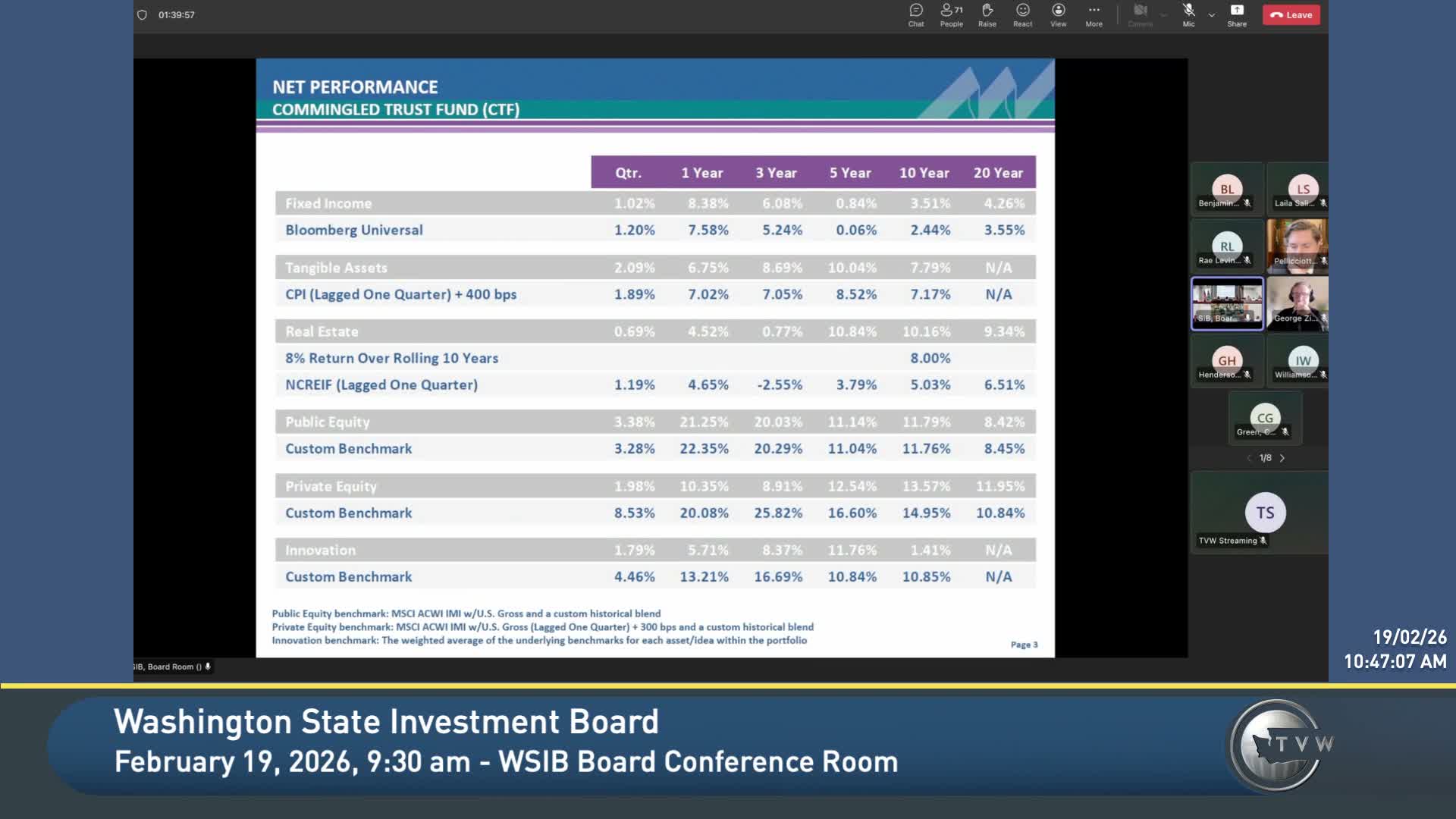
Dwayne and Julia from the innovation portfolio explained that private credit moved from incubated concept to a standalone asset class in December 2025, and they described the innovation program as a testing ground that evaluates themes with the intention of graduating successful strategies into the larger portfolio. Julia said the innovation portfolio screened 246 opportunities in 2025, a large share of which were private‑credit related, and that the team maintains high thresholds before scaling concepts into the broader portfolio.
Board members sought clarification on whether existing innovation‑portfolio private‑credit exposures would transfer into the new asset class; staff said there is not a compelling case to transfer the current satellite positions immediately and that most future investments will be under private‑credit governance, with committee and board review as needed. Staff said they will continue to monitor the innovation pipeline and return with additional detail on staffing and portfolio construction as the policy and implementation steps proceed.
The discussion emphasized governance guardrails, vintage diversification and the importance of building a small dedicated team as part of the normal budgeting cycle before materially deploying larger sums to the new asset class.