Get Full Government Meeting Transcripts, Videos, & Alerts Forever!
Get email alerts on the Regionalization And Shared Services topic
No spam. Unsubscribe anytime.
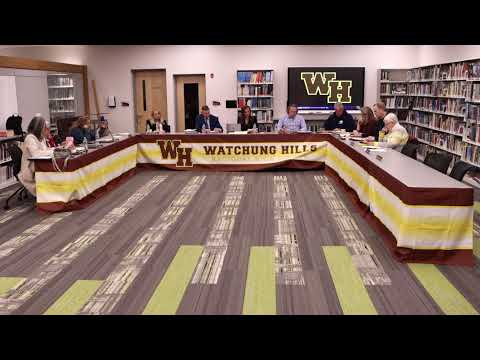
Board debates shared services, curriculum alignment; moves consent items
Summary
Trustees discussed regionalization, alignment of middle-school curricula with WHRHS, and shared-services options for health insurance before a roll-call that moved items C1–C25; board members noted the challenges of five sending districts and proposed formalizing an articulation process.
The Watchung Hills Regional High School Board spent significant time on Dec. 9 discussing shared services and curriculum alignment among its five sending districts, and recorded a roll-call vote to move a set of consent items.
Board members and administrators emphasized the difficulty of aligning curricula when multiple sending districts have different schedules, resource levels and curricular priorities. "One of the single most benefits to regionalization is you have one board and one administration," Speaker 1 said, outlining reasons the district is examining regionalization and articulation to reduce redundancies and close gaps between middle and high school expectations.
Board members described a planned approach to formalize articulation: supervisors will assemble curriculum documents from middle school through high school to compare standards, identify redundancies and develop a multi-year plan to coordinate changes within budget cycles. "Let's see what books we have that we're not teaching that we want to push from ninth grade to eighth grade," Speaker 1 said as an example of how the district might align materials across grades.
The meeting also recapped a discussion with an insurance consultant from Brown and Brown and the possibility of shared-services pooling with sending districts to address rising premiums. The consultant described pressure on the market: "The state health benefit plan is having a 31% increase," a board speaker reported, and the district expects an estimated rate the following week.
Public comment procedures were reiterated: the first public-comment period would be limited to agenda items and a second period would be open to any topic, with speakers limited to five minutes.
On procedural business at the end of the meeting the board took a roll-call vote related to the consent agenda. Miss Potter recorded abstentions on items 1 and 2 and "yes" votes on the remaining items; Miss Prossett, Miss Trump Warren and Mr. Bloomberg recorded "yes" votes. The chair then moved items C1 through C25 for consideration.
Next steps: staff will continue to develop a formal articulation framework and report back on budget and insurance estimates; consent items moved by the roll call will be processed according to the board's agenda schedule.