Get Full Government Meeting Transcripts, Videos, & Alerts Forever!
Get email alerts on the Parental Self Care topic
No spam. Unsubscribe anytime.
Keynote urges parents to 'fill your cup': intentional self‑care benefits children, speaker says
Summary
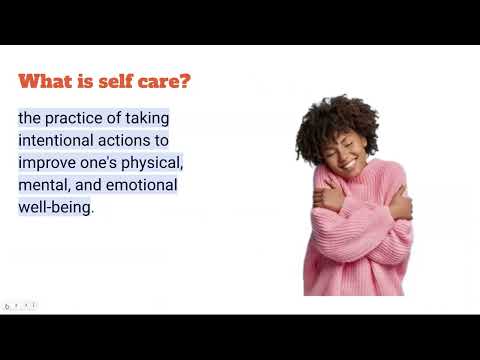
Joelle Murchison, keynote at the Connecticut Office of Early Childhood webinar, urged parents and caregivers to practice intentional self‑care—physical, mental and emotional—arguing that adults must 'fill their cup' to care for children effectively and offering practical tools and routines.
Joelle Murchison, founder and CEO of Exec Mummy Group, told attendees at a Connecticut Office of Early Childhood webinar that parental self‑care must be intentional to benefit children. "You cannot pour from an empty cup," Murchison said, using the image to explain why parents and caregivers need to prioritize their own physical, mental and emotional health before trying to meet others' needs.
Murchison, who introduced concrete practices throughout her keynote, distinguished between maintenance activities—"getting your nails done or getting your hair done"—and what she called intentional self‑care. She recommended simple, repeatable practices such as prioritizing sleep, scheduling regular blocks for exercise, setting recurring calendar events for wellness activities and taking short restorative naps when needed. "You are the arbiter, the decision maker around what self care looks like for you," she said.
To make self‑care practical, Murchison described tools she uses and recommends: apps for ordering meals and scheduling, color‑coded calendars with buffer time, journaling and setting firm boundaries with family and work. She encouraged attendees to model self‑care for children by making certain practices nonnegotiable—examples she shared included booking weekly fitness classes and protecting the time around them.
Murchison also used personal examples to normalize ordinary strategies: preparing for an upcoming trip as a time to "fill my cup," using a recurring fitness routine at a local studio, and small comforts at home such as a heated mattress pad to improve sleep. She closed by encouraging participants to define self‑care for themselves and to change that definition over time as needs evolve. She offered contact information for follow‑up and thanked the audience for participating.
The keynote emphasized actionable, low‑cost steps that parents can adapt to varied schedules and incomes—Murchison repeatedly returned to the themes of intent, boundary setting and modeling healthy habits for children as central to sustaining family wellbeing.
Next steps announced in the webinar included a short video and a panel of parent leaders who discussed grassroots strategies and barriers to regular self‑care.