Get Full Government Meeting Transcripts, Videos, & Alerts Forever!
Get email alerts on the Disability Employment topic
No spam. Unsubscribe anytime.
Deputy corporation counsel describes how BRS accessibility services enabled her career
Summary
Michelle, deputy corporation counsel for the city of New Haven, said BRS modified her vehicle, installed a home ramp and provided a stair glider that allowed her to attend law school and sustain full employment; she urged employers to hire equally qualified people with disabilities.
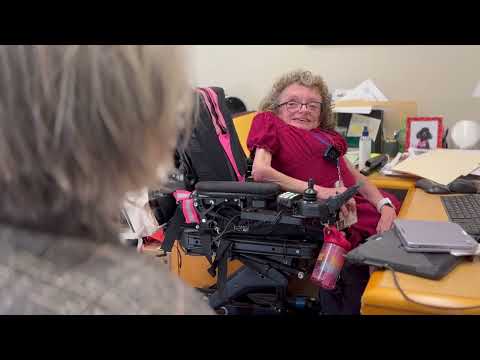
Michelle, deputy corporation counsel for the city of New Haven, recounted how BRS helped her pursue higher education and a career by adapting her vehicle and home for wheelchair access. "They modified a vehicle for me so that I could go to law school and, subsequent employment," she said.
She told listeners that BRS also supplied a ramp and a stair glider at her home that make it possible for her to enter and leave safely and to attend work: "...provided me a ramp going into my home and and a stair glider that enables me to get in and out safely in my wheelchair so that I can come to work and do my job and, be productive in my career." Michelle said those supports have been "immensely helpful in getting and maintaining full employment for the entire length of my career."
On broader employment challenges, Michelle said finding work can be difficult for people with disabilities and that connections and programs like BRS are crucial: "For people with disabilities, finding employment can be somewhat challenging... I have found and seen throughout my career that connections are the best way to do that." She recommended employers consider the value disabled employees can bring and observed, "the law says you must, hire, equally qualified people with disabilities."
Michelle framed BRS as a benefit not just to individual clients but to community health, saying many residents and employers do not fully appreciate its contribution. She encouraged those considering services to be persistent through the program's benchmarks: "It is a long process... you have to be dedicated to seeing it through... in the end, it all pays off and you get the equipment you need to enable you to work."