Get Full Government Meeting Transcripts, Videos, & Alerts Forever!
Get email alerts on the Breast Cancer Screening Policy topic
No spam. Unsubscribe anytime.
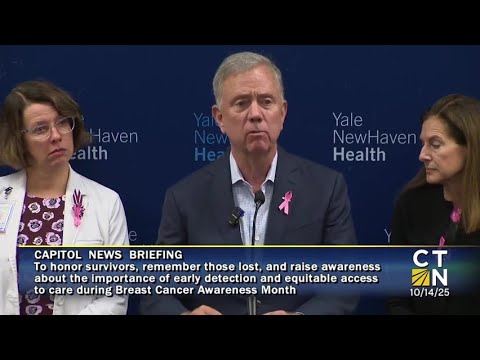
Connecticut leaders, clinicians and survivors urge mammograms at Yale New Haven awareness event
Summary
At an October event at Yale New Haven Hospital’s Smilow Cancer Hospital, Connecticut officials, clinicians and survivors emphasized that early detection saves lives, highlighted state screening programs and laws expanding diagnostic coverage, and warned that federal funding shifts could threaten care access and research.
Connecticut leaders, medical specialists and survivors gathered at Smilow Cancer Hospital in October to mark Breast Cancer Awareness Month and urge residents to get recommended screenings, saying early detection improves outcomes and preserves treatment options.
"Early detection saves lives," the lieutenant governor said, opening the program and laying out national statistics from the American Cancer Society on incidence and mortality. State leaders pointed to Connecticut policies they said support screening access, including a law requiring mammogram providers to notify women with dense breasts and a 2019 state law that expanded breast ultrasound coverage for people with a family history or those 40 and older; speakers also cited a more recent state law extending additional diagnostic coverage to fully insured and group-plan members (statute numbers not specified in the program remarks).
Dr. Eric Weiner, director of Yale Cancer Center and president and physician-in-chief of Smilow Cancer Hospital, framed breast cancer as biologically diverse and said progress in detection and treatment over the past two to three decades has improved outcomes for many patients. "We really have, in some ways, 2 different types of breast cancer," Weiner said, adding that researchers must balance minimizing overtreatment for less-threatening cancers while seeking better therapies for aggressive disease.
Department of Public Health leaders outlined state efforts to reach people who lack insurance or face cost barriers. Commissioner Manisha Jutani said DPH partners with hospitals, federally qualified health centers and other programs to provide about 5,300 mammograms annually to residents who might otherwise lack screening. She noted the importance of prevention and described the department’s role in outreach and diagnostic follow-up.
Several speakers shared personal accounts. Deputy Commissioner Lisa Morrissey described a March diagnosis detected on a routine mammogram that was "so faint and small that it was almost missed," and said even experienced health-system navigators face insurance authorization challenges. "If I had trouble navigating it," Morrissey said, "we need to do more and we need to do better." Nurse Carrie Sandin, diagnosed at her first mammogram after turning 40, said rapid same-day follow-up and treatment steps made a lifesaving difference: "Early detection saved my life."
Officials also directed residents to state resources for help scheduling screenings and diagnostic care, including the Connecticut Department of Public Health screening page (ct.gov/dphscreening) and a state assistance phone line provided during the event. Governor Ned Lamont urged residents to take advantage of no-cost or low-cost options, and warned that proposed federal changes could jeopardize Medicaid and near-term research budgets that support cancer detection and treatment work.
The program concluded with a brief media Q&A and acknowledgments to Yale New Haven Health hosts and Breast Center staff, who were available to answer questions after the event. No formal votes or policy actions were taken during the program; speakers emphasized outreach, screening access and ongoing research as next steps.