Get Full Government Meeting Transcripts, Videos, & Alerts Forever!
Get email alerts on the Commercial Lease Renegotiation topic
No spam. Unsubscribe anytime.
Legal clinic offers step-by-step playbook for restaurants to renegotiate leases during cash strain
Summary
A True Legal presenter, hosted by Elevate Hennepin, told restaurant owners to "reach out early, even before you miss the rent," and outlined a three-step playbook—prepare numbers, propose a temporary relief structure, and sign a written amendment—plus practical options landlords may accept.
Kwame Osapo Ado, a business lawyer with True Legal, told restaurant owners in an Elevate Hennepin webinar that the immediate goal in lease talks during a downturn is simple: “preserve your cash flow, stay open, and ideally at the end, document a deal that you can actually live with.”
The advice was framed as general information, not legal advice. Kwame cautioned that any specific outcome depends on the exact lease language and individual facts, and he urged tenants to approach landlords early—"even before you miss the rent"—to preserve negotiating leverage.
Why it matters: Many restaurants operate with volatile weekly revenue while their rent remains fixed, Kwame said. That mismatch can quickly make rent the largest pressure on a business. He urged owners to make the landlord’s choice a rational one by showing clear financials and offering temporary, documented remedies that reduce the landlord’s vacancy and enforcement risk.
What to prepare: Kwame recommended presenting a short "data pack" that includes at least the last three months of sales, current cash on hand, and a 60– to 90‑day forecast (best, base and worst cases). He said this demonstrates credibility and the concrete steps the business is taking to stabilize, such as trimming hours, focusing on higher-margin items, or renegotiating vendor terms.
Relief options explained: Kwame outlined three common, negotiable structures: - Rent deferral: skip payments for a defined short period with a written repayment schedule to be paid later—useful if the business expects to rebound. - Temporary rent reduction: pay a lower rent for a defined term (for example, 60–90 days) with a clear end date. - Temporary percentage‑rent adjustment: lower the sales‑based percentage charged to the landlord while gross sales are down (for example, reduce a 5% take to 2%). He warned that proposals must be workable for landlords and avoid asking for open‑ended or multi‑year no‑pay plans.
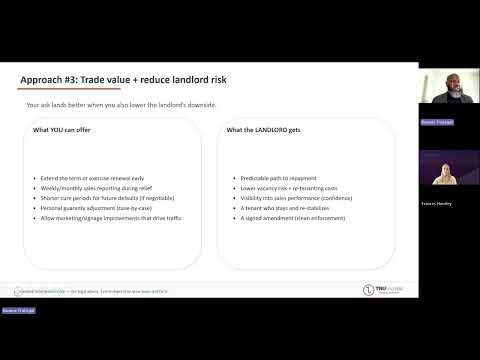
Other negotiation levers: Kwame encouraged tenants to discuss relief not only on base rent but also on common area maintenance (CAM) and other triple‑net costs. Suggestions that create landlord certainty—such as extending the lease term, locking in an upcoming renewal, offering short‑term personal guarantees, or permitting additional signage/marketing—can make landlords more willing to accept temporary relief. Tenants should also offer transparency, for example weekly or monthly sales reports during any relief period.
Practical drafting and timing: Kwame repeatedly advised that any agreed changes be reduced to a formal amendment signed by both parties. He recommended setting a review date (commonly 60–90 days) to reassess, and he noted landlords typically have mortgage obligations that affect their flexibility and may require compromise on cure periods or late‑fee enforcement.
Limitations and legal caution: The presenter emphasized this is general guidance, not legal advice; specific lease provisions—including force‑majeure or COVID‑related clauses, notice requirements, security deposits, and personal‑guarantee language—may materially alter what relief is available and how it should be structured.
Next steps and local help: The webinar closed with a reminder that Elevate Hennepin offers free advising, vetted resources and cohort programming for small businesses seeking help preparing proposals and understanding options. The presenter and host urged owners to document any deal as a signed amendment to the lease.
The session ended with a summary three‑step playbook: communicate early with clear numbers, propose a structured relief plan that trades value, and formalize the agreement in a written, signed amendment.