Get Full Government Meeting Transcripts, Videos, & Alerts Forever!
Get email alerts on the Hb 59 Identification Verification topic
No spam. Unsubscribe anytime.
Utah committee advances HB 59 to tighten fake-ID checks, allow temporary ID holds at bars
Summary
A House committee unanimously recommended HB 59, which refocuses enhanced ID screening on bars and taverns, allows establishments to hold suspected fake IDs temporarily while calling police, and clarifies checks for 'interdicted' driver licenses; sponsor said the bill balances public safety and business concerns.
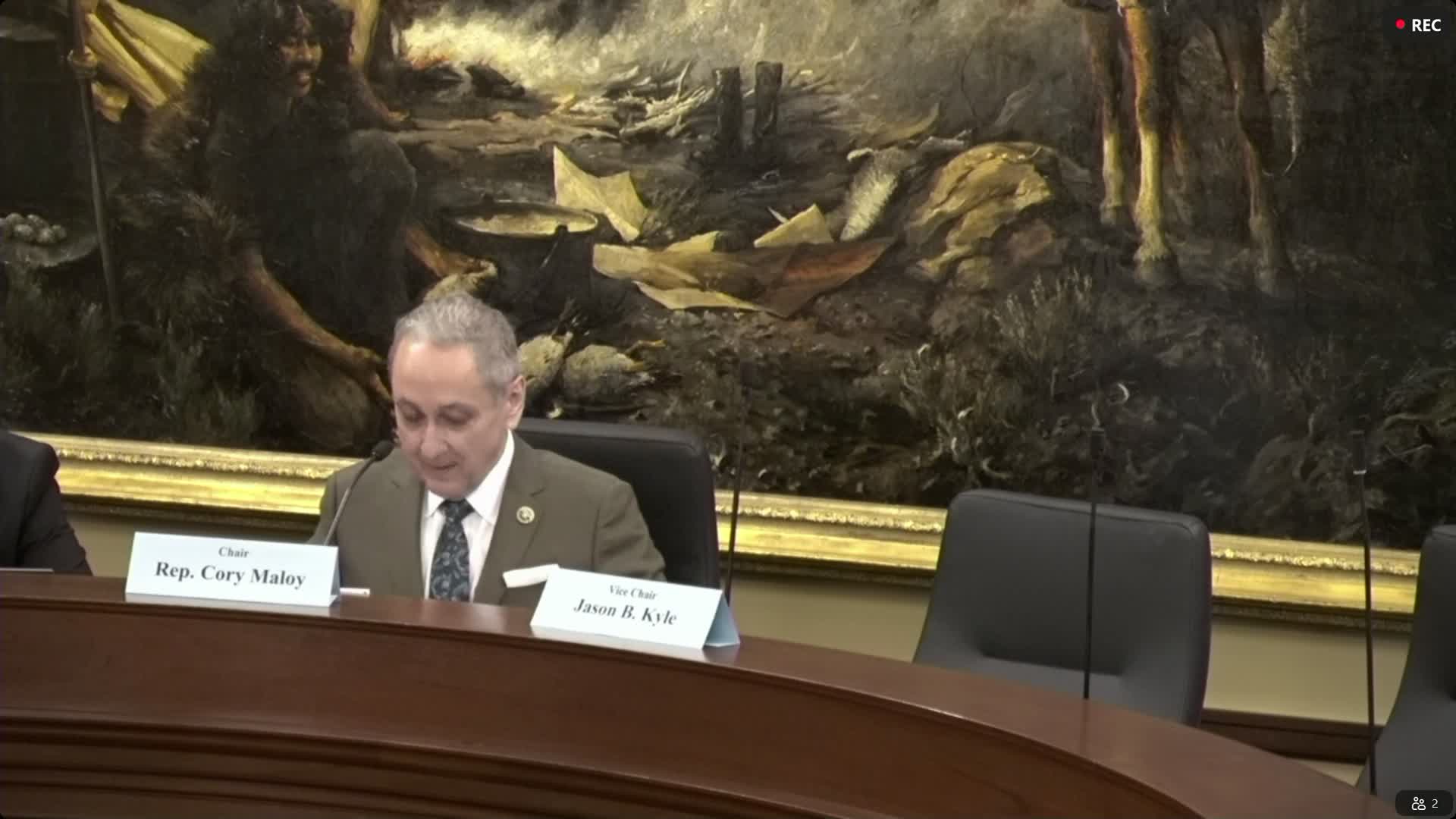
A state House committee on Tuesday voted to favorably recommend the first substitute to House Bill 59, a bill sponsors said will curb underage access to alcohol by sharpening rules for detecting and handling fake identification.
Representative Edelson, the bill’s sponsor, told the committee the measure grew out of last year’s "interdicted persons" law and a State Bureau of Investigation operation that produced large seizures of counterfeit IDs. "If somebody has a serious criminal history related to alcohol — an extreme DUI or automobile homicide — they would be listed as an interdicted person," he said, describing the interdicted license and a requirement that license photos show no-alcohol sales status.
The substitute narrows the scope of the enhanced scanning requirement so it applies primarily to bars and taverns rather than all establishments that serve alcohol. It restores a prior threshold for full ID checks in other venues: staff should check IDs if a patron appears 35 or younger.
The bill also adds an optional tool for licensees: an establishment may temporarily hold a suspected fake ID and call law enforcement to verify it. Under the substitute, if police cannot respond within 30 minutes the establishment must return the ID; at any time the licensee may choose to release it. Edelson said the change is intended to discourage minors from fleeing one bar and attempting to enter another with the same counterfeit.
Art Brown, who testified as an industry prevention advocate, urged support on public-safety grounds, saying minors who drink face much higher crash risks and that modern counterfeit IDs circulate cheaply and widely. "Most of [these fake IDs] you could get 24 of them for $25," Brown said.
Michelle Carigliano, executive director of the Salt Lake Area Restaurant Association, said the substitute addressed business complaints — such as elderly patrons without ID being turned away under the broader previous standard — and supported the added authority for bars to hold IDs and notify police.
Committee members asked staff and the sponsor detailed questions about enforcement and technology. One member asked whether the enhanced scanning software covers foreign driver's licenses; staff said the current software is not programmed to capture foreign licenses and establishments must use an existing procedure (including retaining identifying information for seven days) for foreign documents. Representatives also asked about off-premise retailers and whether convenience stores, gas stations or grocery stores are affected; sponsor said those retail categories remain subject to different, preexisting requirements and that the confiscation language in the substitute applies only to bars and taverns.
Representative Burton moved the favorable recommendation. The sponsor noted the bill contains a retroactive effective date of Jan. 1 and emphasized the public-safety rationale. The committee took a roll call vote and the motion passed unanimously.
The bill will proceed to the next step in the legislative process.