
Senate committee advances bill to set state ‘guardrails’ for programmable money
Get AI-powered insights, summaries, and transcripts
Subscribe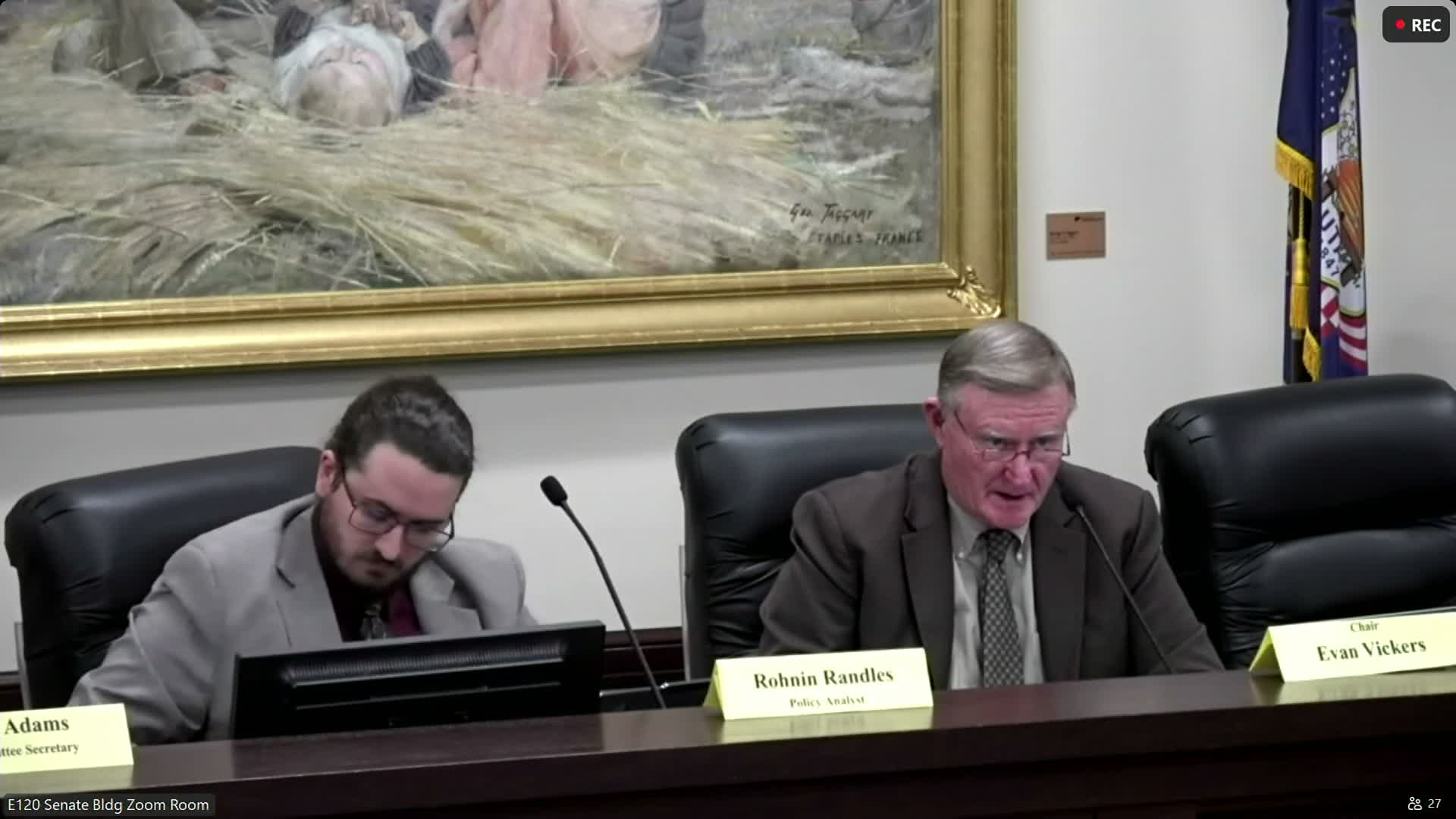
Summary
Senate Bill 298, a substitute sponsored by Sen. Stratton, was recommended favorably after expert testimony warning programmable digital money could enable surveillance or social-credit features; sponsors said the bill signals state preferences and would not preempt federal authority.
Senator Stratton presented Senate Bill 298 (substitute) to establish state-level guardrails around programmable money and certain privately issued digital currencies. He said the aim is to preserve financial choice and ensure citizens retain alternatives if programmable features are introduced in widely used digital money.
Catherine Austin Fitts, publisher of the Solari Report, described risks she said are associated with programmable money, including the potential for surveillance and social-credit-style constraints. She linked the rise of stablecoins to pending federal actions, noting Congress passed the 'Genius Act' last year to regulate stablecoins and that additional legislation (the Clarity Act and a Senate draft called the Responsible Innovation Act) could expand digital-asset issuance. "Digital money or assets that are issued on a distributed ledger...can be integrated with both governmental or private systems that operate like a social credit system," she warned.
Public counsel and academic witnesses described how state-level signaling can influence federal and market policy. The committee adopted the substitute and voted to recommend SB 298 favorably; committee members noted federal primacy on legal tender but said a state statement of policy can shape implementation choices.
Next steps: The substitute was adopted and SB 298 will be reported to the Senate for further consideration.