
Senate committee backs bill to bar compelled ideological affirmations in schools
Get AI-powered insights, summaries, and transcripts
Sign Up Free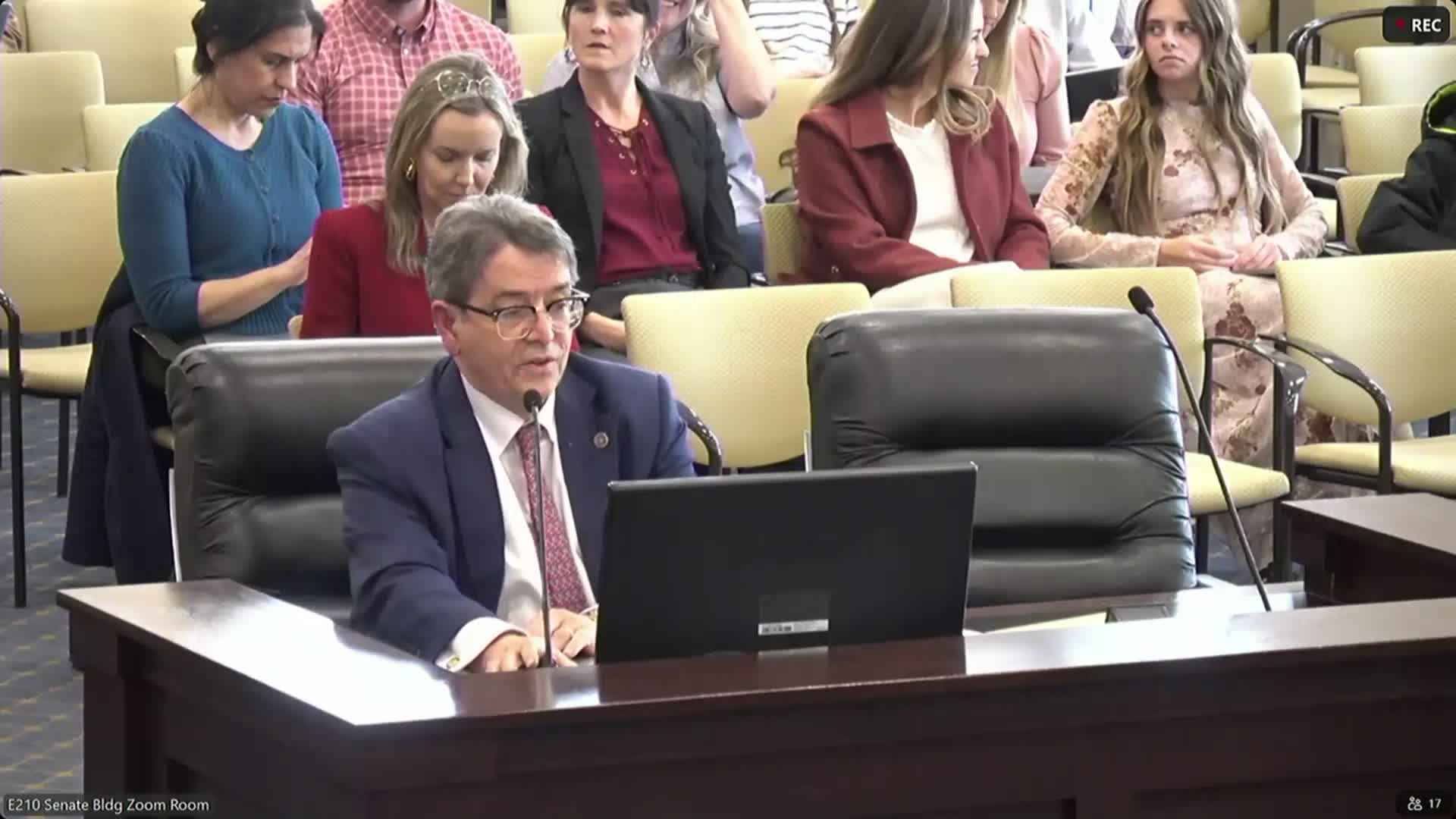
Summary
The Senate Education Committee unanimously advanced SB 295, a bill that prohibits public institutions from requiring ideological affirmation for employment, enrollment or participation while preserving academic freedom and adding reporting and compliance mechanisms.
Senate Education Committee members voted unanimously to advance first substitute SB 295 after the sponsor said the bill restores a constitutional line between protected speech and coerced belief at public institutions.
The sponsor described the measure as aimed at preventing institutions from conditioning status on ideological statements while preserving classroom academic freedom. He cited two local incidents — a guest author withdrawal at Weber State and the denial of a Turning Point USA student club at a high school — as examples of institutional overcorrection that the bill seeks to address. "Public institutions must treat individuals equally, regardless of personal identity characteristics, and may not compel ideological affirmation as a condition of employment, enrollment, or participation," the sponsor said.
SB 295 clarifies treatment of student clubs and allows nondebatelike panels and forums so long as membership or approval decisions are not based on ideology. The bill also adds structured reporting, a biennial compliance review and remediation timelines intended to bring accountability similar to other institutional performance measures.
During committee discussion, members praised the effort to protect viewpoint diversity while warning against unintended consequences. Senator Reebie called the bill a corrective to an overcorrection and said it ‘‘moves in the right direction.’’ Senator Baldry thanked the sponsor for encouraging competing ideas and quoted John Stuart Mill on the value of hearing opposing views.
Public testimony largely supported the bill’s goals while urging careful drafting. Jeff Lambert, commissioner of higher education, said the Board of Higher Education had not taken a position but welcomed the bill’s emphasis on the ‘‘marketplace of ideas’’ and credited sponsor responsiveness to board feedback. Brad AC, president of AFT Utah Local 4723, said the union was not taking a position but urged protections for academic freedom, citing concerns about threats and doxxing of faculty. Several faculty witnesses, including Gabe Byers of Salt Lake Community College and Sydney O’Shea of USU’s AFT chapter, asked lawmakers to coordinate SB 295 with other education bills and implementation processes to avoid duplicative reporting and confusion on campuses.
Heidi Alder, general counsel and government liaison for Weber School District, praised the substitute and recommended minor cleanups to ensure clubs named for demographic groups (for example, Latinos in Action) are not excluded by the language.
After closing public comment, the committee adopted the substitute and Amendment 1 (which clarified club-language) by voice vote and then unanimously recommended the amended substitute favorably to the full Senate.
The committee summary recorded that the measure preserves classroom instruction, research and invitation of guest speakers while barring compelled ideological statements as conditions for institutional status. Next steps: the bill moves to the Senate floor as recommended by committee.