House panel holds property-tax cap bill after testimony on bond ratings and local control
Loading...
Summary
HB 484, which would cap annual property-tax levy increases by local taxing entities at 5% unless voters approve a larger increase, was held in committee after testimony raising bond-rating, timing, and local-control concerns; statewide officials and local elected leaders offered opposing views.
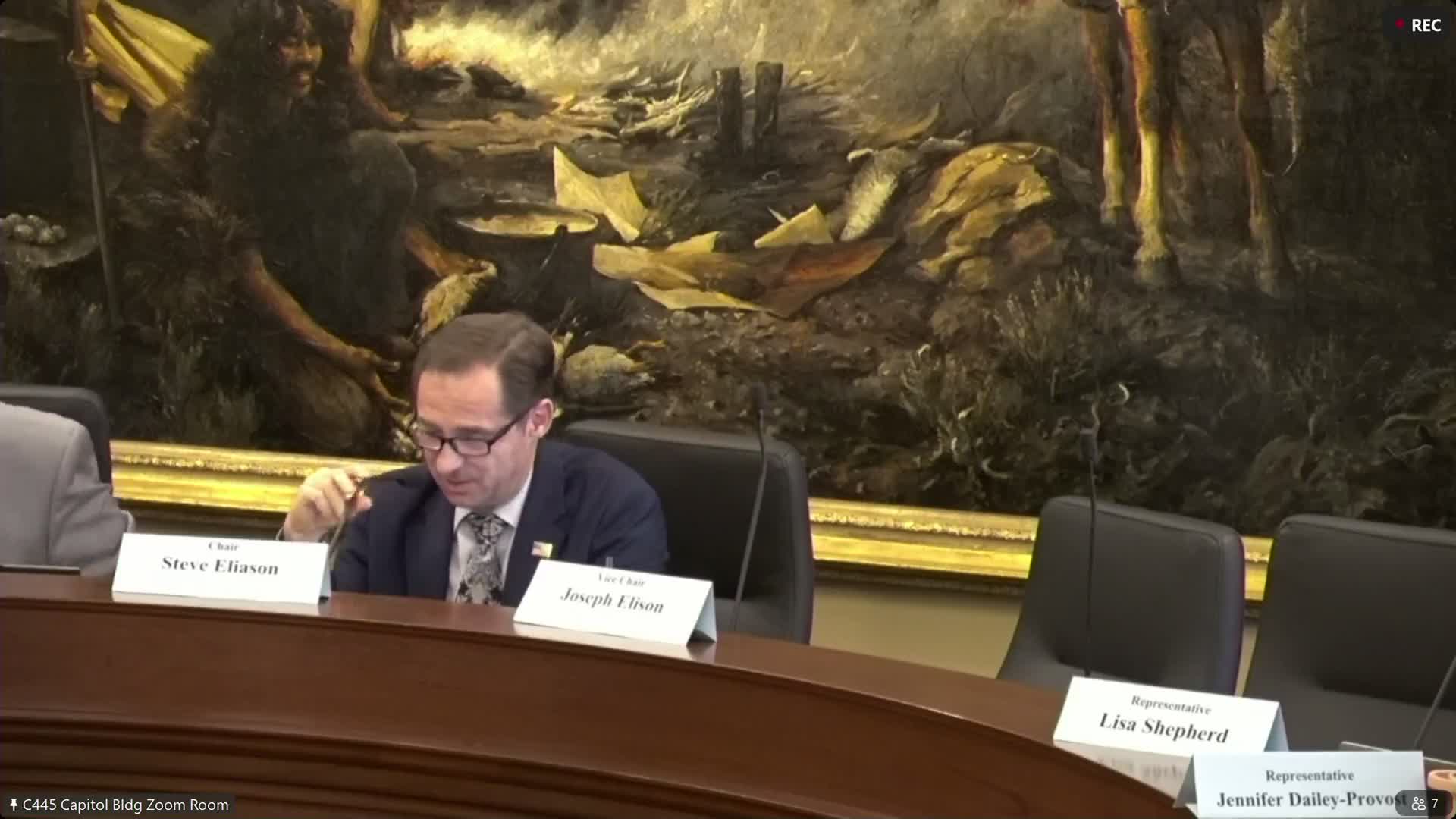
The House Revenue & Taxation Committee took up HB 484 Feb. 19, a proposal by Representative Kristofferson to cap annual increases in local property-tax levies at 5% and require voter approval for larger jumps. After more than two hours of debate and public testimony, the committee voted to hold the bill for further consideration.
Sponsor rationale: Representative Kristofferson framed the bill as a consumer-protection measure aimed at reducing sudden, steep property-tax increases that can hit households on fixed incomes. He described the cap as a balance — allowing modest annual increases while requiring voter approval for larger hikes — and said the bill removes a temporary exemption that had previously delayed local participation in state equalization programs.
Opposition and fiscal concerns: Salt Lake County Assessor Chris Stavros testified online that a hard 5% cap on budgeted property-tax revenue "would be detrimental to the bond ratings of the taxing entities involved." Todd Haber, Granite School District’s business administrator, testified that the bill misunderstands the voted-board guarantee mechanics and warned that lowering certified rates could reduce the number of increments eligible for state guarantee, producing fiscal consequences for school districts. Mayor Troy Walker of Draper, representing the League of Cities and Towns, opposed the bill on principle, stressing local elected officials’ role and warning that limits on revenue flexibility could impair public-safety services.
Public comment split: Online and in-person public testimony included a county assessor cautioning about bond-rating impacts and residents urging tighter limits on tax increases. One resident noted the personal burden of large increases and supported greater accountability.
Committee action: Representative Shepherd moved to hold the bill to allow coordination with related measures and further study; after discussion the committee voted to hold HB 484, with the motion passing 7–3.
Why it matters: The bill raises trade-offs between taxpayer protections and local governments’ capacity to fund services and maintain bond ratings; testimony emphasized timing complications of local budgeting cycles and the potential for unintended fiscal impacts on school equalization and borrowing costs.
What’s next: The bill was held in committee; sponsors and stakeholders can use the additional time to reconcile bond-rating, timing and equalization concerns addressed during testimony.