Get Full Government Meeting Transcripts, Videos, & Alerts Forever!
Get email alerts on the State Energy Policy topic
No spam. Unsubscribe anytime.
Committee backs HB 514 to expand Energy Council and authorize limited financing tools for energy infrastructure
Summary
The committee unanimously recommended HB 514, which expands the Energy Council, designates it as the state energy financing institution for certain federal programs, and authorizes the council to issue bonds or revenue-backed debt to finance energy generation and transmission while preserving limitations on state credit exposure.
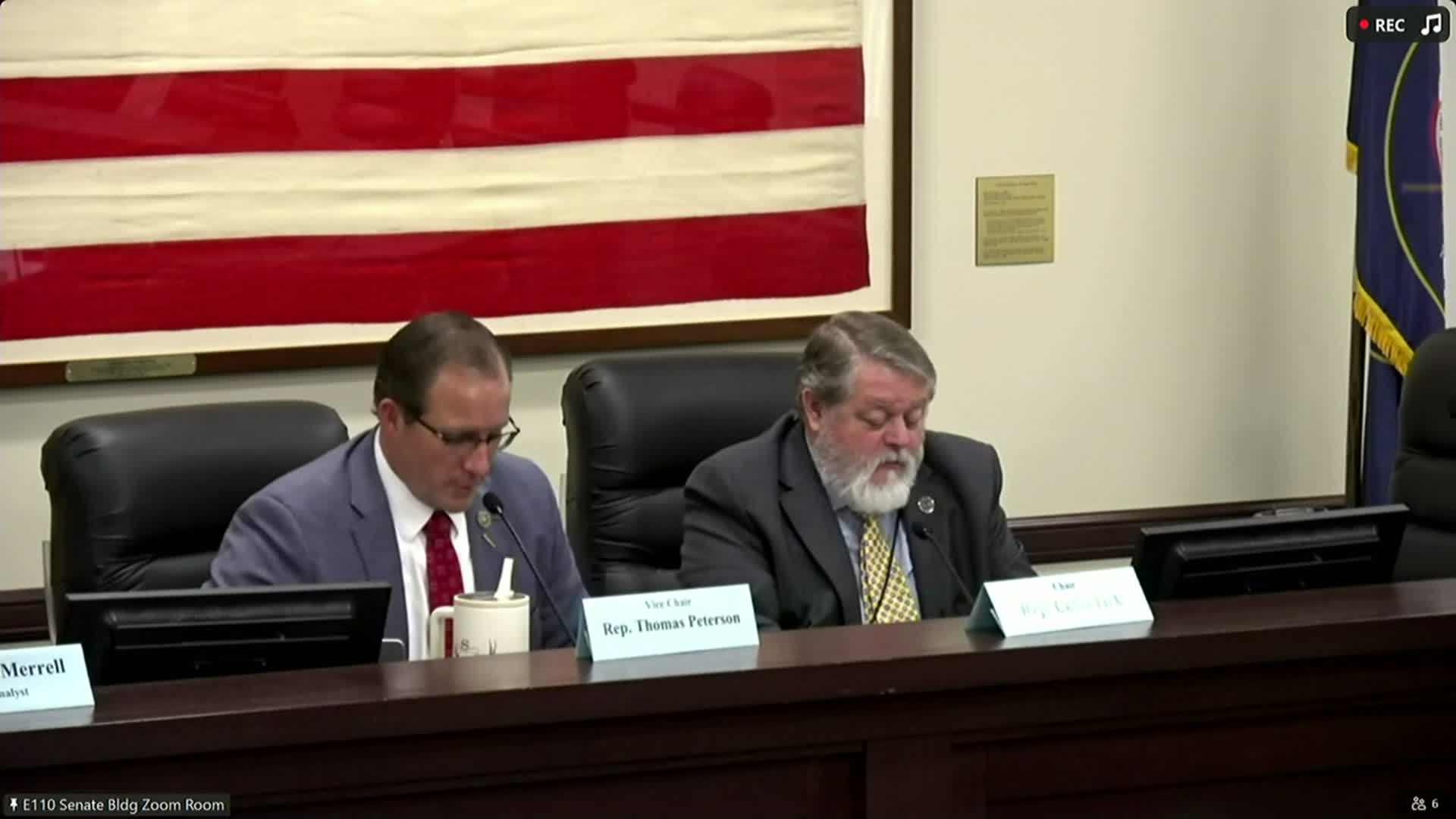
SALT LAKE CITY — Lawmakers on the House Public Utilities and Energy Standing Committee voted unanimously to give HB 514 a favorable recommendation, approving changes that expand the Energy Council’s membership, designate it for certain federal financing roles and permit limited use of bonds or other debt instruments to support energy infrastructure projects.
Representative Walter, sponsor of the bill, described three main changes: increase Energy Council membership from five to seven, designate the council as the state energy financing institution for federal programs, and authorize the council—working with the treasurer and legislative fiscal analysts—to issue debt for energy-generation or transmission assets, with repayment limited to project revenues rather than the state’s full faith and credit. “What we're proposing to do is authorize the energy council in an appropriate way ... and that we specifically do not commit the full faith and credit of the state of Utah,” Walter said.
Witnesses from state agencies and industry largely supported the measure. Emmy Lisovsky, director of the Office of Energy Development, said the tools could help plan a statewide energy future. Tom Carter of Rocky Mountain Power backed the council's expanded duties while cautioning that a dual-chair structure can dilute leadership clarity. Jeff Hartley, representing a nuclear developer, said financing tools can materially lower project costs for capital-intensive projects such as nuclear.
Committee members asked how projects financed under the authority would be operated; sponsors said third-party operators (for example, Rocky Mountain Power or Deseret Power) would likely run assets and that safeguards are being developed with the treasurer’s office, the governor’s office and the legislative fiscal analyst to ensure liabilities remain limited to project revenues.
Sponsor and members framed the measure as a long-term response to regional market dynamics and potential reliability and affordability risks from neighboring states. The committee passed HB 514 out with a favorable recommendation by unanimous voice vote.