Get Full Government Meeting Transcripts, Videos, & Alerts Forever!
Get email alerts on the Firearm Safe Harbor topic
No spam. Unsubscribe anytime.
Committee advances SB 86 to protect privacy and collect data for firearm safe-harbor program
Summary
SB 86, which clarifies that law-enforcement-held voluntary safe-harbor firearm records are protected and establishes aggregate data collection, passed the committee unanimously; law enforcement witnesses urged protections for participants and noted storage capacity challenges in rural agencies.
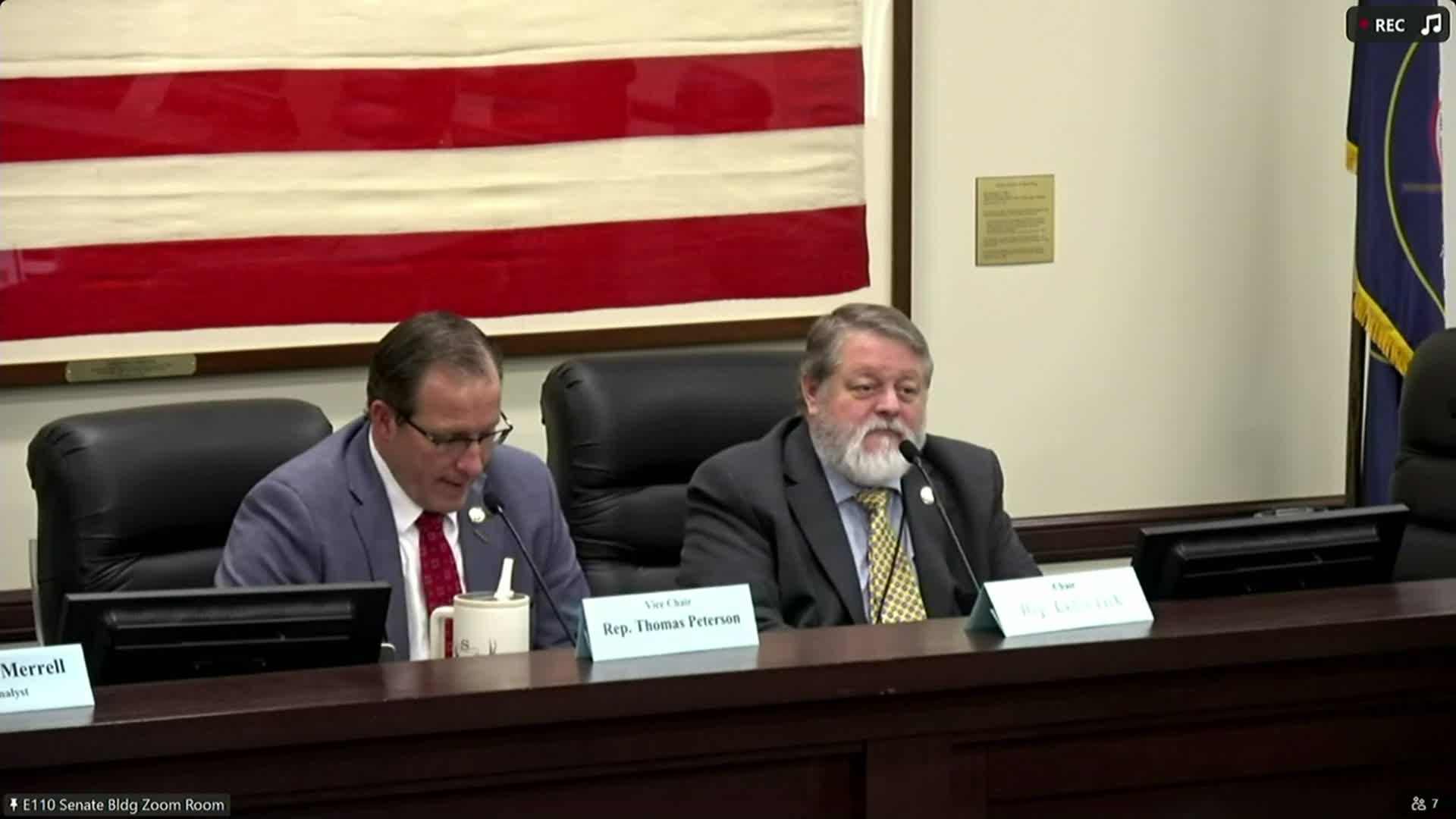
SALT LAKE CITY — The House Public Utilities and Energy Standing Committee voted unanimously to pass SB 86, the firearm safe-harbor amendments, after testimony from the bill sponsor and law enforcement advocates describing program benefits and operational challenges.
Senator Wilson, the sponsor, said the bill clarifies the records status for firearms temporarily held by law enforcement when a household experiences a mental-health crisis and establishes a data-collection mechanism so the state can quantify how many firearms local agencies hold. “The law enforcement agency will hold on to those firearms until they feel their mental health crisis is over with,” Senator Wilson said, describing the voluntary safe-harbor concept.
David Spadafore, representing the Utah Chiefs of Police Association, told the committee that a cross-section of local agencies already use safe-harbor practices and that many departments reported storing weapons at times. He said one rural agency grew from about 190 to roughly 230 stored firearms and that storage capacity and secure facilities are a practical concern. “That's the problem,” Spadafore said, urging aggregation of data while protecting individual privacy.
Committee members asked whether officers inquire about serial numbers or provenance when weapons are turned in; Spadafore said many agencies accept weapons without questions so people feel safe turning them in. Members also discussed how long items are kept and what happens to heirloom firearms; witnesses said agencies generally attempt to return items to owners or families and that return practices vary, which is why longitudinal data could inform future policy.
The committee adopted the bill and later moved SB 86 to the consent calendar. Sponsors and committee members described the proposal as the product of multi-year stakeholder work and said they expect to refine technical details (such as storage standards and return timelines) in future sessions.