Get Full Government Meeting Transcripts, Videos, & Alerts Forever!
Get email alerts on the Solar Panel Disposal topic
No spam. Unsubscribe anytime.
House committee backs HB 323 to create disposal and recycling program for spent solar panels
Summary
The House Public Utilities and Energy Standing Committee unanimously recommended second-substitute HB 323, directing DEQ to study solar-panel recycling, set up a fee-funded program to cover disposal costs, and require EPA hazardous-waste testing where appropriate; industry representatives said they will fund the study through the assessment.
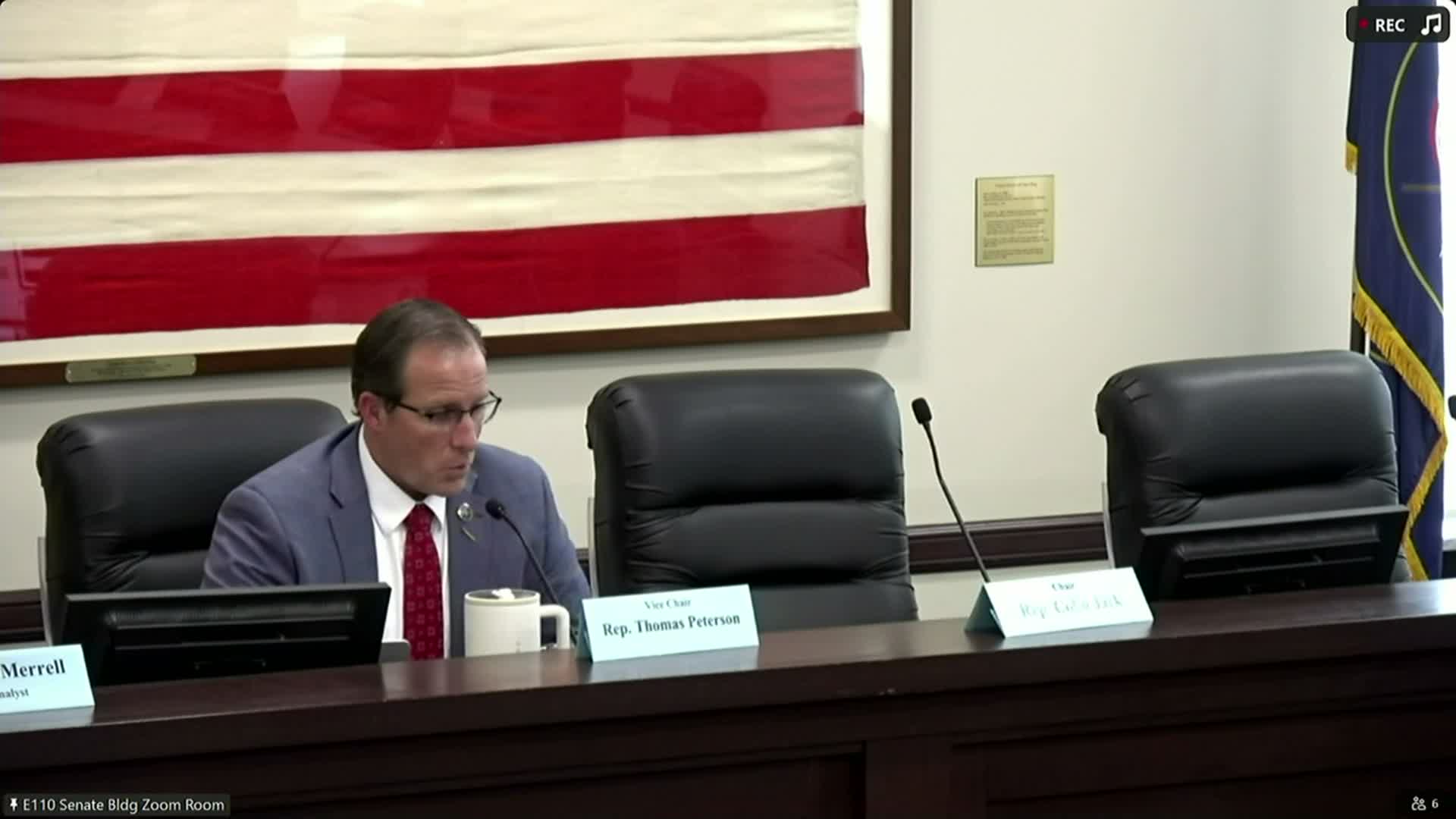
SALT LAKE CITY — The House Public Utilities and Energy Standing Committee on Thursday voted unanimously to give second substitute HB 323 a favorable recommendation, approving a framework to manage the end-of-life handling of utility-scale and rooftop solar panels in Utah.
Representative Jack, the bill sponsor, told the committee the measure creates a decision process that prioritizes recycling where feasible and otherwise requires panels to be managed based on an EPA hazardous-waste determination. “If you go down this flowchart, what to do with spent solar panels ... the first decision diamond you get to is do I recycle them or do I dispose of them,” Representative Jack said in opening remarks.
The bill directs the Department of Environmental Quality to convene stakeholders, fund a study and stand up a program that will ultimately be funded by industry user fees rather than general taxpayers. Tim Davis, executive director of the Department of Environmental Quality, said the proposal is a three-phase approach: collect an assessment to pay for a study, use the study to design an implementation plan and fee structure, and then put a long-term fee in place. “In 2028 is when the program really goes into effect,” Davis told the committee.
Environmental engineer Tim Jimenez, who testified as a private citizen, urged caution and cited experience with legacy cleanup costs from other industries. He referenced the federal liability framework enacted in 1980 to explain why bonding or compensation funds are needed to avoid future taxpayer-paid cleanups.
Committee members asked practical questions about county bonds, landfill capacity in rural areas and whether panels can be processed to recover critical minerals. Davis said the study will evaluate the linkage between decommissioning plans and recycling options, noting that some panel types are more recyclable than others and that reuse or recycling may occur in-state or in neighboring states.
Industry witnesses supported the bill. Sam Johnston, policy director for InterWest Energy Alliance, said industry supports the second substitute and that “industry is funding this study that the department is going to conduct, with this fee,” signaling a commitment to steward projects in local communities.
The bill specifies a short-term assessment schedule to start collecting revenue to stand up the program; sponsor and DEQ testimony made clear the early assessment is intended to fund program start-up and will be replaced by a long-term fee recommended after the study. The sponsor also noted a date in the first substitute that was corrected by the second substitute to remove an inadvertent extension of an earlier code deadline.
The committee adopted the second substitute and then voted to pass HB 323 out with a favorable recommendation in unanimous voice votes. The bill will proceed through the legislative process to additional committee consideration and floor action.