
House clears a slate of bills on consent and third-reading calendars, including measures on medical cannabis, naloxone and energy planning
Get AI-powered insights, summaries, and transcripts
Sign Up Free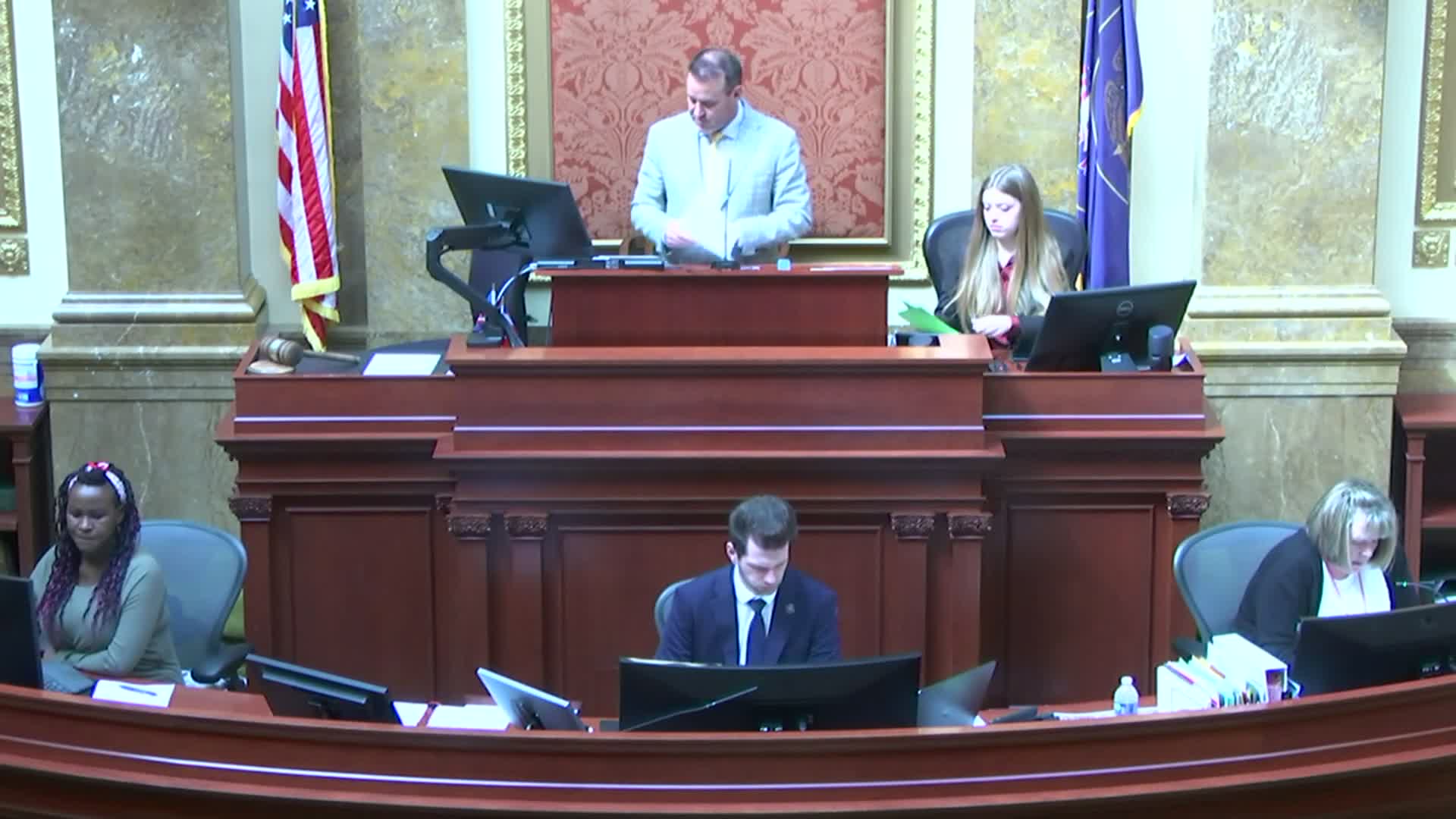
Summary
The Utah House adopted multiple committee reports, passed a batch of consent and third‑reading bills (medical cannabis clarifications, naloxone immunity, energy and wildlife consultation, online marketplace preemption, and others) and assigned numerous bills to standing committees; the chamber recessed until 2 p.m.
The House spent the morning on committee reports, consent items and third-reading bills, approving a broad set of measures that covered health, public safety, commerce and natural resources.
Key votes at a glance: - SB 66 (medical cannabis pharmacy license amendments): Clarified regionality/density language and assigned authority to the Department of Agriculture and Food; passed 70–1. - HB 519 (unclaimed property modifications): Treats certain digital assets as unclaimed property after three years and allows conversion to cash for search and reclamation by the treasurer’s office; passed 65–0. - SB 87 (naloxone amendments): Provides immunity for first responders and nonprofits using naloxone up to two years past expiration; passed 70–0. - SB 132 (spaceport bill): Allows closed meetings for trade-secret discussions, expands exploratory committee scope to include reentry, and extends the site recommendation deadline to Nov. 30, 2026; passed 68–1. - SB 19 (digital evidence amendments): Directs local law enforcement to handle mobile-phone forensics or partner regionally and reserves RCFL for higher-priority cases; passed 67–0. - SB 51 (school safety modifications): Creates a flagging/transfer coordination process for students with violent histories to avoid transferring problems between schools; passed 65–1. - SB 108 (online marketplace amendments): Preempts certain platform-level regulation by municipalities while allowing local regulation of hosts/operators; passed 66–1. - SB 39 (investment zones recodification): Consolidates existing investment-zone statutes without new policy; passed 46–22. - SB 127 (pediatric readiness): Aligns state readiness standards with the National Pediatric Readiness Project to improve emergency care for children; passed 70–1. - HB 412 (energy development planning amendments): Requires wildlife consultation for large solar and wind projects and a 30-day response from the Division of Wildlife Resources; passed 70–1. - HB 94 (criminal accounts receivable amendments): Clarifies how payments to treatment or classes can be credited against fines in some cases; passed 74–0. - HB 261 (electronic information privacy act amendments): House adopted an amendment and passed the second substitute, clarifying law enforcement interactions with electronic information privacy protections; passed 71–0. - HB 303 (family court amendments): First substitute passed; bill adds a definition of coercive control, establishes custody-evaluator rosters, and sets procedures for conflict over court-ordered mental-health treatment; passed 68–1.
Several committee reports were adopted earlier in the morning and multiple other bills were placed on calendars or assigned to standing committees for further consideration. After announcements from leadership and caucuses, the House recessed until 2 p.m.
What to watch: The bills listed above will proceed to the Senate (or further committee work) where text and fiscal notes may be revisited. The spaceport and parental-access measures drew specific floor debate and will likely be tracked by stakeholders in their respective policy areas.