Get Full Government Meeting Transcripts, Videos, & Alerts Forever!
Get email alerts on the Religious Freedom topic
No spam. Unsubscribe anytime.
Senate passes House concurrent resolution on religious freedom after brief exchange over public symbols
Summary
The Utah Senate adopted House Concurrent Resolution 4 endorsing religious‑freedom language and encouraging respectful interfaith dialogue. During floor discussion Sen. Kwan asked whether a line protecting "religious symbols in public spaces" would permit a Buddhist altar; sponsor Sen. Stratton said his interpretation would include diverse faith expressions. The resolution passed 23‑1.
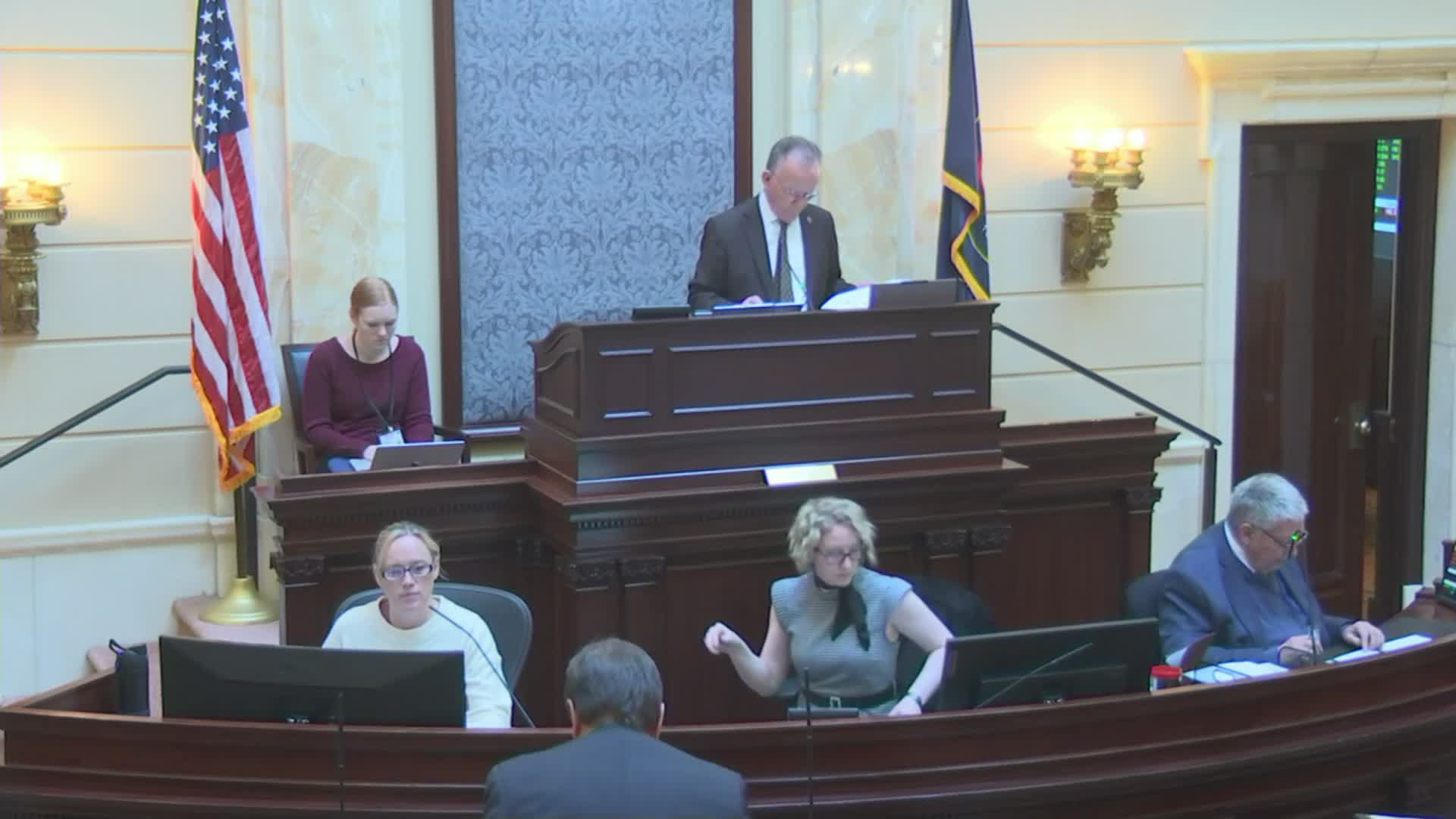
The Utah Senate on day 30 adopted House Concurrent Resolution 4, a measure the sponsor described as reaffirming the state’s historical religious traditions while encouraging respectful dialogue among diverse faiths.
Senator Stratton, the sponsor, said the resolution "documents and states in clarity the historical foundation" and cites recent Supreme Court cases related to free exercise and religious expression. During floor exchange Sen. Kwan asked whether language in the resolution protecting "religious symbols in public spaces" could allow, for example, a Buddhist altar in public spaces.
Senator Kwan asked, "There is a statement on line 67 ... Religious symbols in public spaces. And I'm wondering if this would allow, some in my community, to put up, a Buddhist altar in a public space." Senator Stratton replied: "My understanding and my interpretation would be yes," and emphasized that the resolution is intended to "recognize ... respect of all religions."
The Senate recorded support after brief discussion and the resolution passed on a roll call: 23 yea, 1 nay, 5 absent. President Adams said the resolution will be returned to the House for the speaker’s signature.
Why it matters: The resolution frames the Senate’s posture on religious expression in public spaces and signals legislative interest in clarifying how courts and local governments might treat displays or ceremonies tied to faith traditions. The exchange on the floor clarified that, as the sponsor reads it, the resolution’s draft would protect diverse religious expressions in public settings.
What happens next: The resolution will be transmitted to the House for its follow‑up steps; it is a statement of legislative intent and does not by itself create enforceable new statutory restrictions.