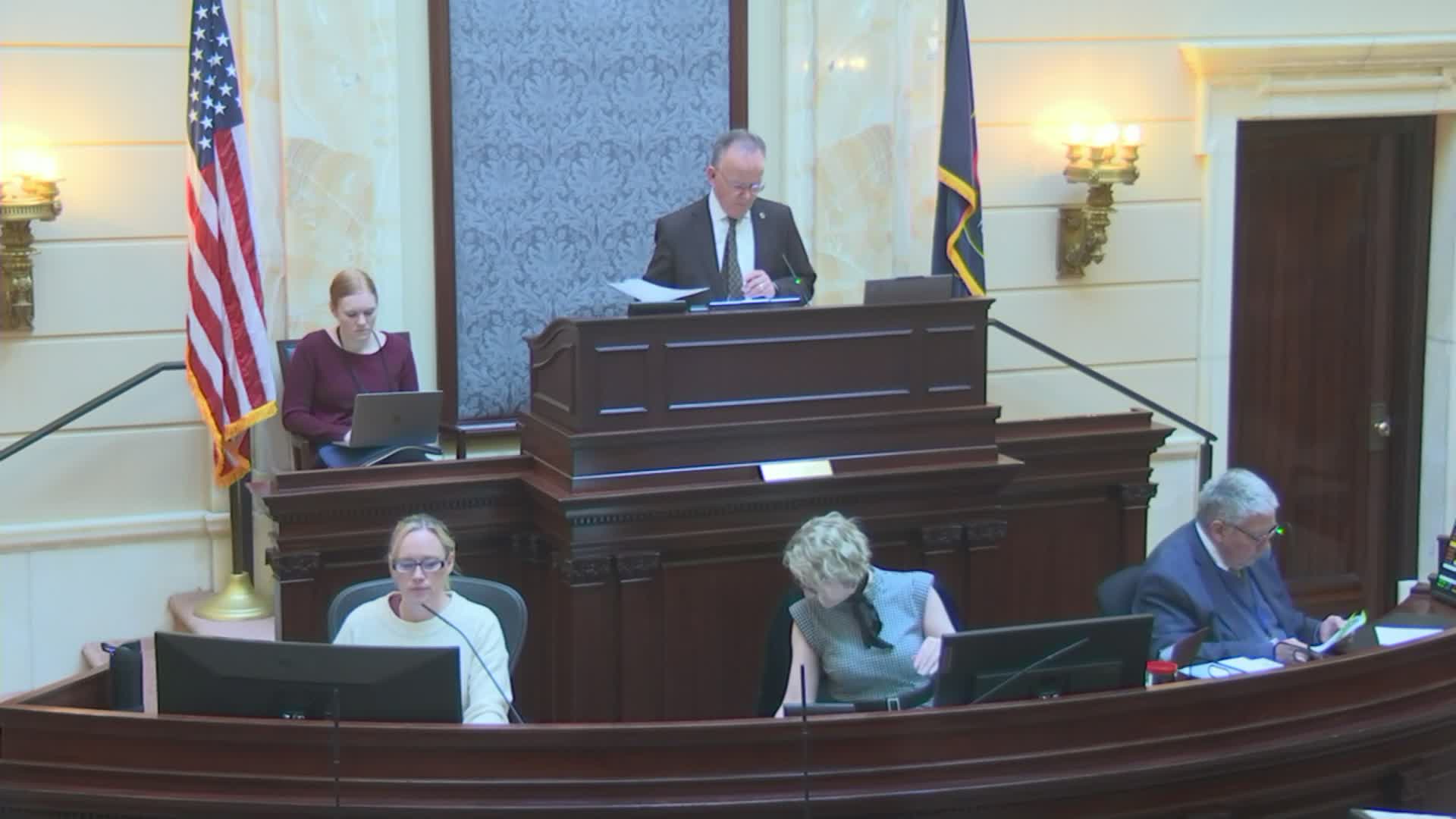
Utah Senate advances wide slate of House and Senate measures; several bills passed unanimously
Loading...
Summary
On day 30 of the 2026 Utah legislative session the Senate approved a broad roster of bills on consent and third‑reading calendars, including measures on estate planning, prescription‑medication rules, traffic roundabout signals and water and infrastructure matters; several passed unanimously or with strong margins.
The Utah Senate moved a broad group of bills through the chamber on the morning of day 30 of the 2026 legislative session, approving measures that ranged from technical code corrections to changes in health‑care and transportation law.
Bills approved on the consent or third‑reading calendars included: - First Substitute House Bill 164 (patient nondisclosure reporting): 24‑0‑5 (absent). The measure clarifies nondisclosure clauses and required disclosures to patients about reporting to the Division of Professional Licensing. - House Bill 181 (Uniform Electronic Estate Planning Documents Act): passed, 25‑0‑4 (absent). Sponsor Sen. McKell said the bill adds electronic signature authority consistent with the Uniform Law Commission model. - Senate Concurrent Resolution 10 (advanced air mobility): passed, 24‑1‑4 (absent). Sen. Harper said the resolution recognizes Utah’s investment in drone ports, charging infrastructure and partnerships with FAA ahead of increased use around the Olympic Games. - House Bill 128 (roundabout signaling clarifications): passed, 22‑0‑7 (absent). The bill clarifies that turn signals are not required when entering or exiting a roundabout. - First Substitute House Bill 20 (correctional facility capacity): passed, 23‑3‑3 (absent). Sponsors described a restricted account to fund capacity expansions that may only be appropriated by the legislature.
Several other technical and policy bills were read and placed on the calendar during the morning. Many of the measures were advanced with little or no floor debate and will be returned to the House for further consideration or enrolling as appropriate.
What’s next: the Senate recessed until 2 p.m. and will return to further consideration of bills that were encircled or tabled for fiscal review. Any measures that were passed here will proceed through the next steps in the legislative process, including enrollment and transmission to the House or signature steps as required.