Get Full Government Meeting Transcripts, Videos, & Alerts Forever!
Get email alerts on the Cdbg Funding topic
No spam. Unsubscribe anytime.
El Centro Council splits limited CDBG pot among senior meals, day center, youth and outreach programs
Summary
Council approved a divided distribution of Community Development Block Grant public-service funds after an hour of debate and public comment, awarding $15,000 to the senior nutrition program, $10,410 to the homeless day center, $15,000 to PALS and $10,000 to Salvation Army social services.
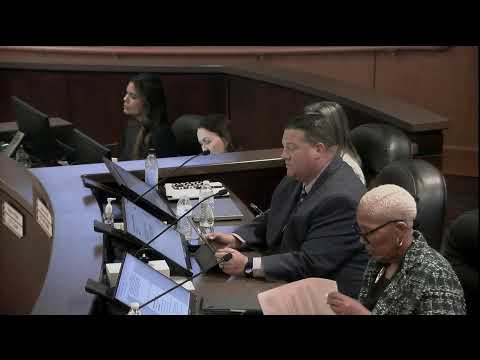
El Centro — After more than an hour of discussion and public comment, the City Council on Tuesday approved a plan to allocate constrained Community Development Block Grant (CDBG) public-service funds among local nonprofits.
The council voted to award $15,000 to the senior nutrition program, $10,410 to the homeless day center, $15,000 to El Centro PALS and $10,000 to Salvation Army social services. Staff had emphasized that CDBG rules cap public-services spending at 15% of the city’s annual allocation and that requests submitted exceeded the available public-services share.
Adriana, the city’s CDBG program presenter, told the council the city used the previous year’s $502,738 allocation as a planning baseline and reminded members of the legal caps on program administration (20%) and public services (15%). She summarized requests that included $25,000 for Catholic Charities’ senior meal delivery and a separate $25,000 homeless-day-center request, $15,000 for PALS recreation, and two Salvation Army requests totaling about $49,000.
Council debate focused on fairness and reach. One councilor urged widening outreach to more than the usual list of past recipients so newer or smaller nonprofits could compete; another said the homeless day center’s services — showers, laundry, meals and case management — merited continued support.
Public commenters included Captain Freddie Miranda of the Salvation Army, who described the agency’s prevention-intervention-integration model and asked the council to help scale services, and Mr. Rodriguez, who urged officials to find extra dollars if possible.
Council members advanced several allocation scenarios on the dais before settling on the motion that passed 3–2. The motion’s proponents said their split sought to preserve core services for seniors and the unhoused while giving smaller or previously overlooked groups an opportunity to receive support.
The council’s approval is expressly tied to the CDBG rules staff reviewed; staff noted that the final award amounts will be proportionally adjusted if the actual federal allocation differs from the planning baseline. City staff also said unspent CDBG funds can be reallocated in future program years within the federal rules.
The council did not eliminate any applicant from consideration; instead, members reallocated available dollars across the highest-priority services identified in the staff report and by public testimony. Council instructed staff to complete required program paperwork and to document outreach steps to broaden future applicant notification.