Get Full Government Meeting Transcripts, Videos, & Alerts Forever!
Get email alerts on the Election Materials topic
No spam. Unsubscribe anytime.
Committee approves first substitute to clarify use of candidate photos in mailed public materials
Summary
The committee unanimously recommended a first substitute to Senate Bill 264, clarifying that a public official's photo may appear in mailed materials if all candidates for the same office are featured equally. Mill Creek officials said the change fixes an unintended ban on routine voter guides.
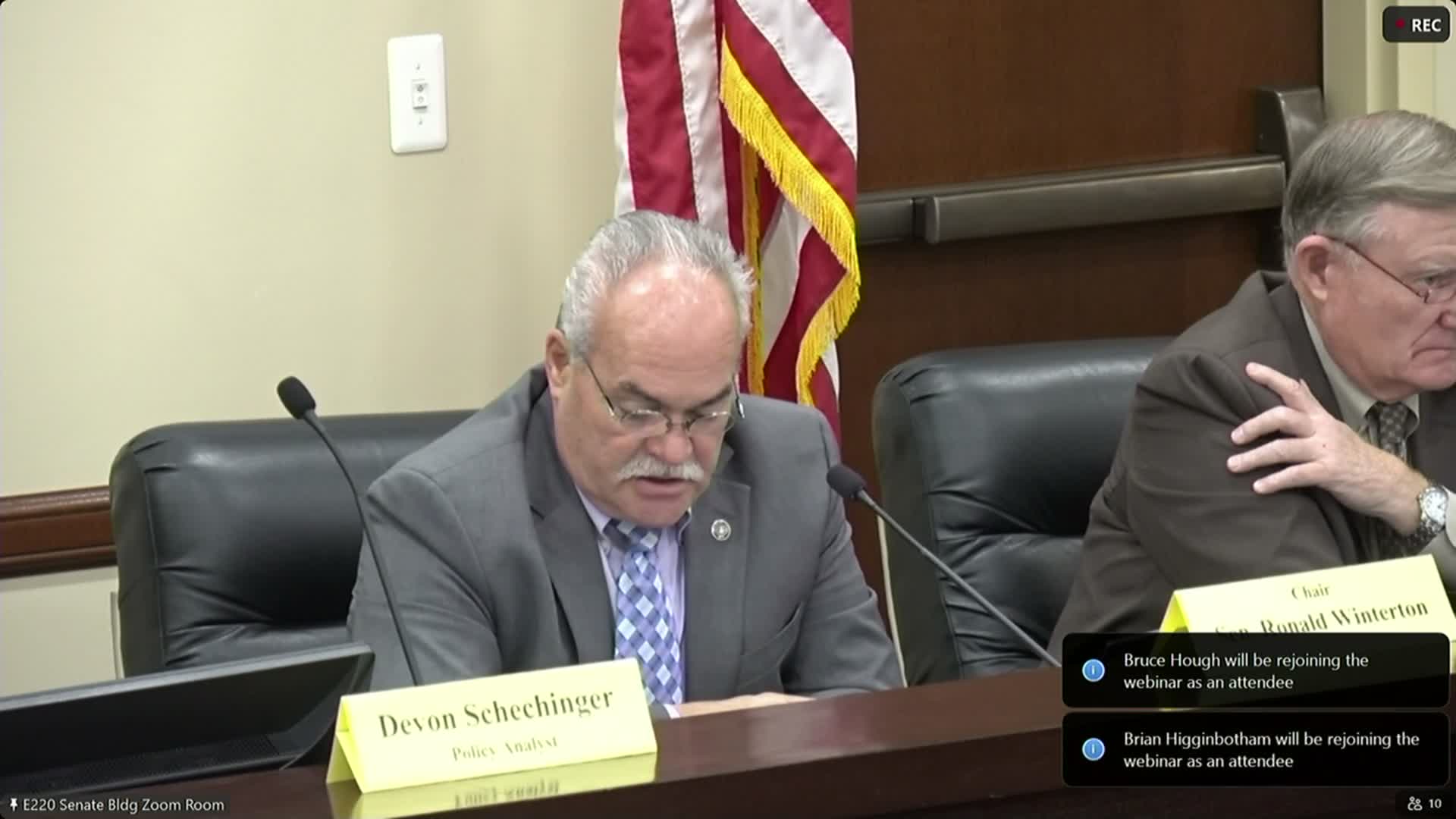
Senate Bill 264 returned to the Senate Government Operations and Political Subdivisions Standing Committee with a first substitute intended to address unintended consequences from last year's restriction on public funds being used to display public officials' photos near election time.
The sponsor said the prior legislation sought to curb placement of public-official photos in materials that reach the public within 60 days of an election, but that the measure had prevented municipalities from including routine newsletter voter guides and candidate headshots. He asked the committee to adopt a limited fix.
Tom (identified in the transcript as "Tom to siren"), a Mill Creek City Council member, described the municipal practice: "On every single issue we have a listing on the back with headshots and just, our council positions and phone numbers," he said, arguing that the newsletter and brief candidate statements help inform voters in low-turnout municipal contests. He and the sponsor said the first substitute would allow a public-official photo to appear if the same treatment is applied to all candidates for that office.
Senator Vickers moved to delete the bill in title and body and replace it with the first substitute; the motion passed unanimously and the committee recommended the first substitute to the full Senate. No public opposition was recorded during the committee hearing.
The change is narrowly scoped to address municipal voter guides and similar communications; the first substitute was presented as a targeted amendment rather than a broad rollback of last year's ethics-related restrictions.