Get Full Government Meeting Transcripts, Videos, & Alerts Forever!
Get email alerts on the Public Access Roads topic
No spam. Unsubscribe anytime.
Committee backs Shelly bill to protect longstanding access across Class D roads and allow wildlife closures on state lands
Summary
The House Transportation Standing Committee adopted First Substitute HB 444 to clarify access over Class D roads, preserve historic public access to public lands and private lots, and let the Division of Wildlife Resources close roads on wildlife management areas when needed. The committee voted to favorably recommend the measure by voice vote (11 Aye).
Representative Troy Shelly told the House Transportation Standing Committee that First Substitute HB 444 clarifies when low‑standard “Class D” roads remain open for public access and when landowners may close them.
Shelly said the bill prevents individual landowners from gating routes that have historically been used to access public lands or other private parcels, and adds language allowing the Division of Wildlife Resources to permanently close roads on wildlife management areas to protect sensitive habitat. “It prevents an individual from closing a road on their private property that has always been used to access the public property,” Shelly said.
Why it matters: Class D roads in Utah are frequently unpaved trails and two‑track routes that provide the only practical access to hunting, camping and other recreation on state parks, sovereign lands and other public holdings. Proponents argued the substitute restores common‑sense clarity about access rights where longstanding use has effectively created a public access easement.
Committee members asked how common Class D roads are and who has jurisdiction. Shelly and staff said jurisdiction is shared between counties and the state and the bill preserves a role for counties while creating a process for county/state coordination. Dylan Hoyt, deputy director at the Public Lands Office, explained the first substitute removed an earlier recording requirement (and an associated $228,000 cost) by allowing the office to be strategic in which county recorders they work with.
Agency and public positions: Justin Shannon of the Division of Wildlife Resources told the committee the changes “are really gonna be good for wildlife,” citing situations where temporary or permanent closures on WMAs help protect migratory or nesting birds and prevent animals from being driven into hazardous areas. UDOT’s Liefelder said UDOT is neutral and appreciated the sponsor’s cooperation; Matt Anderson of the Utah Sportsman’s Caucus urged the committee to support the bill as improved and workable.
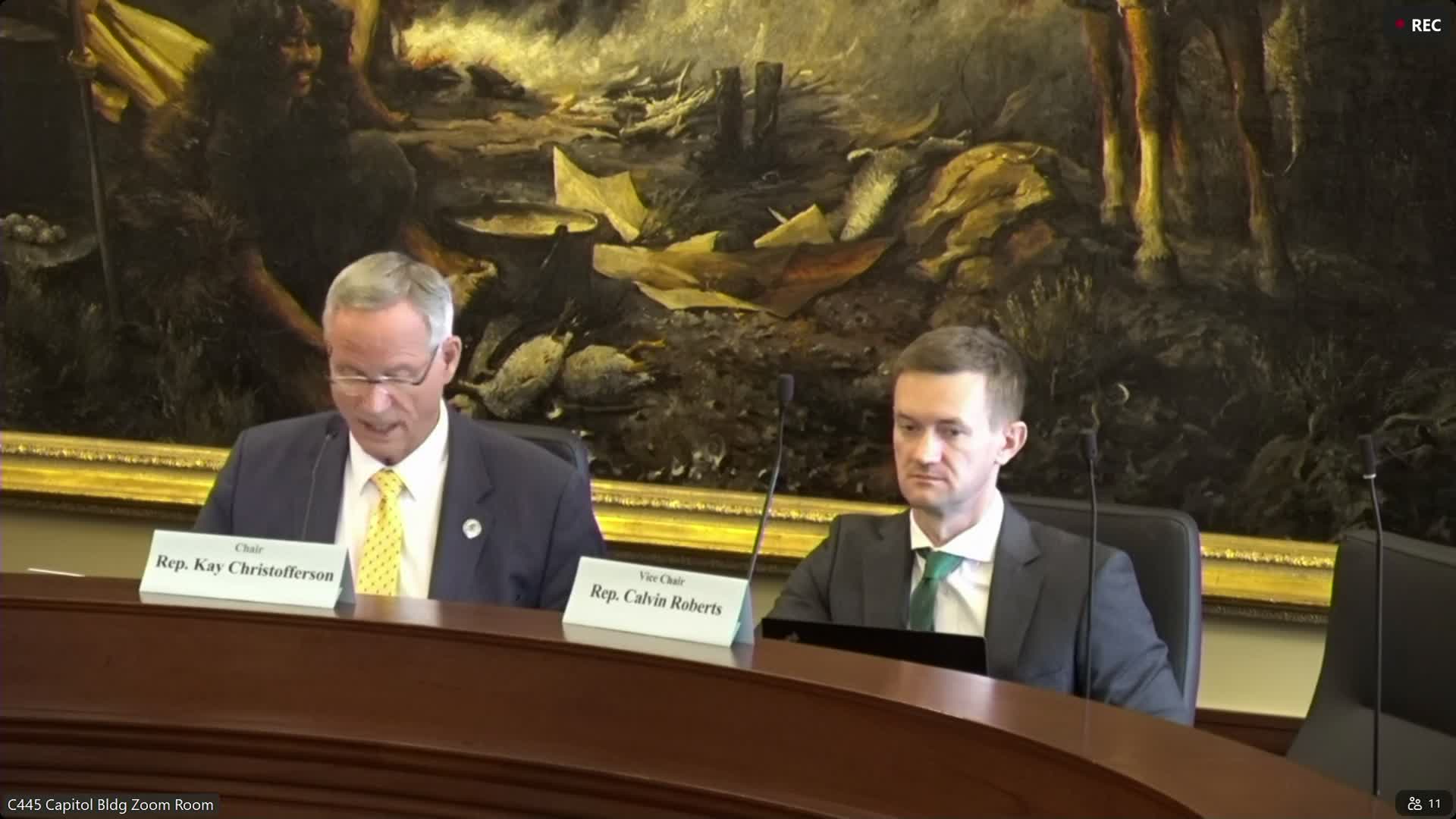
Committee action: Representative Thurston moved to adopt the first substitute and later moved that the committee favorably recommend First Substitute HB 444. The committee adopted the substitute and passed the favorable recommendation by voice vote; the clerk recorded “11 Aye.”
What’s next: The committee forwarded the substitute with a favorable recommendation for further consideration by the House. The sponsor indicated he would welcome placing the bill on the consent calendar if members agree or further floor debate if needed.