Get Full Government Meeting Transcripts, Videos, & Alerts Forever!
Get email alerts on the Public Order topic
No spam. Unsubscribe anytime.
Committee adopts substitute and sends criminal‑offense bill to full House after debate over protest and religious‑worship protections
Summary
The House Judiciary Committee adopted Substitute 1 to HB 331 and voted 7–2 to favorably recommend the bill. The substitute clarifies when unlawful detention, intentional concealment of identity while committing an offense, and deprivation of religious rights can be treated as aggravated offenses, including when conduct advances the interests of a designated foreign terrorist organization.
The committee adopted Substitute 1 to House Bill 331 and favorably recommended the substitute to the full House on a 7–2 roll call after a lengthy sponsor presentation, constitutional analysis from an outside co‑presenter, and public comment.
Representative Clancy, sponsor of the bill, said the substitute clarifies that blocking a vehicle during a protest can fall under existing unlawful‑detention law when done intentionally and against a person’s will, and that some offenses should be elevated when committed to advance the interests of a designated foreign terrorist organization. "The purpose of this piece of legislation is really to bring clarity both to people who are protesting on the street and to drivers to make sure what's appropriate and what's not," Clancy told the committee.
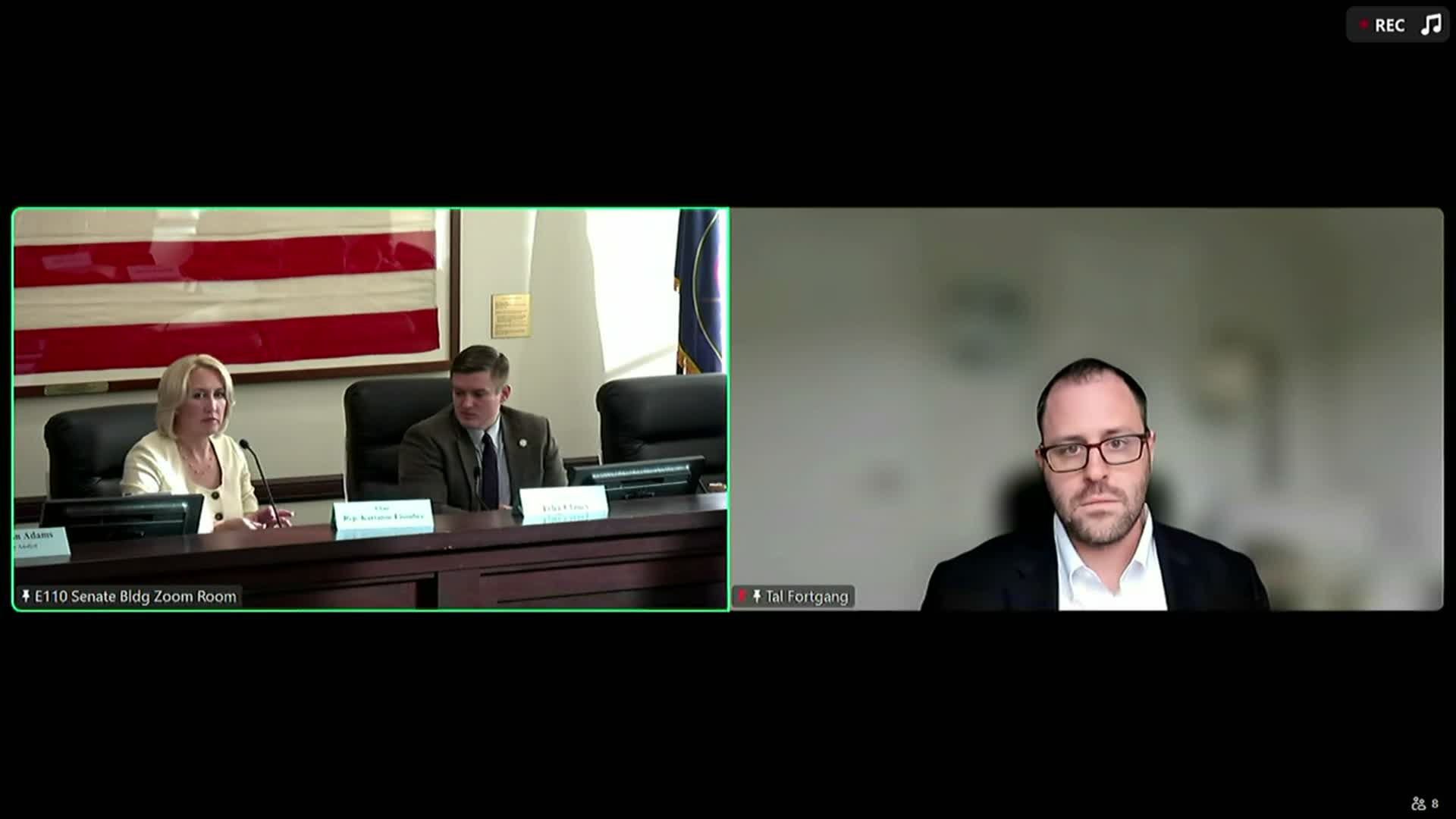
Tal (Mr. Fortgang), a co‑presenter joining from Philadelphia, told the committee the substitute "does not criminalize any expressive behaviors anew" but instead raises penalties for already criminal behavior when aggravating factors — such as coordination to advance a designated foreign terrorist organization — are present. The co‑presenter cited recent examples and a federal designation process for foreign terrorist organizations as context for the aggravating factor language.
Committee members sought narrower language and asked how prosecutors would show a connection to a designated terrorist organization, whether ordinary crowding in a crosswalk could be charged, and why deprivation of religious rights requires two or more actors for a third‑degree felony. The sponsor and the co‑presenter said the substitute narrows liability by tying penalties to intent and coordination, and pointed to Utah Code §76‑5‑304 (unlawful detention) and relevant case law on masking and expressive conduct.
Two online public commenters opposed the bill or sought changes. Ellen Brady warned the bill could sweep in First Amendment protesters and described concerns about paramilitary actors; she opposed the bill. Taj Becker, a physician, said he opposed the bill as written and urged clearer definitions, caution on language covering face coverings for medical reasons, and suggested a state cause of action for constitutional violations by federal actors.
After the public testimony and debate, the substitute was adopted by voice vote and the bill, as substituted, was favorably recommended to the House on a roll‑call vote that passed 7–2. The sponsor and committee members said they will continue to refine language as necessary.