
Data-center accountability bill fails in committee amid debate over environmental review and existing protections
Get AI-powered insights, summaries, and transcripts
Subscribe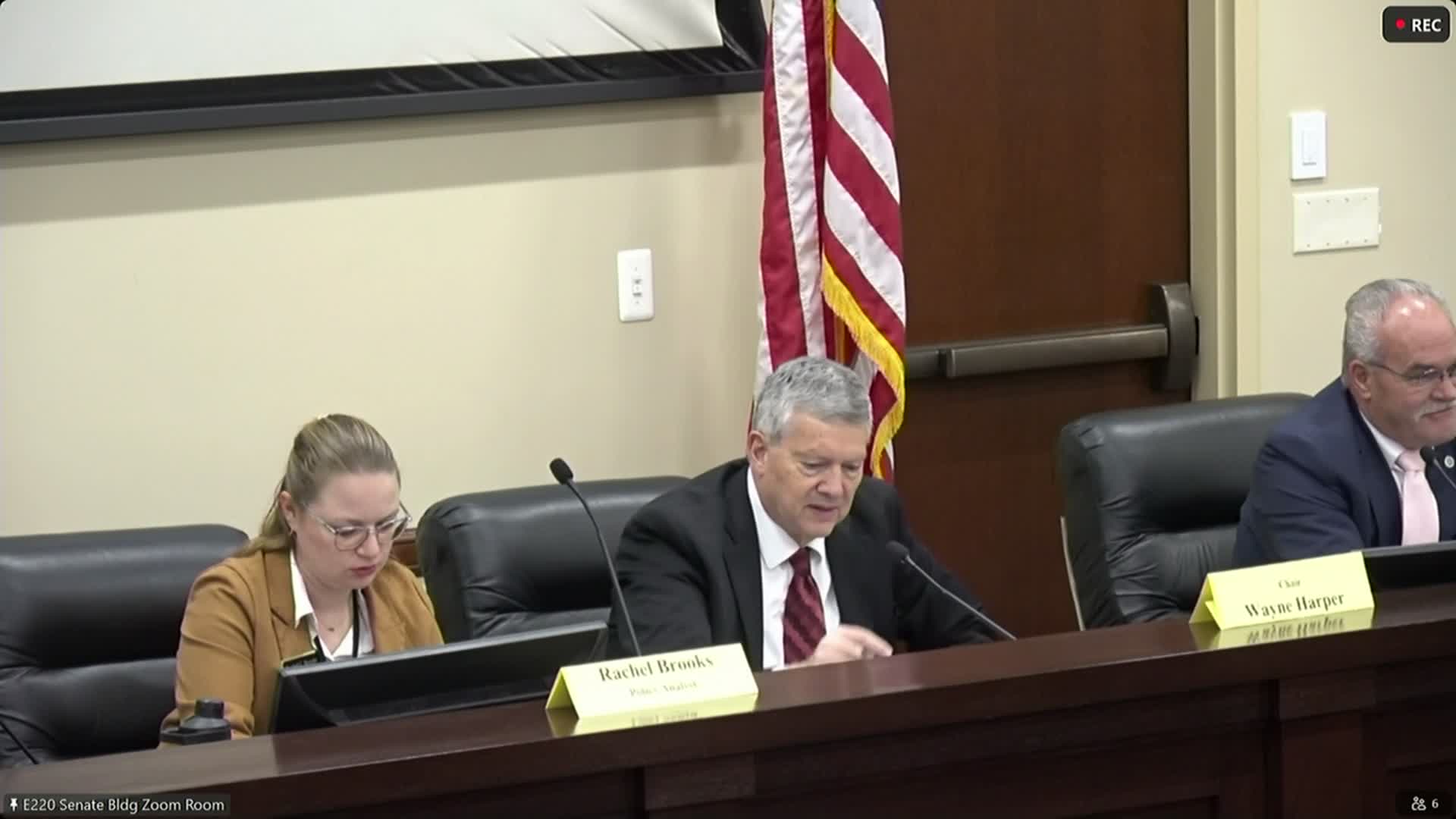
Summary
Senate Bill 282, which would require large energy users (over 100 MW) to provide financial surety, show net-neutral community and grid impacts, and file annual electricity and water-use reports, failed in committee after debate and public comment that split regulators, utilities and environmental advocates.
Senate Bill 282, authorizing new requirements for very large electricity customers such as data centers, failed to receive a favorable recommendation from the Senate Transportation, Public Utilities, Energy and Technology Standing Committee.
Sponsor (recorded as Senator Blueen/Bluhin in the committee transcript) framed the bill as a fairness and accountability measure designed to prevent ratepayers from subsidizing speculative projects. The bill applies to loads above 100 megawatts, would require financial surety (bonds, letters of credit or guarantees) before projects proceed, and requires annual reporting of electricity and water use to improve public transparency.
"Utah rate payers should not be left holding the bag here," the sponsor said, arguing the state should require upfront financial guarantees and reciprocal benefits such as grid-support investments or environmental improvements.
John Cox, representing Rocky Mountain Power, urged the committee to hold the bill. He said protections addressing cost-shifting and financial security were already created by last year’s Senate Bill 132 and incorporated in current code; his primary concern was that SB282 adds environmental-benefit requirements into a framework administered by the Public Service Commission, which he said is an economic regulator and not an environmental regulator. "The Public Service Commission is an economic regulator. It is not an environmental regulator," Cox said, and he suggested environmental attributes fall under the Department of Environmental Quality.
Online testimony from Katie Bellaker of the Healthy Environment Alliance of Utah urged support for SB282, citing Lawrence Berkeley National Laboratory and U.S. Department of Energy projections that data-center energy demand will grow substantially and arguing that annual reporting and a net-neutral standard will protect ratepayers and give local governments useful information.
Committee members asked whether utilities already track usage and whether local governments would have sufficient input. The sponsor said utilities may know usage but proprietary nondisclosure agreements currently restrict public access, and that the bill could be strengthened to ensure local input.
A motion to favorably recommend SB282 to the floor was called; the recorded committee vote failed by a 3–2 margin. The motion did not pass, and the bill will not move to the floor from this committee at this time.