
Utah Senate Committee advances bill to make moratorium on minors’ gender-affirming medical care permanent
Get AI-powered insights, summaries, and transcripts
Subscribe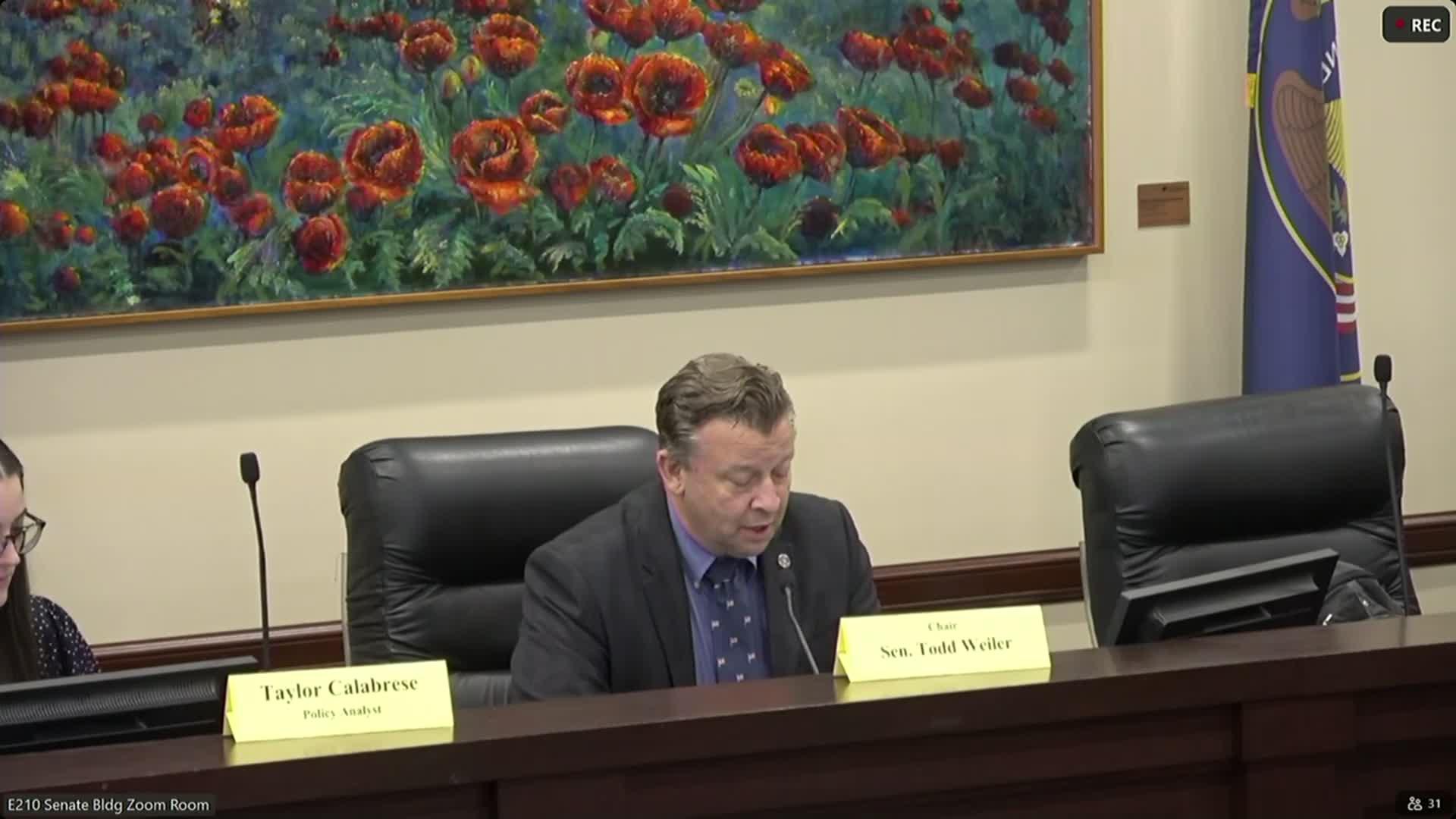
Summary
The Senate Judiciary Committee heard extended testimony for and against HB 174, adopted an amendment delaying parts of the ban by one year, and voted to recommend the bill favorably as amended. Supporters cited alleged harms and questioned the DHHS review; opponents and clinicians warned of mental-health harms and loss of access.
The Senate Judiciary, Law Enforcement and Criminal Justice Committee on Wednesday heard hours of testimony and public comment on HB 174, a bill from Representative Shipp that would make permanent the moratorium on puberty blockers and cross-sex hormones for minors enacted in 2023 by SB 16.
Supporters of HB 174 told the committee the state’s earlier DHHS review was not a proper systematic review, pointed to international reviews and clinic closures, and urged lawmakers to protect children from long-term harms. "The medicalization of gender theory is going down as the most egregious and harmful scandal ever in the history of medicine," said David Bector, a board-certified pediatrician, summarizing his testimony about alleged physical and medical-legal risks tied to these treatments.
Opponents, including clinicians and people who identify as transgender or have received gender-affirming care, warned that ending access to care would increase depression, anxiety and suicide risk. "Ending the course of treatment for youth already undergoing medical care would result in adverse outcomes and increased mental-health symptoms and suicidality," a University of Utah mental health clinician told the committee during online testimony.
Why it matters: HB 174 would change health access for minors in Utah by converting a temporary moratorium into a permanent prohibition on specified medical interventions for transgender youth. Lawmakers heard conflicting depictions of the scientific literature: witnesses favoring the ban described systematic reviews in the UK and federal reports that they said undermine the evidence base for care; witnesses opposing the ban pointed to peer-reviewed studies and the state report that found mental-health benefits for some young people.
What happened in the hearing: Representative Shipp opened the presentation and introduced five presenters. Multiple expert witnesses — including Kurt Miceli of Do No Harm Action and Dr. Alan Smith, chair of Utah’s Physician Licensing Board — criticized the state DHHS review as lacking a full evidence synthesis and noted alleged conflicts of interest among advisory-panel contributors. Testimony also included a personal account from Chloe Cole, who described detransition and long-term physical and emotional effects.
Public comment was extensive and sharply divided. Supporters of the bill framed the issue as protecting children and preserving future fertility; opponents described the care as lifesaving for some youth and warned that the bill would constitute government overreach into family medical decisions. Younger speakers and current patients said the treatments had been essential for their wellbeing.
Committee action: The committee adopted "Amendment 2," offered from the chair, which delays aspects of the ban by roughly one year to avoid abruptly cutting off some ongoing care. The amendment passed on a recorded voice/roll-call showing the motion passed 6–1. The committee then voted to recommend HB 174 favorably as amended; the transcript records the final recommendation as passing on a 5–2 roll call.
What comes next: The committee recommended HB 174 favorably as amended, sending the bill forward in the legislative process. The amendment’s one-year delay leaves some transition-age youths a short window for continued care while the bill advances; proponents said that change was intended to avoid abruptly interrupting care for people close to adulthood.
Quotes from the hearing: "The DHHS report is not a systematic review," said Kurt Miceli, arguing the state review omitted high-quality evidence and risk-of-bias evaluations. "These failures undermine the report's credibility and render its conclusions unreliable."
"Ending this care would cause an undue burden not only to these families, but our medical systems," a University of Utah mental-health clinician testified online.
Limitations: This article summarizes positions and votes recorded in the committee transcript. It reports claims made by witnesses and members as stated at the hearing; it does not independently verify contested scientific or legal assertions made during testimony.
Next step: With the committee’s favorable recommendation, HB 174 will move to the next stage of the legislative process as scheduled by the Senate leadership.