
Committee advances App Store Accountability Act with delayed effective date and clarified enforcement
Get AI-powered insights, summaries, and transcripts
Subscribe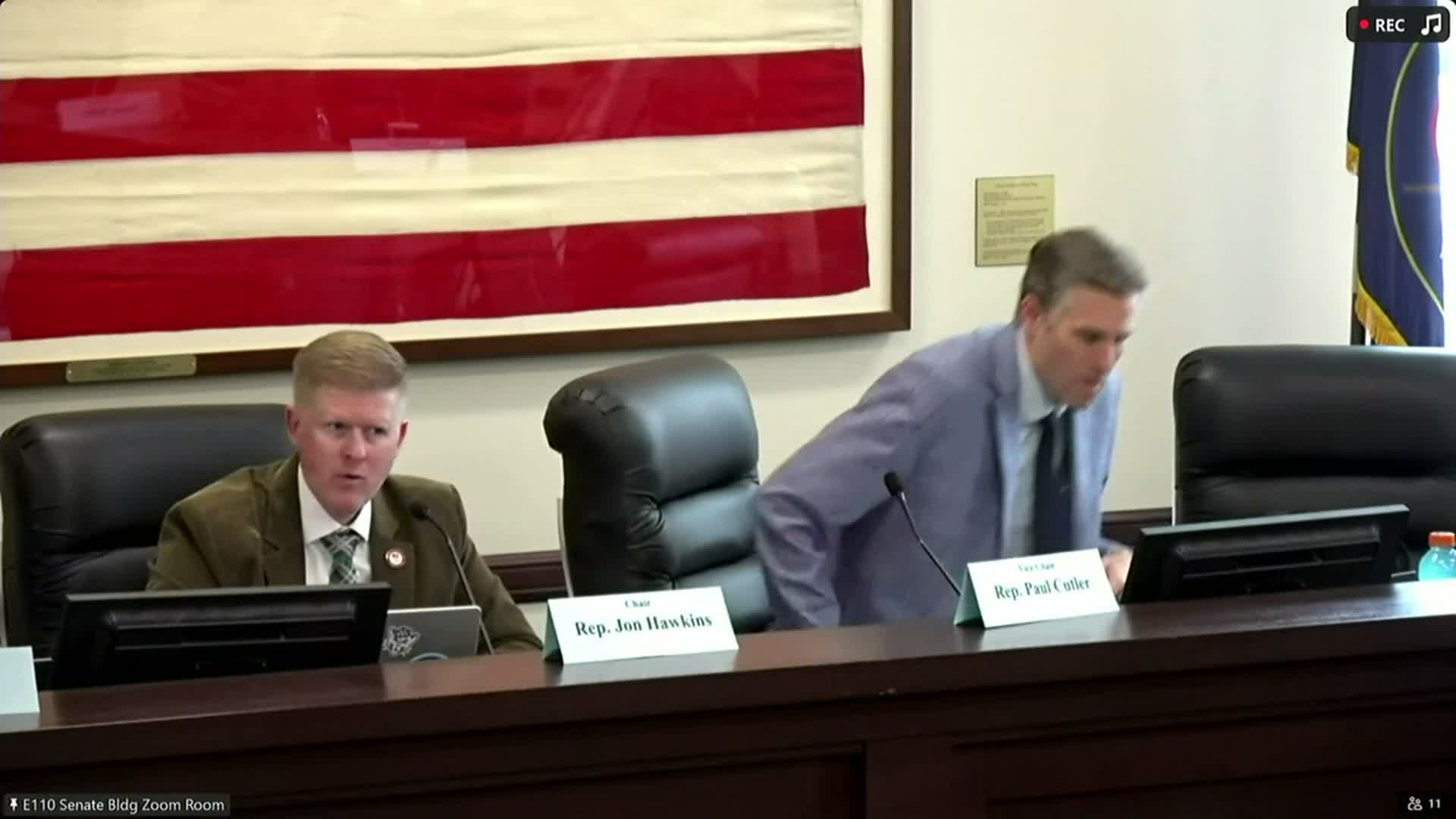
Summary
The House committee approved a substitute for HB 498 to delay the bill’s effective date to May 6, 2027, retain a private right of action as the exclusive enforcement mechanism and expand coverage to preinstalled apps while excluding married or emancipated minors.
Representative Doug Dunnigan presented the 2026 update to the App Store Accountability Act (HB 498), telling the committee the bill delays its effective date to May 6, 2027, narrows enforcement to a private right of action and clarifies coverage around minors and significant app changes.
Dunnigan said the bill preserves a private right of action originally included last year but removes other regulatory enforcement mechanisms. He described a parental‑control example: a family Netflix account currently uses the youngest child’s age as the default allowed content level; the substitute would allow an adult to raise content access levels for older children after initial setup.
The substitute also excludes minors who are married or emancipated and adds language to bring preinstalled apps (for example, Safari, Chrome and Gmail) under similar notice and content‑control provisions. Dunnigan said those changes mirror model language being considered in about 20 other states.
During public comment, Corinne Johnson of Utah Parents United and Dina Alexander of the Child First Policy Center urged support, noting a pending federal markup on related legislation and emphasizing child safety and contract‑law rationale for limiting children’s ability to form binding subscriptions.
The committee adopted Substitute 1 and voted 7–1 to favorably recommend the substitute to the full House; Representative Hansen recorded the lone no vote. The bill now proceeds to the full House for further consideration.