House approves revised employer childcare tax credit after extended debate
Loading...
Summary
After extended floor debate over fiscal impacts and program design, the Utah House passed a revised employer childcare tax credit (second substitute HB 190) that sponsors say will incentivize small businesses to offer childcare supports; opponents questioned ROI and provider supply constraints.
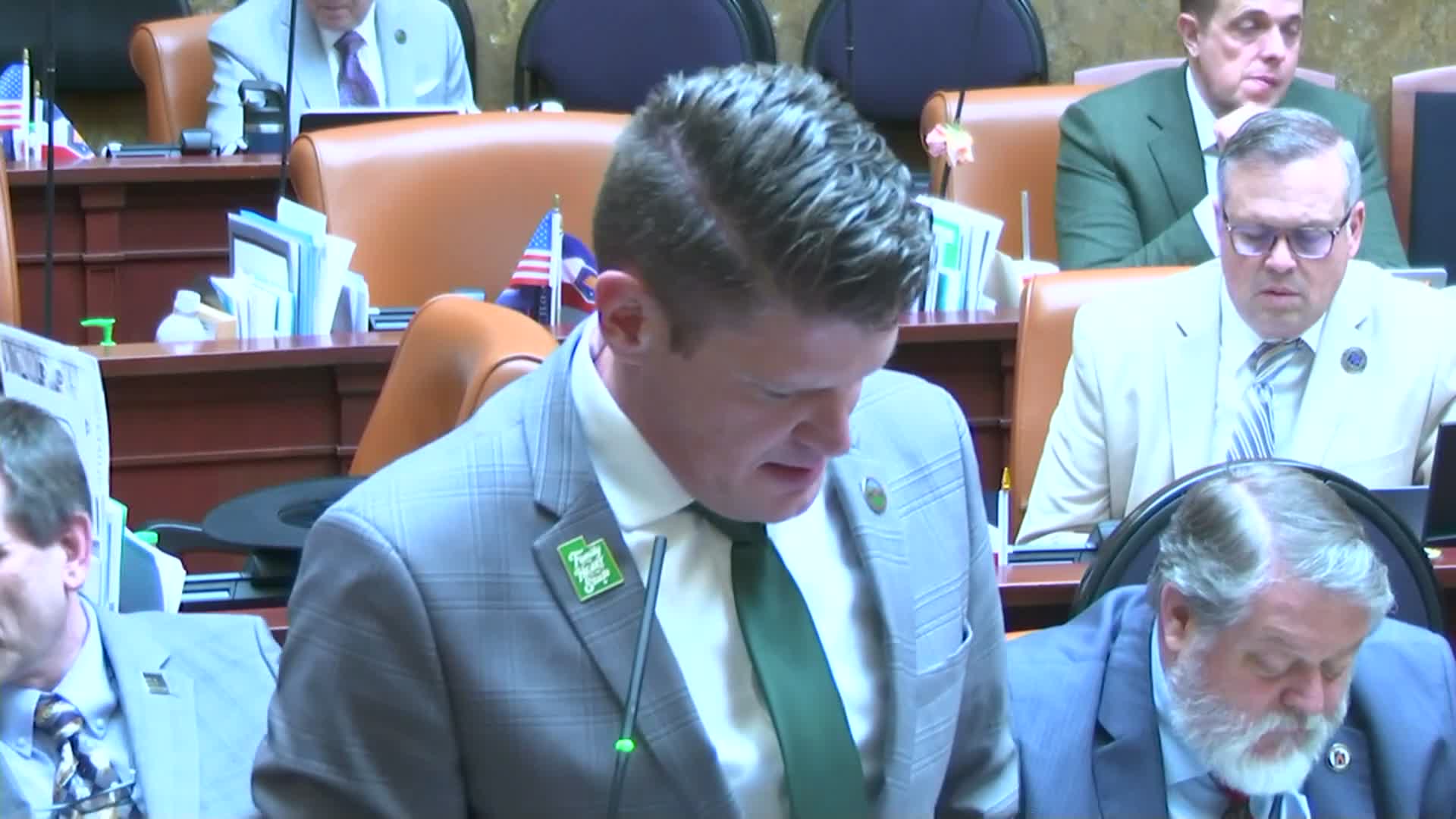
The Utah House on Feb. 18 passed second substitute HB 190, a bill that redesigns the state’s employer childcare tax credit to encourage small businesses to invest in childcare for employees. Representative Thompson, the bill’s sponsor, framed the measure as a response to a statewide childcare shortage and significant economic losses, asserting the state ‘‘loses $1,360,000,000 in economic productivity every year due to childcare-related issues’’ and citing $258,000,000 in lost income tax revenue.
Thompson and other sponsors said the bill is structured as a voluntary, non‑refundable tax credit tied to federal eligibility standards so employers can only claim the state credit if they also qualify for the comparable federal credit. Representative Thompson said the credit mirrors recent federal changes intended to boost small-business participation and argued the program could increase economic output and employment.
Opponents raised multiple concerns on the floor. Representative Thurston questioned the dynamic fiscal-note scenarios and argued the projected return on state investment looked poor: "For our $3,000,000 investment, in the minimal scenario, we're getting $36,000 of return," he said, calling that a weak ROI. Others worried the program would struggle to increase supply because of existing shortages of childcare providers and that incentives might shift limited providers toward participating employers rather than expand overall capacity.
Representative Peck offered and the House adopted Amendment 1 to close a potential double-dipping loophole that, in the sponsor’s view, would prevent employers from claiming the credit while also receiving duplicate payment for providing childcare through another mechanism. With that change the second substitute passed and will be transmitted to the Senate for its consideration.
What remains unresolved from the floor debate is the practical effect of the incentive on provider supply and a final fiscal accounting; lawmakers on both sides asked for ongoing implementation guidance from the Legislative Fiscal Analyst and state agencies before broader rollout.
Next steps: The bill will go to the Senate. Implementing guidance and any rulemaking or LFA follow-up were identified as near-term tasks on the floor.