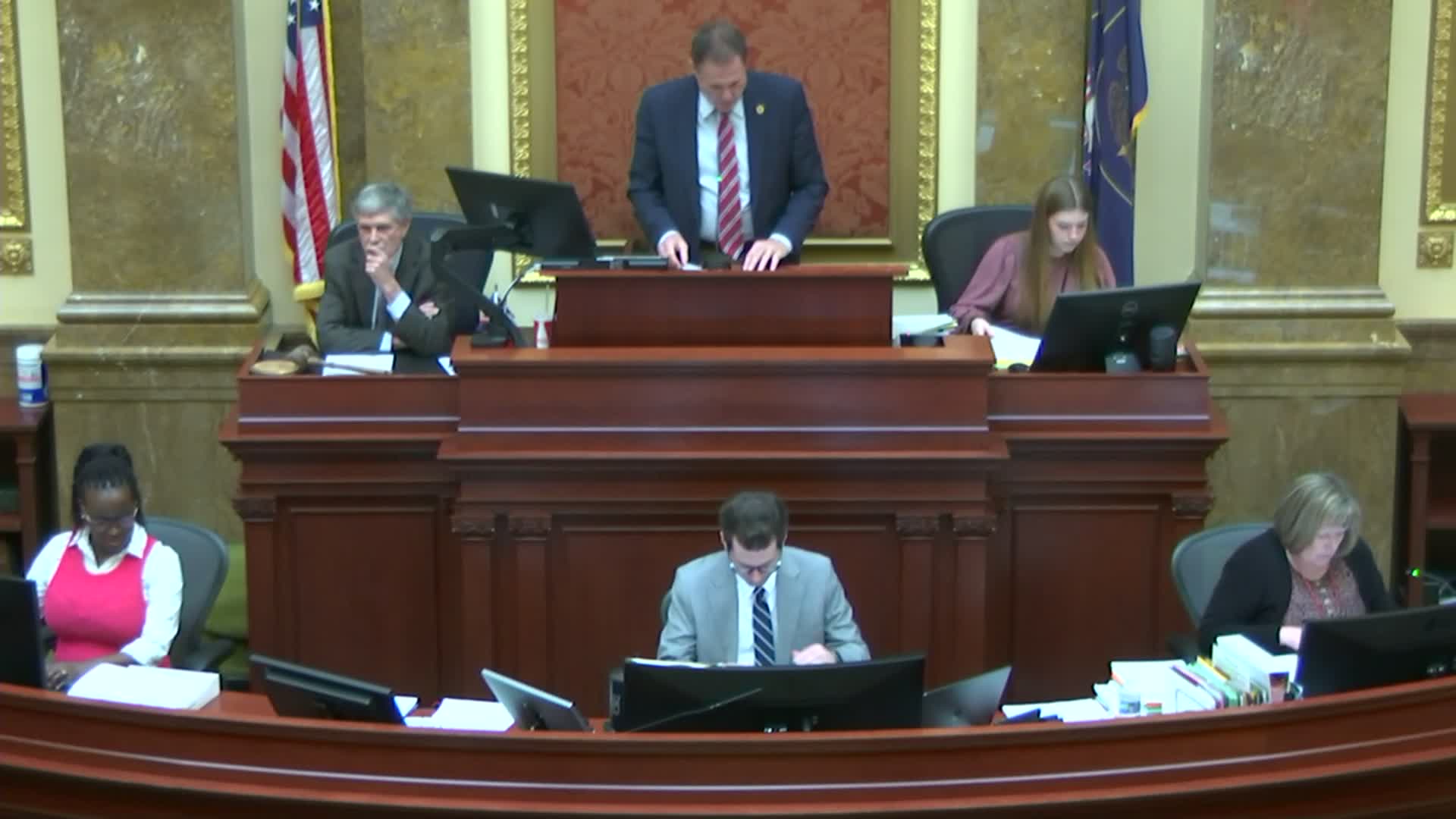
House advances education, health and childcare measures; multiple bills pass on Feb. 18
Loading...
Summary
The Utah House on Feb. 18 passed a slate of bills on education, health and family policy, including measures on weapons policy at higher education campuses, school governance, classroom technology, and clinical research for veterans, and approved changes to childcare tax credits after extended debate.
The Utah House of Representatives on Feb. 18 moved a broad package of bills through the floor, approving measures on education governance, classroom technology, public-health reporting and incentives for employer-provided childcare.
Third substitute House Bill 84, which clarifies how concealed and open-carry rules apply on public education and higher-education campuses, was amended on the floor and passed 67–0. Representative Brooks, the bill sponsor, said the measure ‘‘adds some clarity to open carry’’ at higher-education institutions and that higher ed stakeholders were neutral on the final language.
Second substitute House Bill 144 removed an outdated requirement that school community councils manage Internet filters and instead requires school administrations to report on safe-technology use; it passed 69–0 after Representative Tracy Miller described the changes as a cleanup that preserves local advisory responsibilities.
A series of education bills also advanced: HB 145 expanded excused absences for students who maintain a 2.0 grade-point average and participate in activities such as mountain biking and shooting sports; HB 273 (the ‘‘Balance Act’’) requires local education agencies to adopt policies on classroom technology and artificial intelligence while preserving local control; and HB 358 allows flexible scheduling options for schools. Those bills received floor debate and votes and were sent to the Senate for consideration.
On health and safety, the House approved HB 380, which requires hospitals to develop workplace-violence incident-reporting systems and report numbers annually, and HB 388, which clarifies procedures and authority for testing and cleaning lodging or retail spaces contaminated by substances such as methamphetamine or fentanyl.
The House also approved HB 255, requiring consumer disclosures by health-share ministries, and HB 339, which codifies street-medicine practices for providers delivering care to unsheltered people.
Several measures received notable floor debate before passage. After extended discussion and the adoption of an amendment to close a perceived double‑dip loophole, second substitute HB 190 updated Utah’s employer childcare tax credit to encourage small-business participation; sponsors and opponents disputed the likely return on investment and whether tax credits were the appropriate tool. Representative Thompson, the bill sponsor, framed the proposal around economic and workforce losses tied to childcare shortages, saying the state ‘‘loses $1,360,000,000 in economic productivity every year due to childcare-related issues.’’
Representative Daley Provo’s first substitute HB 390 would create a tightly controlled clinical study of psychedelic-assisted treatments for treatment‑resistant PTSD in veterans at Huntsman Mental Health Institute. Supporters cited Utah’s elevated veteran suicide rate and called the measure a careful research partnership; the bill passed the House and will go to the Senate.
The House concluded floor business with routine committee report adoptions, a citation honoring John Abbsey and adjournment until Feb. 19 at 10:00 a.m.
Votes at a glance (tallies as announced on the floor): HB 84 — 67–0; HB 144 — 69–0; HB 145 — 66–1; HB 263 — 40–25; HB 194 — 61–2; HB 273 — 68–1; HB 358 — recorded as passed on the session calendar; HB 448 — 67–0; HB 255 — 65–0; HB 277 — reported as passed (tally announced on the floor); HB 339 — 66–1; HB 380 — 68–1; HB 190 — passed after amendment (tally announced on the floor); HB 388 — 67–1; HB 390 — 68–2.