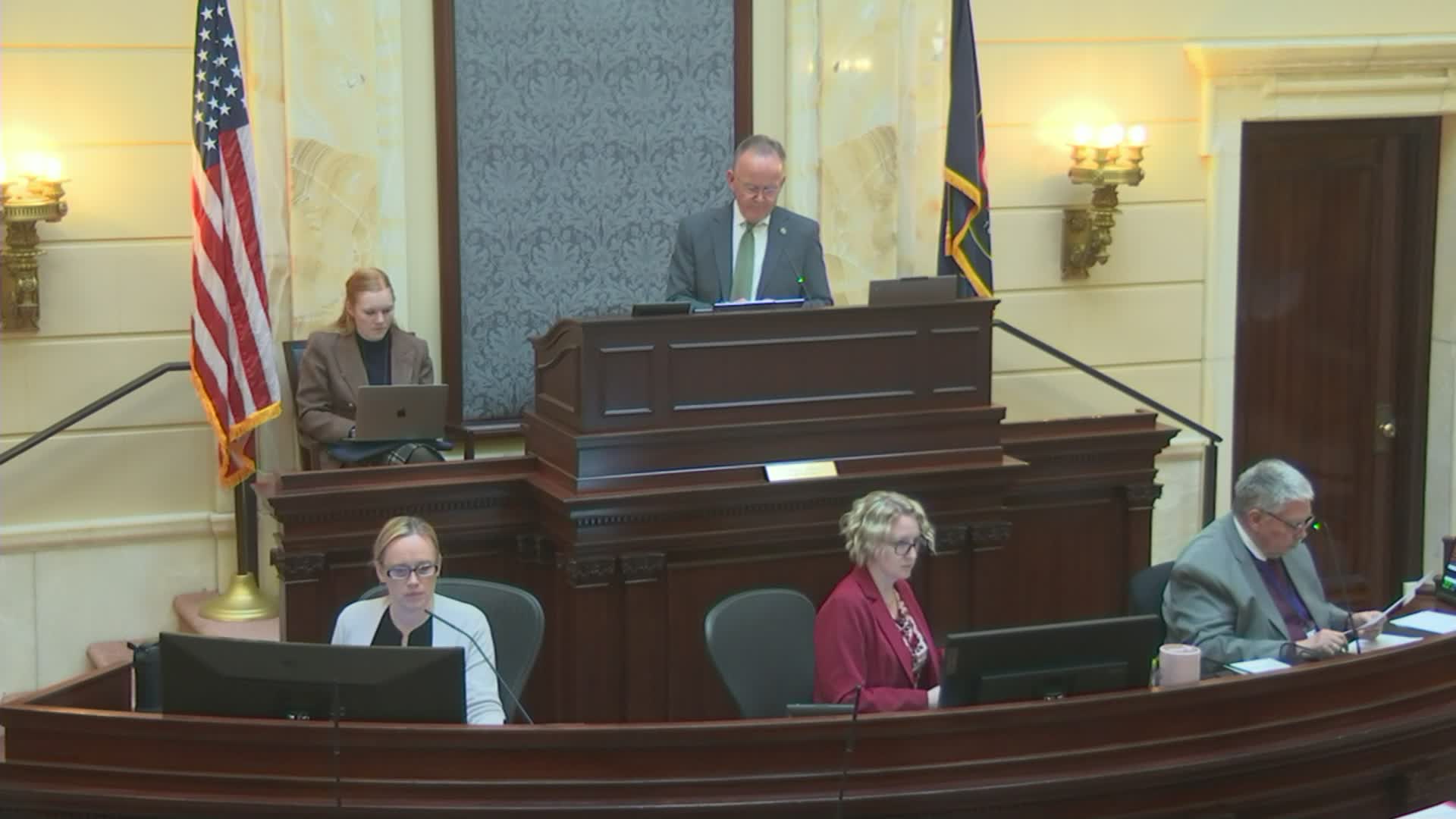
Senate approves solar plant siting amendments after debate over local approvals
Loading...
Summary
Senators approved second substitute House Bill 16 to tighten state review and require wildlife-impact consultation and reclamation provisions for certain solar plants; debate centered on whether new language would require local approvals for every new solar plant, with sponsors saying the language targets projects on farmland or wildlife habitat. The bill passed and returns to the House.
The Utah Senate on the floor adopted a substitute and passed second substitute House Bill 16, a measure that adds requirements tied to incentives for solar plants and requires wildlife-impact consultation and reclamation planning for qualifying projects.
Sponsor Senator Hinkins said the substitute contains mostly wording changes and that the measure ‘‘gives more… what they can do at a local level, with the counties,’’ describing county discretion on siting when projects affect farmland or wildlife habitat. During debate, Senator Blue pressed whether language beginning at line 135 would reach "any solar plant that is being constructed anywhere in the state," arguing that a requirement to seek local governing-body approval could be "highly burdensome" and potentially apply to projects without state incentives.
Hinkins responded that the provision is targeted and primarily concerns plants on land that would otherwise be valuable for agriculture or wildlife, not every new solar facility. After floor discussion and summation from the sponsor, the Senate recorded the final vote: second substitute House Bill 16 passed with 20 yeas, 6 nays and 3 absences and will be returned to the House for consideration of the Senate substitute.
Supporters on the floor urged greater local discretion over siting to protect farmland and habitat; critics warned the provision could impose duplicative local review requirements on developers. The bill’s text as adopted requires documentation and certain approvals in defined circumstances but the transcript record does not include additional implementing details or funding allocations. The bill’s next step is consideration by the House of the Senate’s substitute language.