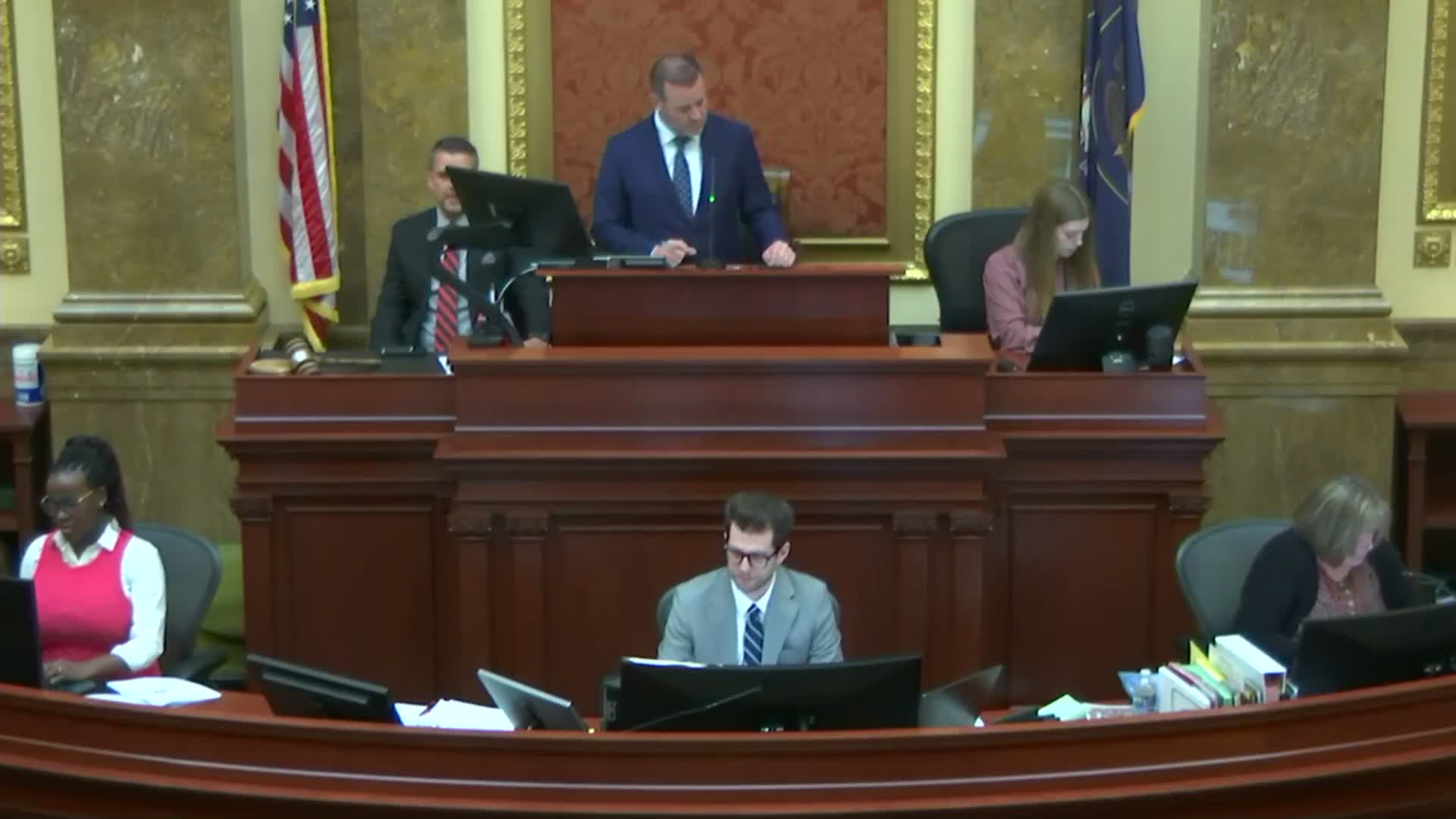
House approves kratom regulatory framework to stand if a ban does not pass
Loading...
Summary
The House passed HB387 establishing a regulatory framework for kratom products that will take effect only if a separate ban does not pass; sponsors emphasized public-health concerns and stakeholder consultation while members debated differences between natural leaf products and synthetic extracts.
Representative Daley Provo, sponsor of House Bill 387, told the chamber the measure is intended to fill a regulatory vacuum for kratom products in Utah "if the state does not pass a ban." She described the bill as a compromise built with stakeholders to provide product testing, registration and enforcement through the Department of Agriculture and Food.
The sponsor and supporters repeatedly framed the bill as a public-safety measure: Representative Daley Provo said the state is seeing increases in addiction and deaths associated with synthetic kratom products and that creating a regulatory structure will let professionals set and enforce safety standards. "This creates a regulatory framework, that goes into effect if the state does not pass a ban," she said on the floor.
Opponents and questioners pressed for clarity about distinctions between raw leaf products and concentrated or synthetic extracts. Representative McPherson asked how the bill differentiates raw plant matter from extracts and how synthetic products such as 7-hydroxymitragynine would be treated; sponsors said the bill gives authority to the Department of Agriculture and Food to define and restrict dangerous synthetics. Several members said they supported the approach as a middle path between an outright ban and leaving the market unregulated.
Representative Daley Provo and others cited stakeholder meetings, registration fees and enforcement language that would fund oversight and testing. The sponsor said the framework would not preclude a ban: if a separate ban bill passes, this regulatory framework would not take effect.
On final consideration the House passed HB387 62–10. The bill now goes to the Senate for its consideration. The transcript records the sponsors’ emphasis on scientific testing, the Department of Agriculture and Food’s role, and the bill’s trigger language; the floor record does not supply detailed fee amounts or the precise regulatory schedule, which will be determined in agency rule-making if the bill becomes law.