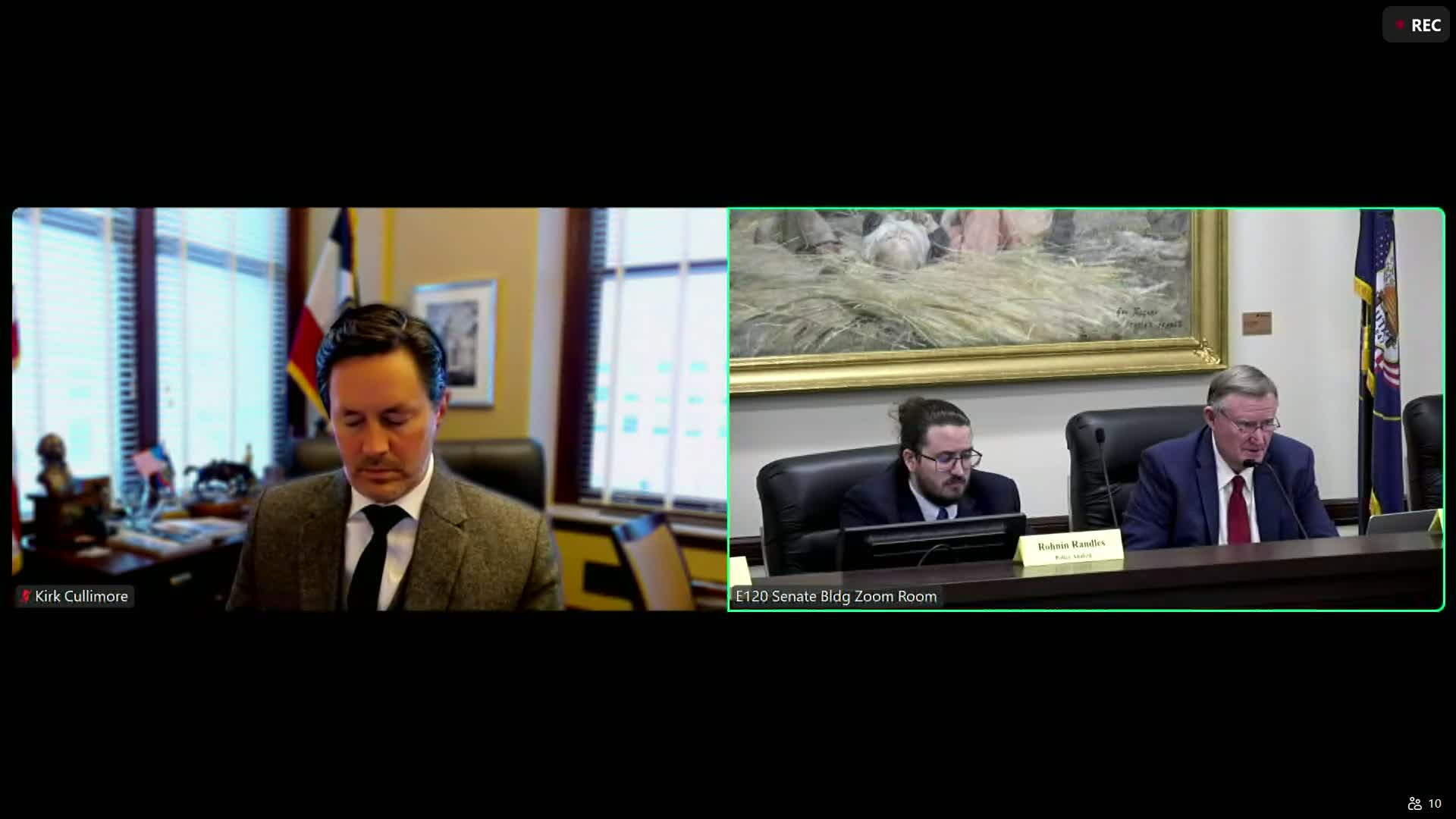
Senate committee unanimously backs bill to create Utah retirement-plan exchange
Loading...
Summary
The Senate Business and Labor Committee on Feb. 18 recommended House Bill 250, an exchange to help small employers offer retirement plans. Sponsors said the platform will make it easier for roughly 700,000 Utah workers without workplace plans to save; the recommendation passed 6–0.
Representative Edelson introduced House Bill 250 on Feb. 18 to create a state-supported marketplace that helps small employers set up workplace retirement accounts. "This is actually a very exciting bill," Edelson told the Senate Business and Labor Standing Committee, arguing that many small businesses lack the scale or know‑how to offer plans. The committee voted to favorably recommend the substitute version, 6 to 0.
State Treasurer Marlo Oakes framed the proposal as a response to a coverage gap. Utah is a small‑business state, she said, with about 99% of employers classified as small businesses and roughly 45% of the workforce employed by them. Oakes said employees are "17 times more likely to save for retirement if a plan is offered through their work," and warned that a Pew analysis projects higher state costs if access to workplace savings does not expand. He also said a newly discussed federal incentive could matter: testimony described a federal match that would cover 50% of eligible annual contributions (testimony characterized this as matching up to $2,000 in contributions with a maximum match of $1,000 for eligible savers), which states risk missing if they do not put programs in place.
Nate Glassy of the American Retirement Association told the committee the bill aims to be an "easy button" for small firms: the state would create a portal where employers answer basic questions, choose among provider options that meet guardrails set by the treasurer's office, and enable payroll deductions. Presenters emphasized that private firms would manage accounts and that the treasurer’s office would set admission standards for providers focusing on price, service and plan setup.
Senators asked how the state would remain neutral when deciding which providers may participate. Presenters said the treasurer’s office would establish industry‑standard guardrails (capacity, service levels and pricing) rather than select firms on other criteria, and that the intent is to include any provider that meets those standards. No members of the public testified on the measure in committee.
The committee’s favorable recommendation sends HB250 to the Senate floor for further consideration. Sponsors said next steps include finalizing technical language on the portal’s guardrails and the administrative role of the treasurer's office.