
Aging committee hears bill to bar municipal agents with conflicts from counseling older adults
Get AI-powered insights, summaries, and transcripts
Subscribe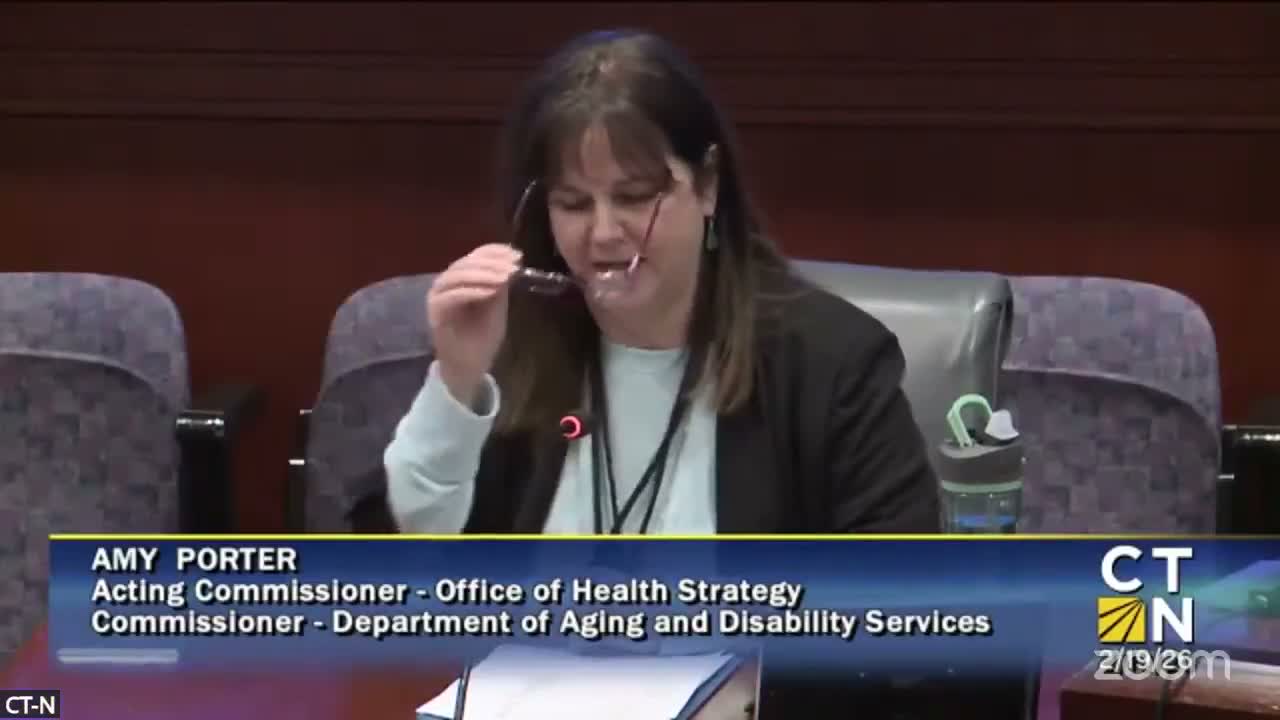
Summary
State aging officials and advocates urged the committee to tighten rules for municipal agents who advise older adults, citing instances where paid insurance brokers and other sellers used municipal‑agent roles to steer beneficiaries. Supporters would require written conflict certifications and options for shared agents in small towns.
Amy Porter, commissioner of the Department of Aging and Disability Services, told the Aging Committee she strongly supports a package of measures including Senate Bill 124 to prevent conflicts of interest among municipal agents who help older residents access benefits and services. "I'm here today to offer strong support of three bills being heard today," Porter said, describing the municipal‑agent role and why the agency wants clearer conflict rules.
The bill would prohibit appointing or reappointing municipal agents who have a real or perceived conflict of interest, require agents to certify in writing that they have no conflicts, and require municipal agents to report any newly discovered conflict to their appointing authority so the matter can be reassigned if needed. Porter said the bill also lets two or more municipalities share a municipal agent through a memorandum of understanding to address staffing limits in small towns.
State Health Care Advocate Kathy Holt said the change would close a loophole that has allowed paid insurance brokers and others to benefit financially from municipal‑agent positions. "20% of Connecticut residents are Medicare eligible. That's about 750,000 people," Holt said, adding that approximately 200,000 are dually eligible for Medicare and Medicaid and thus vulnerable to being steered into plans that benefit sellers. She told the committee that private Medicare Advantage plans pay higher commissions and brokers sometimes avoid recommending traditional Medicare even when it would better serve a beneficiary.
Advocates and area agencies on aging echoed the request for transparency and funding to support service navigators who help older adults with enrollment and benefits. Marie Allen, representing Aging CT, described the navigator network and said the area agencies last year helped about 9,000 people with 21,000 applications and are seeking $500,000 to preserve capacity when ARPA funds sunset in 2026.
No formal committee action or vote was recorded during the hearing. The committee will consider written comments and follow up with staff work and stakeholder discussions as the bill advances through the committee process.