
Gadsden mayor unveils $140 million bond package, pledges infrastructure upgrades and jobs
Get AI-powered insights, summaries, and transcripts
Sign Up Free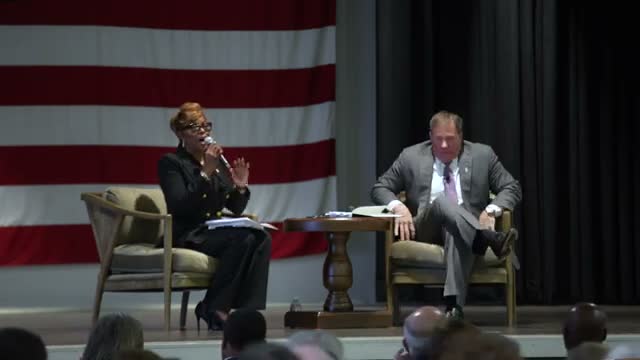
Summary
Mayor Ford used the State of the City address to outline a $140 million bond-backed project list — from a new City Hall and athletic complex to road relocations and ADA upgrades — and said federal grants and increased local revenues will help pay for the work.
Gadsden City Mayor Ford laid out a $140 million program of capital projects Tuesday night, saying the city will use bond financing and federal grants to pay for new facilities, road relocations and neighborhood improvements that he expects will spur jobs and development.
The mayor described a strategy that combines bond proceeds, year‑to‑year capital funds and federal appropriations. "We decided as a council ... to do $140,000,000 in projects," Mayor Ford said, adding that the city had reviewed its finances with bond advisors and could borrow more if needed. He told residents revenues have risen since the administration took office and said sales‑tax‑designated capital funds (referred to in the presentation as the "3.23/3.40" funds) will be used to service the new debt.
Why it matters: The package funds a range of projects the mayor said will improve quality of life and attract visitors and businesses — from a new City Hall to public safety equipment and large recreational facilities — and is intended to increase long‑term sales tax receipts and job growth.
Key projects and funding details: Mayor Ford said the city negotiated to buy a former bank and the Merrill Lynch building to create a new, ADA‑compliant City Hall, describing a negotiated purchase price discussed in the presentation at roughly $2.8 million and noting the city expects ground‑floor tenants to provide recurring rent revenue. The package also includes new fire trucks, motorcycle and bike patrol units, and an in‑house paving crew to target neighborhood streets.
On recreation and tourism, the mayor previewed the proposed Gadsden Athletic Center (described in presentation materials at about 160,000–180,000 square feet) with multiple courts, a six‑lane aquatic center and event space intended to recruit tournaments and boost hotel occupancy. He said the city had pursued grant matches for a Rails‑to‑Trails project and planned to replicate a sensory playground model at multiple neighborhood sites.
Transportation priorities included advancing a long‑discussed Highway 759/411 relocation. "This thing's about to go the fastest project you ever seen happen in the state of Alabama," Mayor Ford said, and he told residents the contract for that work is expected to be let in November. He also cited pending work on Coosa Harbor with final engineering drawings under review and permitting awaiting federal agencies.
Federal and grant support: The mayor credited outreach to U.S. Sen. Katie Britt and Rep. Mike Rogers for securing appropriations and said the city received a roughly $6.5 million sub‑appropriation in the THUD budget to build a consolidated riverfront fire station. He also described HUD and federal partner involvement in rapid housing remediation after the city identified unsafe rental properties.
Budget and pay: Mayor Ford said the city has increased wages for employees and covered health insurance costs, and he reported that a 2% pay raise would have a gross budget impact reported in the presentation at about $1.8 million. He said the city has paid off several bonds in recent years, freeing up capital funds to service the new borrowing.
Public questions and local concerns: During a question‑and‑answer session residents raised truck routing on East Broad Street, timing for Broad Street Bridge paving (a previously proposed appropriation was pulled), paving for mountain roads, and an upcoming Rural King store opening (the mayor said mid‑to‑late‑year openings were expected). When asked about jobs that pay more than minimum wage, the mayor said the city was under nondisclosure agreements with prospective employers but that a major project expected to bring "hundreds of jobs" was advancing.
What’s next: Mayor Ford urged residents to review project boards after the address and thanked the city council and staff for cooperation. "In the next two years, this city will be transformed," he said. Council approvals, final engineering, permitting and federal grant disbursements are the next procedural steps for many items described.
Sources and attribution: Quotes and project details are drawn from Mayor Ford's State of the City address as recorded in the event transcript; other speaker attributions and staff roles are taken from the transcript references.