
County leaders tell Senate that SNAP, Medicaid changes could push costs to property taxpayers
Get AI-powered insights, summaries, and transcripts
Subscribe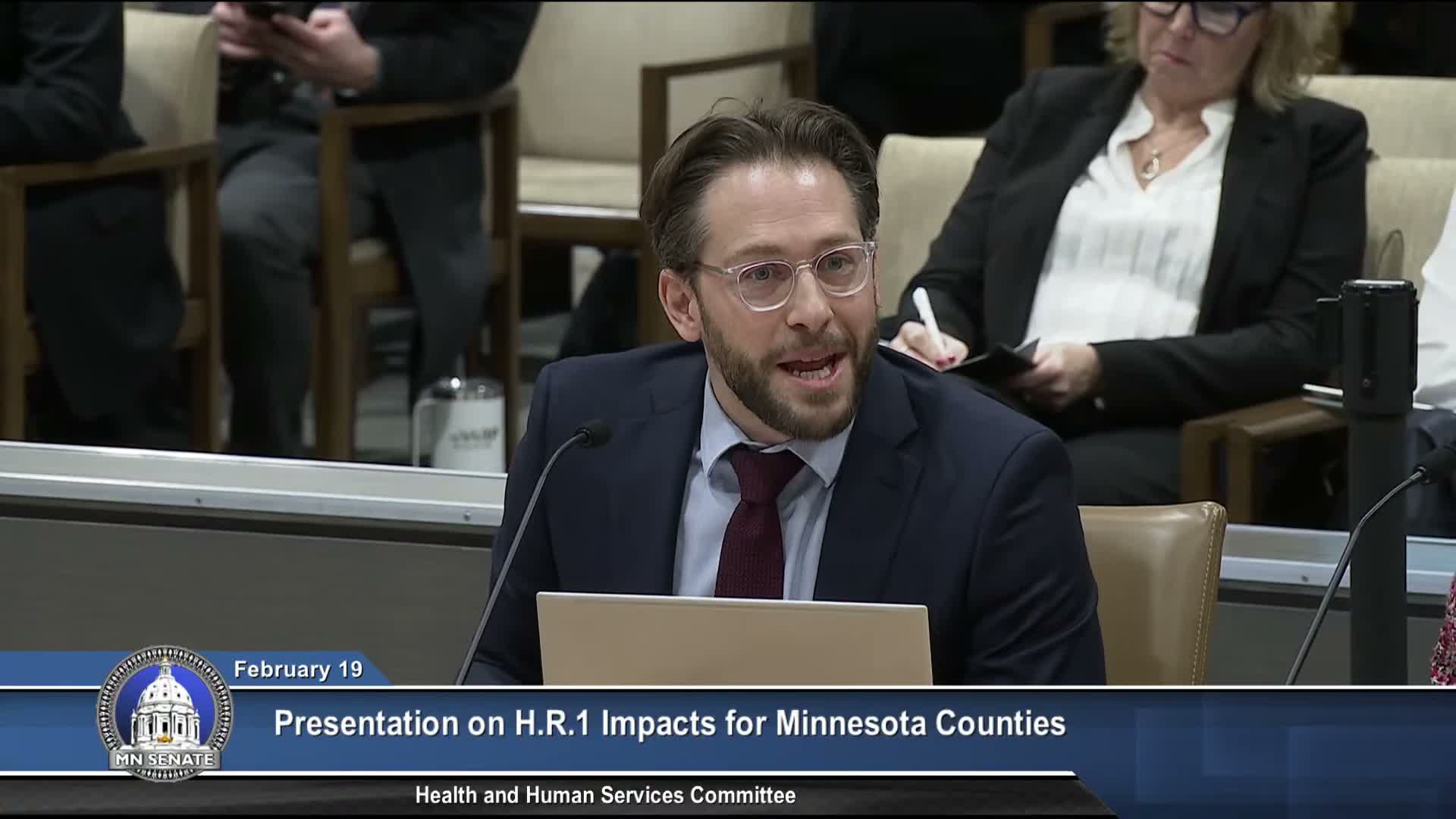
Summary
County officials warned that HR 1’s SNAP and Medicaid rule changes, plus proposed error-rate penalties, could shift hundreds of millions in costs to counties and ultimately property taxpayers, and urged statutory hold-harmless protections and immediate IT modernization.
ST. PAUL, Minn. — County officials told the Senate Health and Human Services Policy Committee on Feb. 19 that changes in federal SNAP and Medicaid rules tied to HR 1 could force counties to raise property taxes or cut services.
"There is a cacophony of issues that we are facing at local governments," said Matt Hogarth of the Association of Minnesota Counties, adding that HR 1 is a "tidal wave" of potential administrative and fiscal impacts. County leaders said Minnesota is unusual among states in assigning counties significant administrative responsibility for SNAP and Medicaid and that further shifts would be passed along to taxpayers.
Barb Dahl, Scott County Health and Human Services director, explained how the SNAP payment error rate is calculated and why the federal penalty formula—applied to a small sample—can produce high error-rate percentages that include client errors and corrected under- and overpayments. Dahl said in one county review the sample produced an 8% error rate and warned counties may begin to feel penalties on Oct. 1, 2027.
The Association of Minnesota Counties stressed three legislative priorities: clarity on who bears responsibility for error-rate penalties, statutory hold-harmless protections against new administrative cost shifts, and immediate funding for IT modernization so counties can reliably administer increased redeterminations and work-reporting requirements.
County witnesses provided quantifications: MMB and counties cited about 440,000 SNAP participants statewide and an MMB-based state estimate of an $86,000,000 potential cost shift in 2026 that could grow if error-rate thresholds are reached. County officials requested written clarifications and legislative remedies; no formal vote or rule was taken at the hearing.