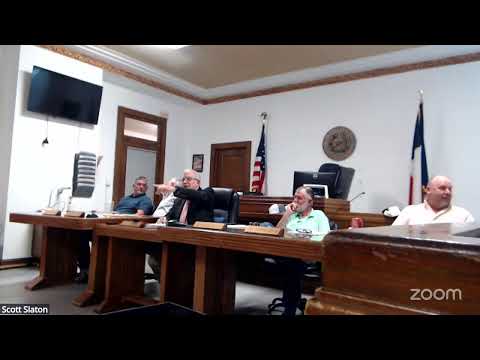
Van Zandt County commissioners say they will work with cities on road priorities but can’t reallocate county road tax now
Loading...
Summary
Residents and city representatives pressed the county to direct more of the special 10¢ road-and-bridge tax toward city streets; commissioners agreed to coordinate plans during the June budget process but said the tax, by law, funds county roads and the court lacks capacity to divert large sums without harming county-maintained roads.
Van Zandt County commissioners heard more than two hours of public comment and discussion Friday on whether some proceeds from the county’s special 10¢ road-and-bridge tax should be used to help repair city streets.
Residents and city representatives said they are paying into the special road tax but not seeing commensurate repairs. "So what we're asking for is, our money back," Ernie said during the meeting, summarizing city concerns about funds collected and roads left unaddressed. A resident who identified himself as Anthony told the court his road, No. 3505, had reverted from paved to dusty dirt and said the dust was affecting health: "My road's not getting fixed… My dogs are having trouble breathing."
The court and staff described limits on what the county can do with the 10¢ tax and on available materials and labor. A county operations speaker said crews used crushed concrete as a temporary surface because there was not enough material or budget to perform full rebuilds: "We came in, ground it all up… we topped it with the crushed concrete, once it sets up, it'll wash the dust," the speaker said, explaining the temporary nature of that fix. Commissioners cautioned that paying for short-term treatments that last only months can be fiscally inefficient.
Commissioners emphasized the scale of the county’s road network and competing needs. One commissioner noted Van Zandt County oversees roughly 1,152 miles of county roads and said even a substantial new revenue stream would not cover immediate needs across all precincts. "We have an obligation to all citizens of Van Zandt County to use our money wisely," the presiding official said, and the court indicated it would be "irresponsible" to pull large amounts from the county budget now.
Instead of reallocating existing county road-and-bridge money, commissioners said they would work directly with city leaders and precinct foremen to prioritize specific projects and to include any cooperative plans in the county budget process. The presiding official referenced a prior step the court has taken to increase revenue: a resolution asking the state for an additional penny of the motor fuels tax, which would produce materially more revenue than the current allocation and could allow future assistance to cities if approved.
County staff also urged residents and city officials to use available transparency tools. Staff said commissioners maintain a current work list (described in the meeting as a visible internal list of scheduled roads) and invited residents to check whether their road is on the spring work list, while warning that schedules can change based on weather and material availability.
Technical and cost details were discussed at length: officials and contractors offered cost examples (an example of roughly $184,000 to stabilize and asphalt about 0.7 mile) and described how different soil types across precincts require different treatments. Commissioners proposed objective prioritization — using traffic counts, surface-condition scores and connectivity to state or FM roads — to guide future decisions and said they had requested traffic counters to support that work.
The court did not adopt any immediate policy changes or vote to redirect funds. Instead, commissioners asked cities to develop coordinated proposals with precinct commissioners and said they will revisit possible cooperation during the county’s budget work in June. "We'll get together again sometime in June when we're starting… around the budget time to further clarify what we can and can't do," the presiding official said before adjourning the meeting at 3:25 p.m.
What’s next: Commissioners asked city officials and precinct leaders to bring coordinated plans and any cost estimates to the budget process in June, and encouraged citizens to provide specific details so staff can research individual complaints such as the one about road 3505.