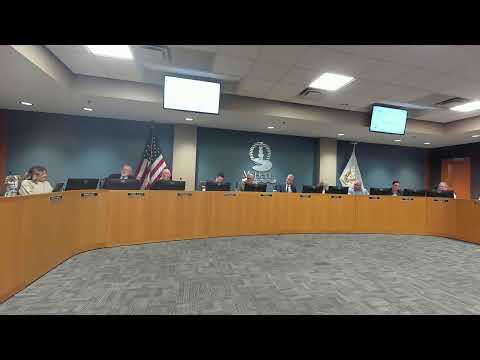
McHenry council reviews draft TIF eligibility reports for North Richmond Road and Route 120
Loading...
Summary
Consultant Tesco Associates told the council two study areas meet conservation-area standards for Tax Increment Financing but fall short of blight thresholds; councilors and residents debated boundaries, wetlands inclusion and displacement risks before staff clarified next steps.
A consultant told the McHenry City Council on Feb. 17 that two proposed Tax Increment Financing (TIF) study areas — north along Richmond Road and west along Route 120 — meet the lower conservation-area eligibility standard and could move to a redevelopment planning phase if the council so chooses.
Peter of Tesco Associates told the council he evaluated each area against the 13 statutory eligibility criteria and "we hit the eligibility standards on both of them." He said neither area met the higher blighted-area standard, which the city would have had to meet by showing five of the 13 criteria; instead, both met the conservation-area threshold that requires meeting three criteria plus an age-based building threshold.
The presentation outlined several changes to study-area boundaries. For North Richmond Road, the consultant said staff removed newer parcels and added older buildings farther south to meet the age threshold. For the Route 120 study area, the consultant said staff requested including parcels along Boone Creek; those are largely undeveloped, floodplain properties and required a registered engineer’s determination of chronic flooding before inclusion.
Why it matters: establishing eligibility is the first formal step in the multi-part TIF process. If the council approves advancing beyond the eligibility phase, the city would commission redevelopment plans that spell out specific projects, projected tax increment and how proceeds would be used.
During public comment, a resident raised concerns about several issues. The speaker said the packet shows building deterioration often stems from owner neglect and suggested code enforcement or existing business improvement grants could address some problems without TIF. He warned that if taxing bodies do not collect on anticipated increases in equalized assessed value (EAV) during the TIF period, "that shortfall will be covered…through an increase of the resident's property taxes," and said the city "cannot certify that the redevelopment will not result in the displacement of 10 or more housing units," which triggers a housing-impact study under state rules. He concluded, "Because of these reasons, I cannot support continuing with either TIF."
City staff and councilors responded with clarifications. Staff confirmed residential properties may be eligible for TIF-funded improvements, but emphasized that eligibility does not mean the city must approve incentives for any project. Several council members noted that the redevelopment vision — what the city would want to fund and why — comes later in phase 2, when specific projects and funding priorities are set. Staff also noted many of the Boone Creek parcels are city-owned or exempt from the tax rolls, limiting their direct EAV impact.
Next steps: the reports presented are drafts. The council did not take a formal vote to create either TIF district at the meeting; if the council directs staff to proceed to phase 2, the city would prepare redevelopment plans, hold required public notice and engage taxing districts through the multi-month statutory process.
Provenance: Topic introduced SEG 028; discussion and public comment through SEG 955.
Speakers quoted/used: Peter (Tesco Associates); Public Commenter (resident).