
Senate Transportation hears bill to limit railroad liability to enable Connecticut River bike path
Get AI-powered insights, summaries, and transcripts
Subscribe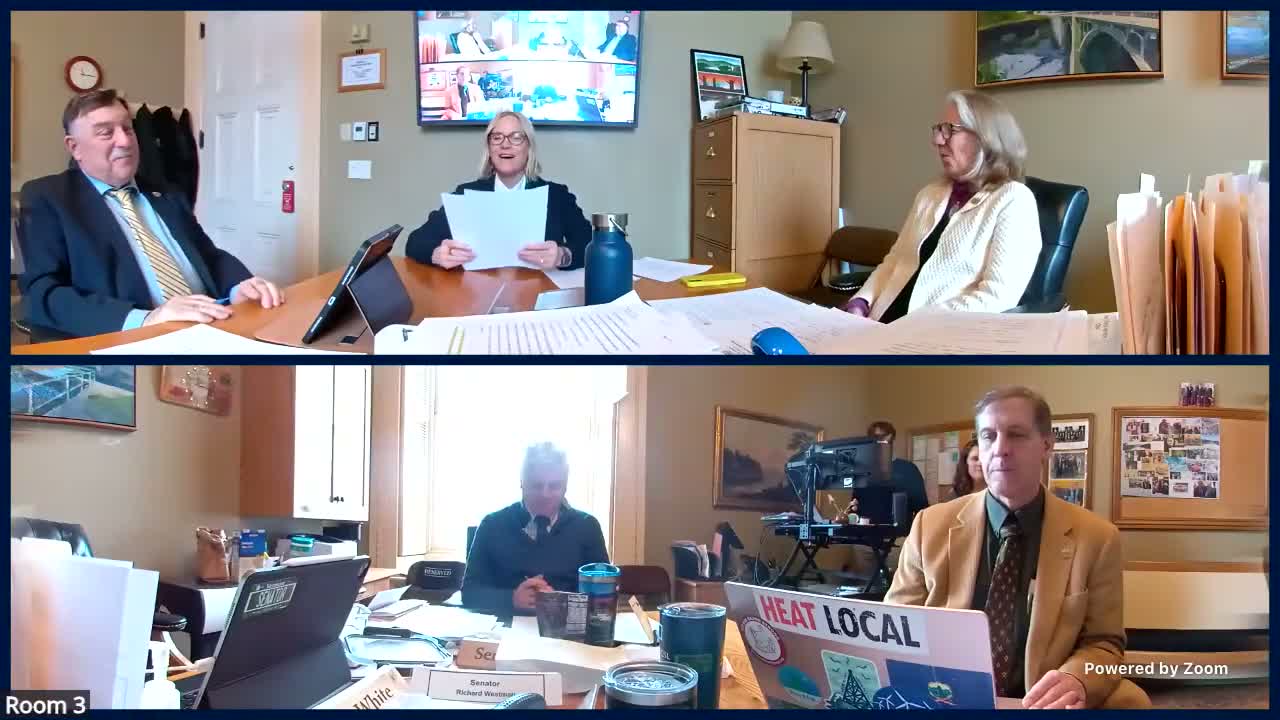
Summary
Committee discussion of S.261 focused on adding railroad property and utility corridors to a statutory exemption from liability to enable a continuous bike path along the Connecticut River. Members raised safety concerns for active rail corridors, lease and utility questions, and agreed to consult the rail division during budget hearings.
The Senate Transportation committee discussed S.261 on Feb. 17, a bill that would amend state statute to limit railroad liability where public recreational access is permitted, with the stated aim of enabling a continuous bike path along the west bank of the Connecticut River from the Massachusetts border to Canada.
The bill's presenter (Unidentified Speaker 1) told the committee, “This is a bill that I will go over fairly quickly,” and said the proposal grew out of constituent interest and conversations with colleagues. The presenter described S.261 as a short change to the statute—spoken in the hearing as an addition to “12 … 57 92”—that would add railroad property, railroad rights-of-way and utility corridors to categories where public access is allowed without exposing railroads to full liability.
“If something were to happen on that land” would not trigger full railroad liability under the proposed language, the presenter said, arguing the change would remove a major barrier to creating rail-adjacent trails. The presenter cited Massachusetts and Maine as models and said existing trails have boosted visitation in Chittenden County and Grand Isle.
Committee members pressed for clarifications. Unidentified Speaker 4 asked which statutory section the bill alters and what practical barrier it removes; Unidentified Speaker 3 summarized the core point: “And as long as they don't, ask for a fee to to go on it, then they're exempt from liability.” The exchange clarified that the exemption would apply to lands used for trails when no fee is charged, not to commercialized uses, and that the Massachusetts one-page example gives drafting context.
Members also asked whether railroads would still need leases. Unidentified Speaker 5 asked directly about leases; the committee was told additional steps would be required beyond the liability change—such as agreements with rail owners—and that indemnification and other legal and operational arrangements remain necessary. The committee discussed safety on active rail corridors: advocates said the bill is intended to allow consideration of trail projects even where rails remain active, while acknowledging it is easier to convert abandoned corridors.
The panel noted local interest: Windsor has reached out in support, and members raised utilities and other engineering issues that would need resolution. Unidentified Speaker 2 said the committee can highlight the matter when the rail division appears for its budget hearing, signaling that the rail division’s input will be the next procedural step.
No formal motion or vote on S.261 was recorded during this session. The committee concluded discussion and set the item aside pending further coordination with the rail division and stakeholders.
What happens next: committee members indicated they will raise the rail-trail issue when the rail division appears for the budget review to solicit technical and operational feedback.