Get Full Government Meeting Transcripts, Videos, & Alerts Forever!
Get email alerts on the Housing Legislation Package topic
No spam. Unsubscribe anytime.
Governor Ferguson signs 10 housing bills, including new statewide rent protections
Summary
Governor Ferguson signed a package of 10 housing bills at Blake House in Seattle, advancing tenant protections, incentives for middle-housing, permitting and tax changes, and a high-profile rent-stabilization measure that limits excessive rent increases statewide.
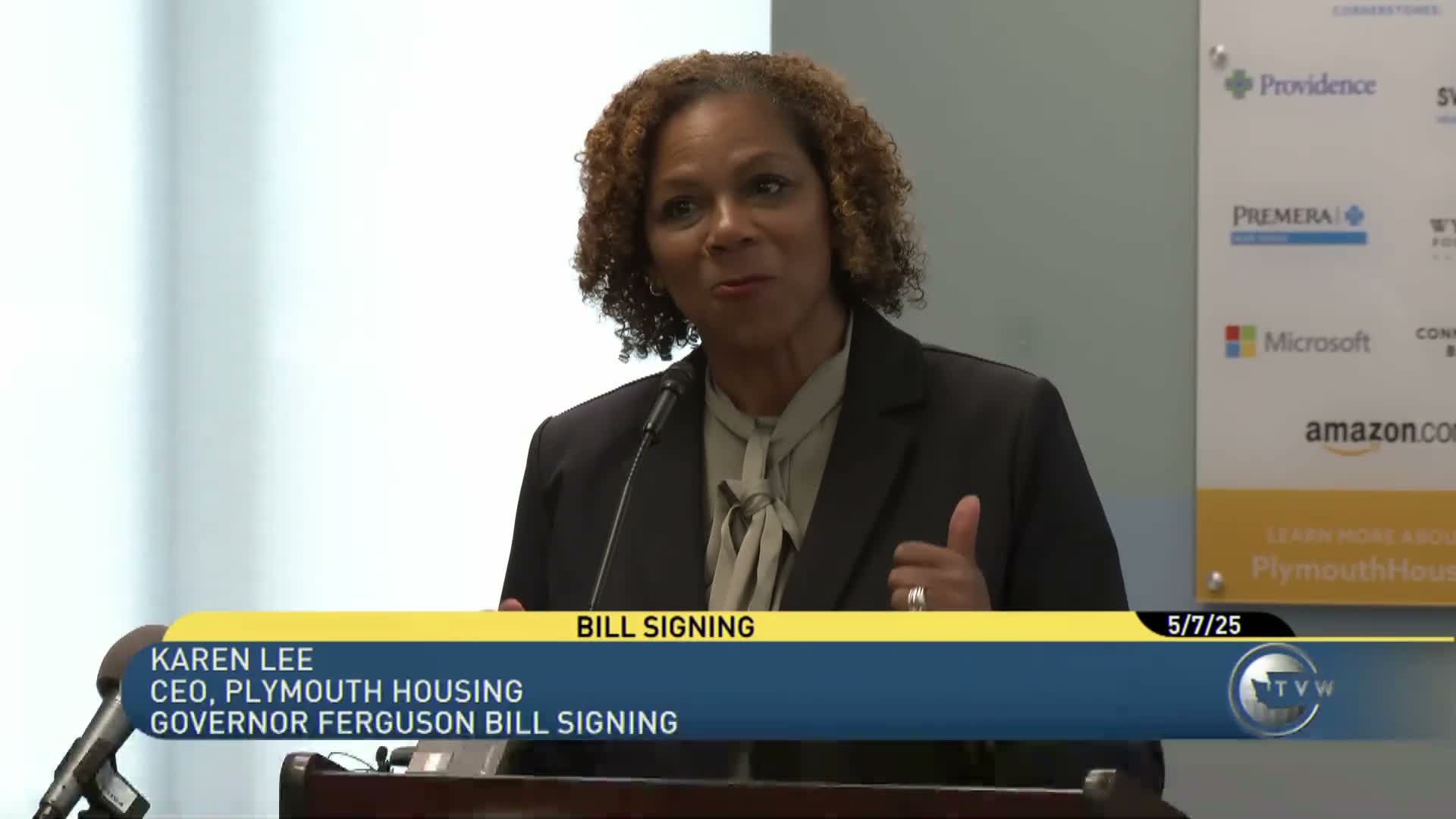
SEATTLE — Governor Ferguson on Saturday signed a package of 10 housing-related bills at Blake House, a 2023 permanent supportive housing building,calling the legislation a major bipartisan step to address Washington’s housing shortage.
The bills cover a range of policy changes: property tax relief for disabled veterans, clearer rules to encourage condominium construction, incentives for accessory dwelling units, limits on local parking mandates for housing projects, streamlined permitting, stronger tenant protections and a high-profile rent-protection law. ‘‘We made a lot of progress,’’ Ferguson said, thanking legislators, advocates and community members who pushed the measures to his desk.
The most consequential measure, introduced as House Bill 1217, places statewide guardrails on rent increases that advocates and sponsors described as an ‘‘anti‑gouging’’ policy. Senator Emily Alvarado, a lead sponsor, said housing "is not a luxury. It is a basic human need," and framed the bill as a way to prevent ‘‘unchecked excessive rent increases’’ that have displaced families.
Advocates at the event underscored both the urgency and limits of the change. Rebecca Gardea of the Q Law Foundation, who spoke as a renter and legal advocate, thanked lawmakers and described the bill as "a really meaningful step" while warning it was "not the version that so many of us here in the room fought so hard for." Gardea and others noted the law is a start and that more work remains.
Key bills signed (descriptions summarized from remarks at the signing): - House Bill 1106: Lowers the VA disability rating threshold for property tax relief from 80% to 40%, expanding eligibility for disabled veterans to qualify for relief to help them remain in their homes. - House Bill 1403: Clarifies state rules that had discouraged condominium development, creating clearer standards to encourage middle‑housing options. - House Bill 1516: Directs the Office of the Insurance Commissioner to identify insurance options that support condominium construction and first‑time homeownership. - House Bill 1757: Requires cities to adopt rules by June 30, 2026, for converting commercial and mixed‑use buildings to housing and provides limited exemptions from the state energy code to speed development. - Senate Bill 5184: Caps local off‑street parking requirements for housing projects, noting each parking space can add as much as $20,000 to development costs and structured parking can multiply that expense. - Senate Bill 5298: Strengthens notice and process requirements when land containing tenant communities is listed for sale so local governments and housing authorities may have a chance to compete to buy and preserve affordability. - Senate Bill 5313: Expands the list of lease provisions prohibited in residential rental agreements that would limit tenants’ legal remedies. - Senate Bill 5529: Expands the accessory dwelling unit property tax exemption to Pierce County (previously available in King County) to encourage ADUs as affordable housing. - Senate Bill 5611: Reduces permitting timelines and improves communication between applicants and permitting jurisdictions to lower barriers and costs for housing projects. - House Bill 1217: Establishes statewide limits intended to prevent ‘‘rent gouging’’ and provide basic consumer protections for renters and manufactured‑home owners; sponsors described the enacted limit in discussion as balancing landlord returns and tenant stability (speakers discussed a formula described as "7% plus CPI with a max of 10%").
Ferguson and lawmakers acknowledged the bills do not solve the housing crisis alone. Ferguson said the state still needs ‘‘1,000,000 more homes’’ and a combination of zoning reform, investments and tenant protections. Sponsors and advocates at the event emphasized the combination of supply‑side measures (permitting, conversions, insurance, ADU incentives) and tenant protections as necessary complementary steps.
On legal challenges and local concerns, sponsors acknowledged some local officials worry about state mandates and that legal challenges are possible. Senator Alvarado and the governor said they expected implementation conversations with local governments and expressed confidence the legislation is lawful if challenged: "If there is a lawsuit, the courts will ultimately decide," Ferguson said, adding he was confident the laws would be found constitutional.
The governor and legislators posed for photos with advocates and sponsors after signing. Reporters asked questions about local implementation and a separate incident the governor declined to address during the housing-focused portion of the event. The administration said it would take additional questions after the signing.