Lifetime Citizen Portal Access — AI Briefings, Alerts & Unlimited Follows
New RCO analysis: Washington's outdoor recreation economy is $25.2 billion
Loading...
Summary
RCO presented a 2024 economic analysis showing $25.2 billion in direct outdoor recreation spending, supporting about 237,000 jobs and contributing an estimated $5 billion in state and local taxes; the report also highlights nonmarket benefits including consumer surplus and ecosystem services.
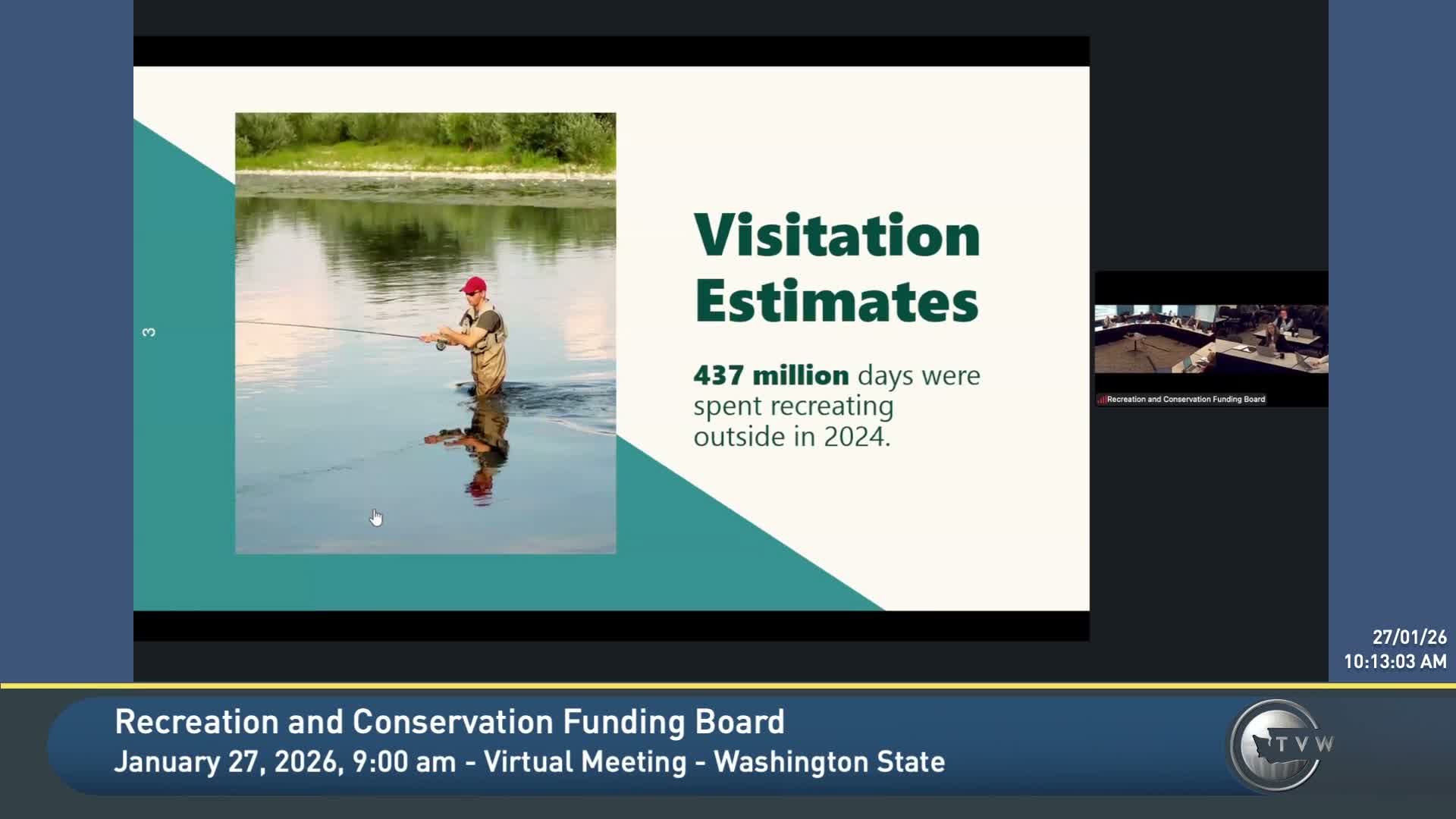
RCO policy specialist Leah Dobie presented the office's recently completed economic analysis of outdoor recreation in Washington, prepared by Earth Economics and published in November. Dobie said the report documents 437 million visitor days of outdoor recreation in 2024 and estimates $25.2 billion in direct spending, of which about $1.6 billion came from out-of-state visitors.
The analysis divides spending into trip-related expenditures (about 58% or $14.6 billion) and gear and equipment (about 42% or $10.5 billion). RCO's report estimates that direct and induced effects together support roughly $33.1 billion of economic activity and that recreation supports over 237,000 direct and indirect jobs (about 5.4% of Washington's workforce).
Dobie highlighted nonmarket values: an estimated consumer surplus of $33.7 billion and a wide-ranging ecosystem service estimate between $20 billion and $148 billion depending on methods. She also described new sections in the report on costs of recreation (impacts on residents, carrying capacity and tribal treaty concerns) and barriers and opportunities for underserved communities, including infrastructure, seasonality, management complexity and digital connectivity.
Methodology notes: the team used the 2023 SCORP participation data, anonymized mobile device data for state lands, and refined methods to reduce overlap across activities. Dobie cautioned that changes in survey method and overlap adjustments complicate direct year-to-year comparisons of visitor days.
Why it matters: Board members said the figures help quantify the scale of recreation's economic contribution when RCO briefs the legislature and underscores the trade-offs between visitation and management costs. Dobie said detailed county-level tables are available in the full report on RCO's website.
Next steps: staff will incorporate the report into SCORP outreach and use the findings to inform grant criteria and engagement.