Get Full Government Meeting Transcripts, Videos, & Alerts Forever!
Get email alerts on the Marine Infrastructure topic
No spam. Unsubscribe anytime.
State Parks releases pump-out needs assessment, recommends 15 new pump-outs and more mobile service
Summary
A December 2025 assessment funded by the state identified gaps in boat sewage disposal infrastructure in Puget Sound and the San Juans and recommended 15 new pump-outs, more mobile pump-out services, upland restroom improvements and education to reduce vessel sewage discharge.
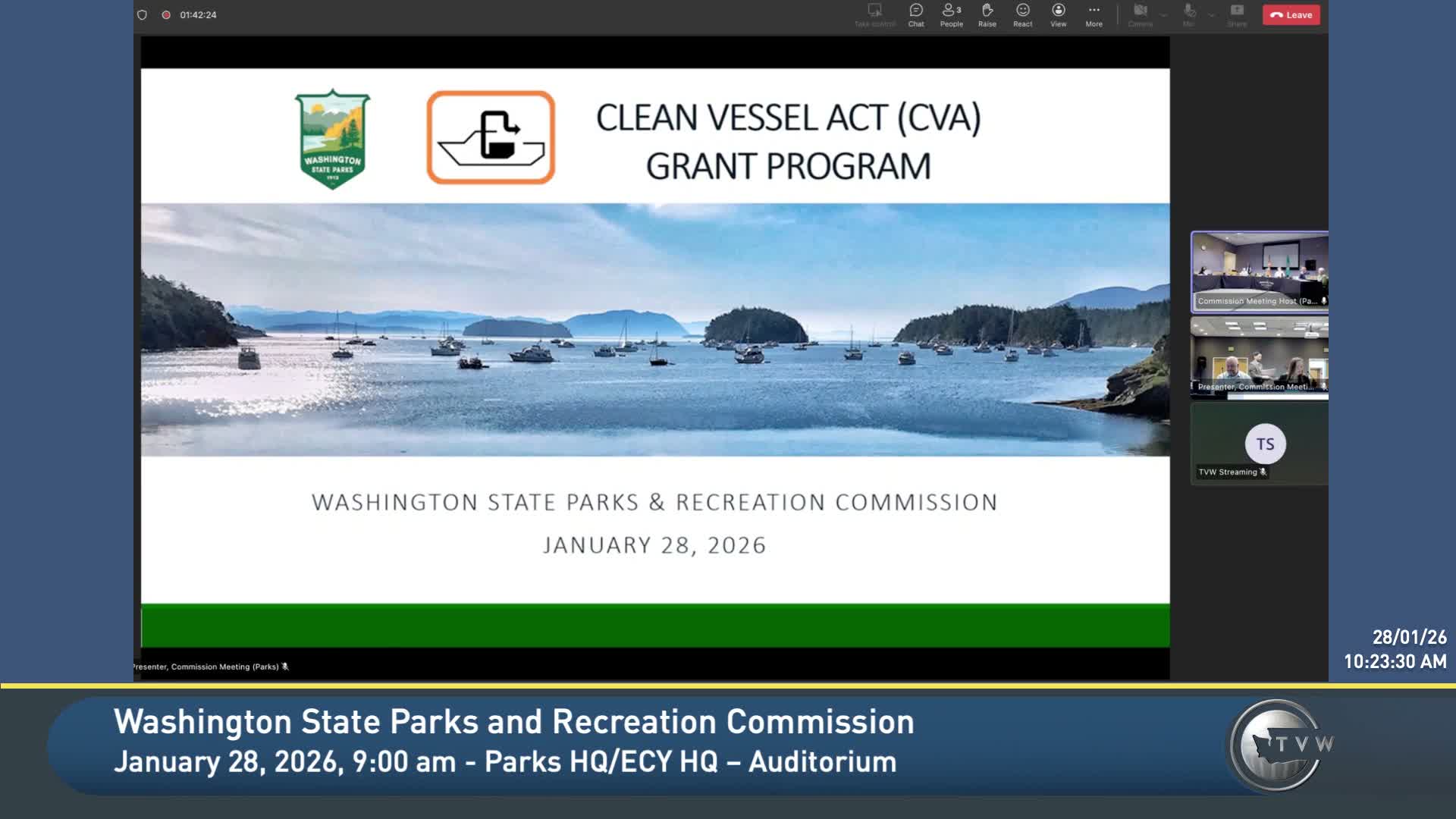
Lydia Morehead, manager of Washington State Parks' Clean Vessel Act (CVA) program, briefed the commission on a needs assessment completed in December 2025 under contract with MAKERS.
The assessment inventoried existing facilities and boat behavior, ran a supply-and-demand analysis and surveyed boaters and the public. Morehead said the state currently has 192 pump-outs (including fixed and portable units), 21 mobile pump-out vessels (20 in Puget Sound, one on the Snake River near Pasco), and seven floating restrooms. A statistical boater survey generated more than 12,000 responses that informed future need projections.
Using a planning ratio of one pump-out per 300 moorage slips of boats 26 feet and longer, the assessment concluded Washington needed roughly 15 additional pump-outs with a concentration in Puget Sound and the San Juan Islands: six recommended in the San Juans and seven in the broader Puget Sound region, plus single additions in Hoquiam and Westport.
Morehead said the assessment also recommended more mobile pump-out services, improved upland restroom access for human-powered craft, updated data collection standards and a public education campaign about legal requirements and available facilities. She noted that federal CVA grants come with a matching requirement and that the state typically applies for the maximum coastal award — described in the briefing as $1.5 million — and applies for inland funding on alternate years.
As an example of the program's return on investment, Morehead highlighted a 2024 CVA-funded mobile pump-out vessel that operated in West Puget Sound and pumped 25,420 gallons between April and September at no charge to users. The vessel was developed in partnership with the Recreational Boating Association of Washington, the Port of Poulsbo and local cities.
Commissioners asked about enforcement of the Puget Sound no-discharge rules; Morehead said enforcement is decentralized and relies heavily on reporting and that ecology and local agencies share jurisdiction. She and staff said the assessment will inform future grant rounds and capital requests.