Get Full Government Meeting Transcripts, Videos, & Alerts Forever!
Get email alerts on the Winter Recreation topic
No spam. Unsubscribe anytime.
State Parks warns snowmobile program needs money; bill would raise registration fees
Summary
Winter recreation managers told the commission that snowmobile registrations declined sharply since early 2000s and that the legislature is considering bills to raise registration fees from $50 to $75 as staff seek sustainable funding amid staffing shortfalls and poor snow seasons.
Washington State Parks presented a winter-recreation briefing on Jan. 28 that combined operational updates with the agency's legislative priorities for the snowmobile program.
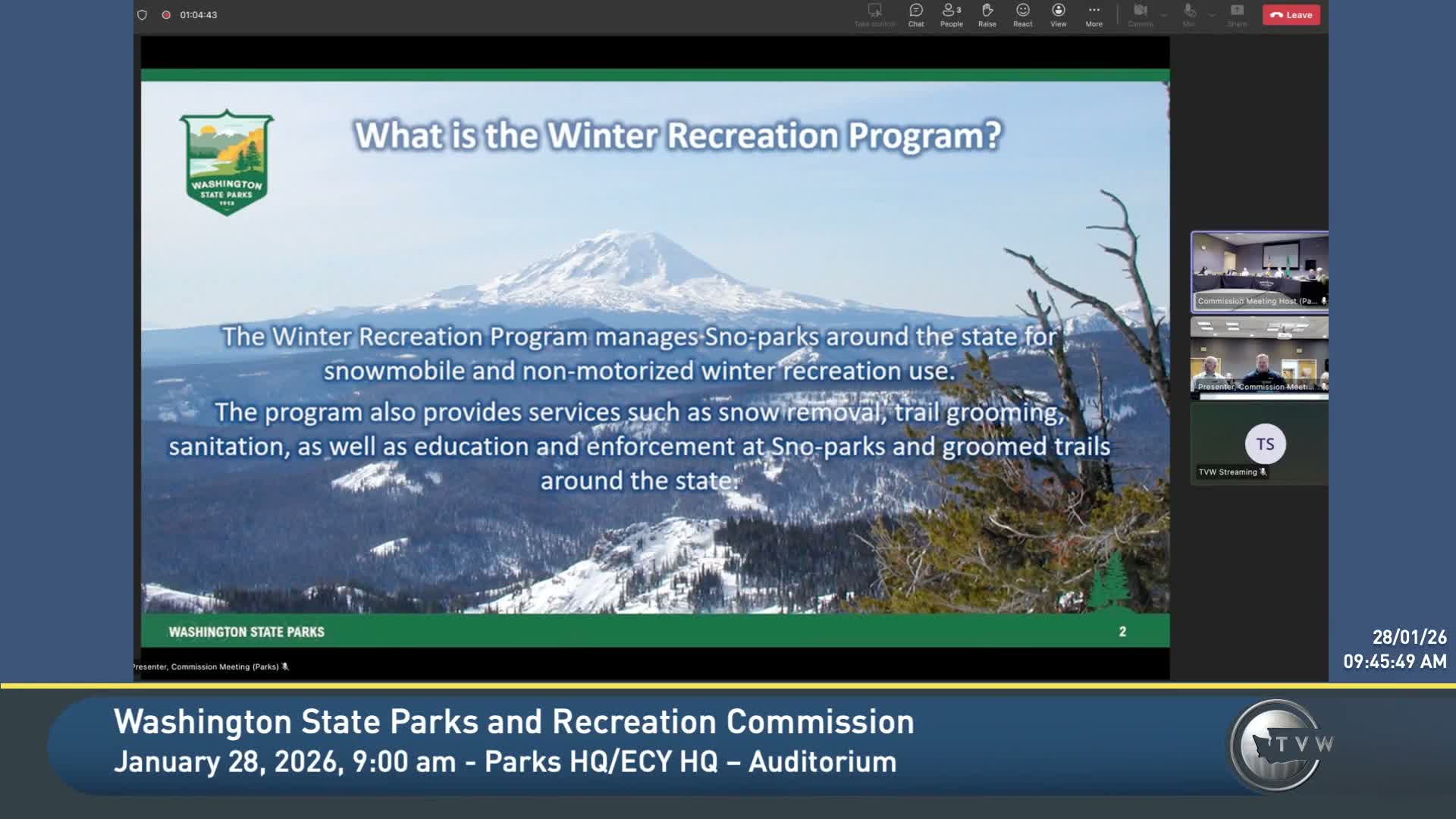
Corey Toler, winter recreation manager, said both motorized and non-motorized winter programs are funded through user fees and operate with a small team. He told commissioners the program manages roughly 130 snow parks and about 3,000 miles of trail across the state and that, unlike many park programs, the snowmobile side is bound closely to state statute and legislative action.
Toler described three pressing challenges: a multi-year decline in snowmobile registrations, staffing shortfalls among partner agencies (notably the U.S. Forest Service), and highly variable winter weather. "We had a 25% reduction in funding due to declining snowmobile registrations in fiscal year 24," he said, later adding the registration count fell from about 38,000 in the early 2000s to roughly 18,434 in 2024, with a modest recovery to 19,014 in the most recent year.
To address revenue shortfalls, the agency supported companion bills in the Legislature to increase regular snowmobile registration from $50 to $75 and to raise the vintage snowmobile fee (30 years or older) from $12 to $18; those appear in the record as Senate Bill 5234 and House Bill 2139 and had hearings during the session.
Toler said the agency also secured five Recreational and Conservation Office (RCO) recreational trails grants totaling about $350,000 to help trail groomers and offset prior reductions. He described a steering committee convened with the snowmobile advisory committee to build a strategic five- to ten-year plan assessing revenue, costs and statutory changes that might be needed.
Commissioners asked whether the increased registration fees would cover costs and about enforcement. Toler said some operational services were moved to private contractors because of Forest Service staffing shortages, which can be more expensive, and that the agency has redirected enforcement funds to Fish and Wildlife and Skamania County for compliance checks in some areas.
The session closed with commissioners commending staff for the strategic planning work and urging ongoing engagement with user groups, advisory committees and the state legislature.